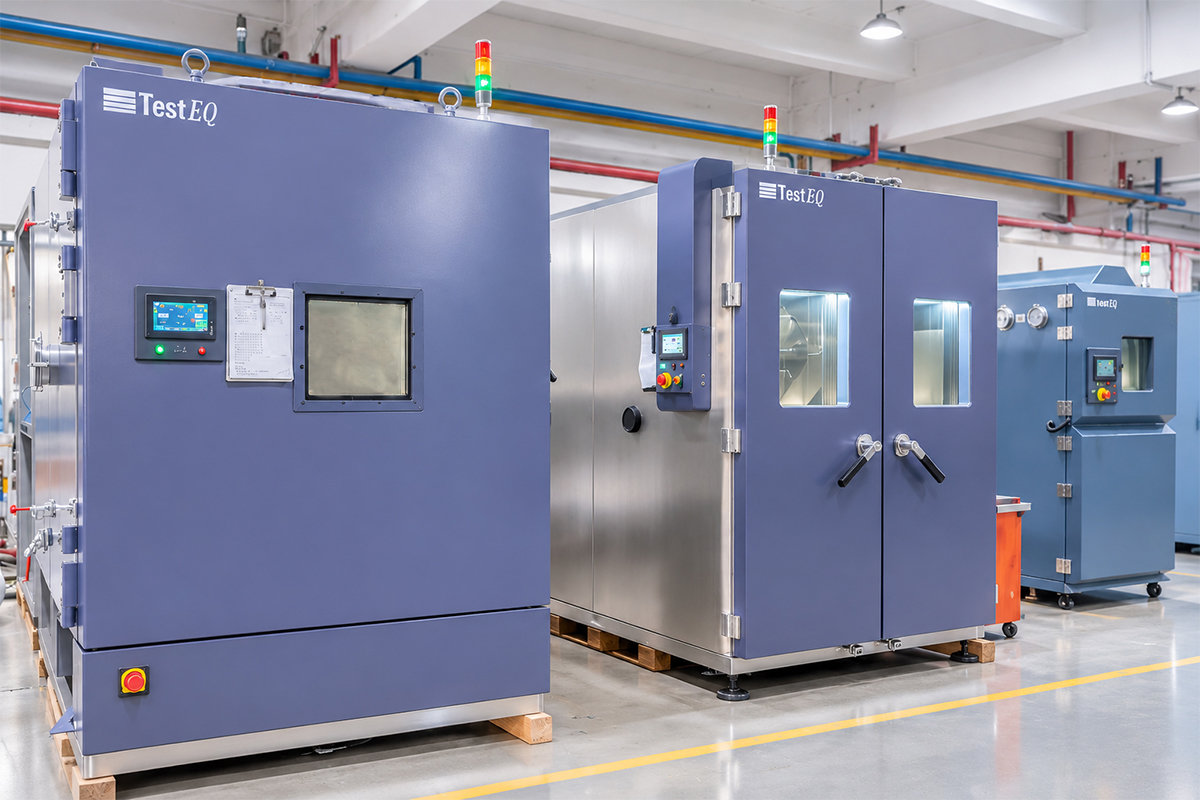
What Is IEC 60068-2-40?
IEC 60068-2-40 is an environmental testing standard originally published in 1976 under the title:
Basic Environmental Testing Procedures — Part 2-40: Tests — Test Z/AM: Combined Cold/Low Air Pressure Tests.
Its original scope covers heat-dissipating and non-heat-dissipating specimens. The objective is to determine whether components, equipment and other products can be stored and operated under the simultaneous combination of low temperature and low air pressure.
Unlike a conventional cold test, which focuses on temperature exposure, this method considers the combined influence of temperature and atmospheric pressure.
This distinction is particularly important for products designed for aircraft, high-altitude installations and other environments where both conditions may occur together.
The standard was withdrawn on November 21, 2018. It should therefore be treated as a historical test reference rather than a currently valid IEC publication.
What Products Does IEC 60068-2-40 Apply To?
The original standard addresses both heat-dissipating and non-heat-dissipating specimens.
Its engineering application is relevant to products that may encounter low temperatures and reduced air pressure during transportation, storage or operation.
Typical product categories include:
Aerospace and Aviation Equipment
Aircraft electronic assemblies
Avionics components
Navigation and communication equipment
Flight-control electronics
Electrical control units
Electronic Components
Semiconductor devices
Electronic modules
Printed circuit board assemblies
Sensors and measuring instruments
Power electronic components
Electrical Equipment
Electrical connectors
Insulation assemblies
Switching devices
Power supply systems
High-altitude electrical equipment
Industrial and Transportation Equipment
Outdoor electronic control systems
High-altitude monitoring equipment
Transportation electronics
Instrumentation systems
The applicable test requirements must always be confirmed against the actual product specification and relevant current standards.
Why Combine Low Temperature and Low Air Pressure?
Low temperature and reduced atmospheric pressure can affect different physical properties of a product.
When they occur simultaneously, their combined influence may reveal weaknesses that are not necessarily identified through separate environmental tests.
Changes in Heat Transfer
At reduced air pressure, air density decreases, affecting convective heat transfer.
For heat-generating specimens, this can change internal temperature distribution and the ability of the product to dissipate heat.
When low temperature is introduced simultaneously, the actual thermal response depends on specimen geometry, material properties, heat generation and chamber conditions.
Electrical Insulation Performance
Reduced air pressure can influence the electrical discharge characteristics of gas-filled insulation gaps.
Depending on voltage, electrode geometry and insulation design, the likelihood of partial discharge or electrical breakdown may change.
This is particularly relevant to aerospace electronics and high-voltage electrical assemblies.
Mechanical and Material Behavior
Low temperatures can change the properties of materials, including:
Material contraction
Seal flexibility
Polymer toughness
Lubricant viscosity
Mechanical clearance
Interface stability
When combined with reduced pressure, these effects may influence the reliability of assemblies and their interfaces.
Operational Stability
Electronic equipment may experience changes in component temperature, thermal management behavior and operating stability under combined environmental conditions.
Testing helps engineers identify whether the equipment can maintain its specified functions under the intended environmental exposure.
IEC 60068-2-40 Test Conditions
Combined cold and low-pressure testing involves controlling multiple environmental parameters simultaneously.
The principal parameters include:
Test Parameter | Engineering Consideration |
|---|---|
Temperature | Required low-temperature exposure range and control conditions |
Air Pressure | Specified absolute pressure (Pa, kPa or mbar) |
Exposure Duration | Required duration under combined low-temperature and low-pressure conditions |
Specimen Condition | DUT operating or non-operating state during testing |
Heat Dissipation | Internal heat generated by the DUT and its impact on thermal stability |
Temperature Stability | Ability to maintain stable specimen temperature throughout the test |
Pressure Stability | Ability to maintain consistent reduced-pressure conditions |
Measurement | Continuous monitoring and recording of chamber temperature and absolute pressure |
For current combined temperature and low-pressure testing, IEC 60068-2-39:2015 provides relevant test methods and guidance.
Low Temperature Testing Under Reduced Air Pressure
Low-temperature testing evaluates whether equipment can withstand cold environmental conditions without unacceptable changes in its physical or functional characteristics.
When combined with low air pressure, the test becomes more demanding because the surrounding atmosphere also influences thermal behavior.
Engineers should pay particular attention to the following:
Temperature Control
The chamber must achieve and maintain the specified temperature throughout the required exposure period.
Pressure Control
The system must maintain the required absolute pressure while temperature conditions are controlled.
Specimen Temperature
Chamber air temperature and actual DUT temperature are not necessarily identical. Temperature sensors should be positioned according to the test plan.
Thermal Stability
For heat-dissipating specimens, internal heat generation and reduced convective cooling can influence stabilization time.
Test Duration
The exposure period should follow the applicable test specification, including any requirements concerning specimen temperature stabilization.
What Is the Difference Between Low Air Pressure and Altitude Testing?
Low air pressure testing and altitude testing are closely related but should not automatically be treated as identical.
Altitude simulation reproduces the reduced atmospheric pressure associated with a specified altitude.
Low air pressure testing focuses on achieving a specified pressure condition around the specimen.
For engineering purposes, the two terms are often used together because altitude is commonly represented by atmospheric pressure.
However, the relationship between altitude and pressure depends on the atmospheric model and reference conditions.
For this reason, test engineers should specify the required pressure in absolute pressure units, such as Pa, kPa or mbar, rather than relying only on an altitude value.
This provides a more precise basis for chamber design, pressure control and test reproducibility.
Low Temperature and Low Pressure Test Chamber Requirements
A chamber designed for combined low-temperature and low-pressure testing requires more than a conventional environmental chamber with a vacuum pump.
The system must coordinate refrigeration, pressure reduction, sealing, instrumentation and specimen monitoring.
Temperature and Pressure Control
The refrigeration and vacuum systems must operate together without compromising the specified test conditions.
Vacuum Performance
The chamber structure, door seals, vacuum connections and feedthroughs must support the required absolute pressure.
Thermal Management
Reduced air density changes heat transfer characteristics. The refrigeration capacity and temperature control strategy should therefore be evaluated under the actual pressure conditions.
Specimen Monitoring
The system should support temperature sensors and other measurement connections required by the test program.
Electrical and Signal Feedthroughs
For powered specimens, appropriate electrical connections and signal interfaces may be needed to monitor operation during testing.
Data Recording
Important recorded parameters may include:
Chamber temperature
Specimen temperature
Absolute pressure
Exposure time
Operating status
Alarm and event records
How to Select an IEC 60068 Low Pressure Test Chamber
For laboratory managers and procurement engineers, chamber selection should be based on the actual test profile rather than temperature range alone.
The following information should be included in the technical specification or RFQ.
Selection Item | Required Information |
|---|---|
DUT Dimensions | Length × Width × Height |
DUT Weight | kg |
Temperature Range | °C |
Absolute Pressure | Pa / kPa / mbar |
Simulated Altitude | m, if applicable |
Temperature Stability | °C |
Pressure Stability | Required tolerance |
DUT Heat Load | W / kW |
Operating Condition | Powered / Non-powered |
Electrical Feedthroughs | Voltage, current and quantity |
Measurement Requirements | Temperature / Pressure / Other |
Exposure Duration | Hours |
Applicable Standard | Current edition or customer specification |
Procurement recommendation: If the test requires simultaneous low temperature and reduced pressure, confirm that the supplier can maintain both conditions at the same time. A chamber's minimum temperature and minimum pressure specifications, when achieved separately, do not prove that both can be achieved simultaneously.
What Low Temperature and Low Pressure Test Chamber Does TestEQ Provide?
TestEQ designs and manufactures customized environmental simulation equipment for electronic, aerospace and industrial reliability testing.
Depending on the application, TestEQ can provide configurations for:
Low-temperature environmental testing
Low-air-pressure and altitude simulation
Combined temperature and low-pressure testing
Temperature-humidity-altitude testing
Thermal vacuum testing
Custom environmental test chambers
System configurations can be evaluated according to chamber volume, temperature range, absolute pressure, refrigeration capacity, specimen heat load, feedthrough requirements and monitoring needs.
For combined cold and low-pressure applications, the chamber should be engineered around the actual DUT and test profile rather than selected solely from standard catalogue specifications.
Why Choose TestEQ for Customized Low Temperature and Low Pressure Test Systems?
TestEQ is a reliability testing system provider and environmental test chamber manufacturer specializing in customized environmental simulation solutions.
Why work with TestEQ?
15+ Years of Engineering Experience: Experience in environmental simulation equipment and customized reliability testing systems.
Customized Chamber Design: Engineered around specific temperature, absolute pressure, chamber volume and DUT requirements.
Integrated Environmental Simulation: Solutions covering low temperature, low pressure, altitude and thermal vacuum testing.
In-House Manufacturing: Equipment design, manufacturing, assembly and system integration.
Application-Specific Engineering: Refrigeration capacity, vacuum performance, feedthroughs and monitoring configured according to actual test conditions.
Technical Support: Engineering assistance throughout system configuration, manufacturing and commissioning.
TestEQ focuses on engineered-to-order environmental testing systems, helping laboratories and manufacturers address complex testing requirements beyond standard chamber configurations.
Applications
Combined low-temperature and low-pressure environmental simulation is relevant to several engineering sectors.
Aerospace and Aviation
Aircraft electronics, avionics, navigation systems and high-altitude electrical assemblies.
Electronics and Semiconductors
Electronic modules, sensors, semiconductor components and power electronics.
Automotive and Transportation
Electronic control units and electrical assemblies designed for demanding operating environments.
Research and Testing Laboratories
Environmental qualification, product development, failure analysis and reliability research.
Industrial Equipment
High-altitude monitoring devices, communication equipment and outdoor electronic systems.
FAQ — IEC 60068-2-40 Low Temperature and Low Air Pressure Testing
1. What Is IEC 60068-2-40?
IEC 60068-2-40 is an environmental testing standard originally published in 1976 as Test Z/AM: Combined Cold/Low Air Pressure Tests. It addresses the simultaneous effects of low temperature and reduced air pressure on heat-dissipating and non-heat-dissipating specimens, helping engineers evaluate environmental suitability.
2. Is IEC 60068-2-40 Still Valid?
No. IEC 60068-2-40:1976 was officially withdrawn on November 21, 2018. It should be treated as a historical testing reference rather than a current IEC requirement. For new qualification programs, engineers should review IEC 60068-2-39 and other applicable current standards before defining test procedures.
3. What Is the Purpose of Combined Low Temperature and Low Air Pressure Testing?
Combined testing evaluates how products respond when cold temperatures and reduced atmospheric pressure occur simultaneously. These conditions can influence heat dissipation, electrical insulation, material properties and operational stability. It is particularly relevant to aerospace electronics, high-altitude equipment and electronic assemblies designed for demanding environmental conditions.
4. What Is the Difference Between IEC 60068-2-40 and IEC 60068-2-13?
IEC 60068-2-40 originally addressed combined cold and low-air-pressure testing, whereas IEC 60068-2-13 focuses on low-air-pressure testing. The key distinction is the simultaneous temperature and pressure condition. Engineers should select the applicable method according to the actual environmental qualification requirements.
5. What Is the Difference Between IEC 60068-2-40 and IEC 60068-2-39?
IEC 60068-2-40 is a withdrawn historical standard for combined cold and low-air-pressure testing. IEC 60068-2-39:2015 provides methods and guidance for combined temperature, or temperature and humidity, with low-air-pressure testing. It is an important reference when planning new combined environmental test programs.
6. Why Is Low Temperature and Low Pressure Testing Important for Aerospace Electronics?
Aerospace equipment may experience low temperatures and reduced atmospheric pressure during high-altitude operation. These conditions can affect electronic insulation, thermal management, seals, materials and component performance. Combined environmental testing helps engineers identify potential weaknesses and evaluate whether equipment meets its specified operating requirements.
7. What Parameters Are Important When Selecting a Low Temperature and Low Pressure Test Chamber?
Important parameters include temperature range, absolute pressure, chamber volume, pressure stability, temperature uniformity, exposure duration and DUT heat load. For powered specimens, engineers should also consider electrical feedthroughs, temperature sensors, signal connections and data acquisition requirements.
8. Can a Conventional Environmental Test Chamber Perform Low Pressure Testing?
Not necessarily. A conventional environmental chamber is not automatically designed for reduced-pressure operation. Combined low-temperature and low-pressure testing requires an appropriately engineered chamber, vacuum system, sealing structure, refrigeration system and coordinated temperature-pressure control.
9. What Is the Difference Between an Altitude Test Chamber and a Thermal Vacuum Test Chamber?
An altitude test chamber primarily simulates reduced atmospheric pressure associated with high-altitude environments, while a thermal vacuum chamber provides controlled temperature and vacuum conditions. The appropriate system depends on the required pressure level, temperature range, specimen heat load and intended test application.
10. Can TestEQ Customize a Low Temperature and Low Pressure Test Chamber?
Yes. TestEQ provides customized environmental simulation chambers for low-temperature, low-pressure, altitude and thermal vacuum testing. Configurations can be developed according to DUT dimensions, temperature range, absolute pressure, chamber volume, heat load, electrical feedthroughs and monitoring requirements.
Related Standards
Understand low-air-pressure testing requirements for electronic components and equipment exposed to reduced atmospheric pressure.
Explore combined temperature or temperature-humidity testing under reduced air pressure.
Learn about temperature and altitude qualification requirements for airborne electronic equipment.
Related Test Chambers
Simulate reduced atmospheric pressure and high-altitude conditions for environmental qualification testing.
Combine low-temperature and altitude simulation for aerospace, electronic and industrial testing.
Provide controlled temperature and vacuum environments for aerospace and high-reliability product testing.
Related Resources
Compare the technical scope, test conditions and publication status of three combined temperature and low-pressure testing standards.
Understand how temperature, humidity and reduced atmospheric pressure interact during combined environmental testing.
Explore thermal balance testing considerations, payload configuration and heat-load management in thermal vacuum systems.
Low Temperature and Low Pressure Test Chamber Engineering
Need a Combined Temperature and Low Pressure Test Chamber?
TestEQ designs customized environmental simulation chambers for low-temperature, low-pressure, altitude and thermal vacuum testing.
Our systems can be configured according to your required temperature range, absolute pressure, chamber volume, DUT heat load, feedthroughs and monitoring requirements.
Whether you are testing aerospace electronics, semiconductor components or industrial equipment, TestEQ can help develop an environmental testing solution around your actual test conditions.