What Is MIL-STD-202 Method 107 Thermal Shock?
MIL-STD-202 Method 107 Thermal Shock is a test method used to evaluate the resistance of electronic and electrical parts to extreme temperature exposure and repeated transitions between high and low temperatures.
The method is designed to identify damage caused by rapid or repeated thermal changes, including cracking, delamination, seal damage, leakage, mechanical displacement, and changes in electrical characteristics.
The official Department of Defense documentation describes Method 107 as a thermal shock test for determining the resistance of parts to high- and low-temperature extremes and alternating exposure to those extremes.
For manufacturers, reliability engineers, and qualification laboratories, MIL-STD-202 Method 107 is particularly relevant when a component may experience severe temperature changes during operation, transportation, storage, or deployment.
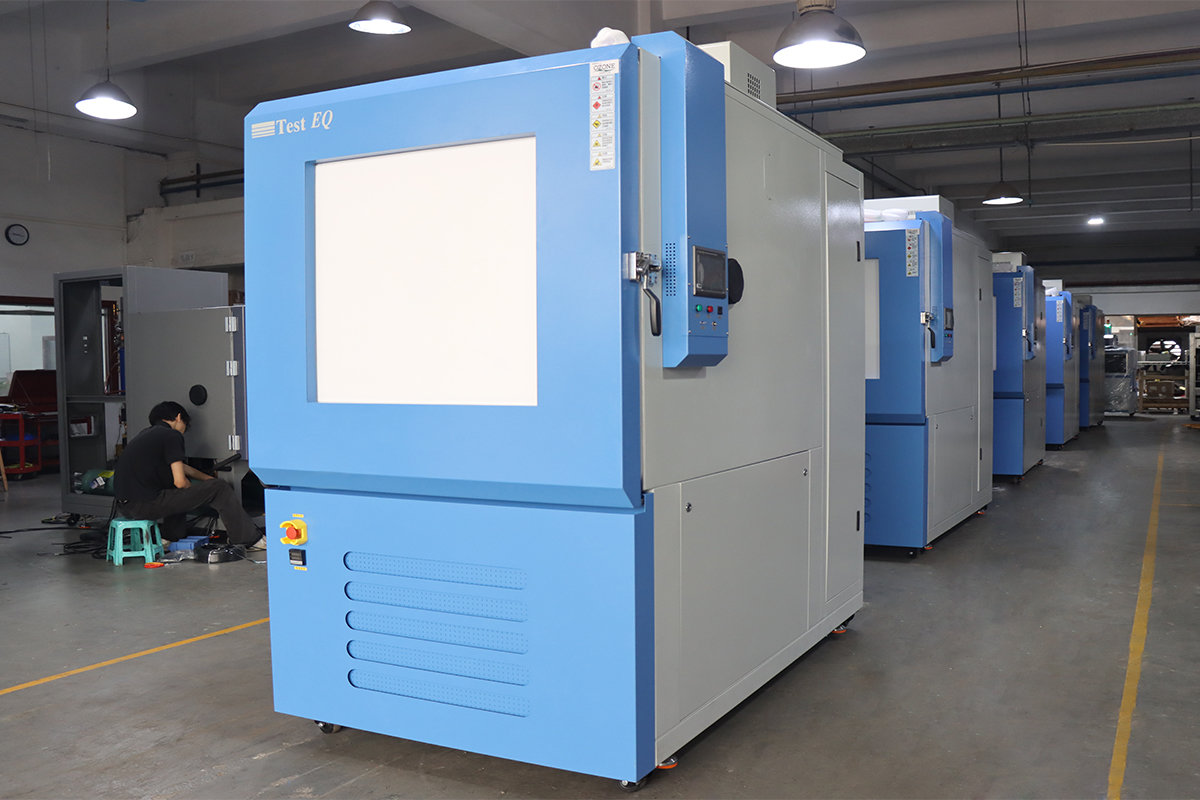
TestEQ provides thermal shock and rapid temperature change test systems designed to support demanding component reliability and environmental qualification programs.
Why Is MIL-STD-202 Method 107 Thermal Shock Testing Important?
Electronic components can experience thermal expansion and contraction when exposed to large temperature differences.
Different materials within the same component may have different coefficients of thermal expansion (CTE). Repeated temperature transitions can therefore generate mechanical stress at interfaces, solder joints, seals, coatings, encapsulants, and other structures.
Typical failure mechanisms associated with thermal shock include:
• Cracking or delamination of coatings
• Cracking or crazing of encapsulating materials
• Opening of thermal seals and case seams
• Leakage of filling materials
• Damage to hermetic seals
• Cracking of vacuum glass-to-metal seals
• Mechanical displacement of conductors
• Changes in electrical characteristics
• Structural degradation caused by repeated thermal stress
These failure mechanisms are specifically identified in the Method 107 documentation.
For engineering teams, the objective is not simply to expose a component to a low and high temperature. The test must reproduce the specified thermal transition, exposure duration, number of cycles, and measurement requirements.
MIL-STD-202 Method 107 Test Methods
Method 107 includes air thermal shock and liquid thermal shock approaches.
Air Thermal Shock
The air method uses temperature-controlled environmental equipment to expose specimens to defined high and low temperature extremes.
The test sequence alternates between temperature extremes, with intermediate transitions through ambient conditions depending on the specified test condition.
The required exposure time depends on specimen weight. For example, the historical Method 107G table specifies minimum air exposure times ranging from 1/4 hour for specimens up to 28 g to 8 hours for specimens above 136 kg.
The actual test specification should always be established from the applicable revision and the individual product specification rather than assuming one universal exposure time.
Liquid Thermal Shock
The liquid method transfers the specimen between liquid baths maintained at specified temperature extremes.
This approach can produce a more severe thermal shock than air testing and therefore requires careful consideration of specimen construction and sealing.
The standard documentation notes that the liquid method is more severe and may damage components that would not necessarily be degraded by the air method. It is also not intended for non-hermetically sealed components.
For this reason, laboratories should confirm the applicable product specification before selecting the liquid method.
MIL-STD-202 Method 107 Thermal Shock Test Procedure
A typical Method 107 thermal shock program consists of the following stages:
1. Initial Measurements
Record the required electrical, mechanical, dimensional, or functional characteristics before thermal shock testing.
These measurements establish the baseline against which post-test performance is evaluated.
2. Low-Temperature Exposure
Place the specimen in the specified low-temperature environment and maintain the required temperature for the specified exposure period.
The selected temperature depends on the applicable test condition.
3. Transition to the Opposite Temperature Extreme
Move the specimen to the opposite temperature environment according to the applicable Method 107 procedure.
For thermal shock applications, transfer time can be an important parameter because the objective is to expose the specimen to a significant thermal transition rather than simply perform slow temperature cycling.
4. High-Temperature Exposure
Maintain the specimen at the specified high-temperature condition for the required exposure time.
5. Repeat the Required Number of Cycles
Repeat the low/high temperature sequence according to the specified number of thermal shock cycles.
Historical Method 107G air conditions included test levels of 5, 25, 50, and 100 cycles, while liquid conditions included 5, 15, and 25 cycles.
The exact cycle count should be taken from the applicable revision and product specification.
6. Final Measurements
After completion of the required cycles, allow the specimen to stabilize under the specified measurement conditions and perform the required final measurements.
Failures should be evaluated based on the acceptance criteria defined by the applicable product specification.
MIL-STD-202 Method 107 Temperature Conditions
One of the most important engineering considerations is the selected temperature combination.
Historical Method 107G air test conditions included combinations such as:
| Test Condition | Low Temperature | High Temperature | Typical Cycle Options* | Simple Description |
|---|---|---|---|---|
| A | −55°C | +85°C | 5 / 25 / 50 / 100 | Standard thermal shock condition for general electronic components |
| B | −65°C | +125°C | 5 / 25 / 50 / 100 | More severe temperature extremes for demanding applications |
| C | −65°C | +200°C | 5 / 25 / 50 / 100 | High-temperature thermal shock for components exposed to elevated temperatures |
| D | −65°C | +350°C | 5 / 25 / 50 / 100 | Extreme thermal shock condition for high-temperature applications |
| E | −65°C | +500°C | 5 / 25 / 50 / 100 | Very high-temperature thermal shock for specialized components |
| F | −65°C | +150°C | 5 / 25 / 50 / 100 | Severe thermal shock condition for selected electronic components |
* Note: The table summarizes historical MIL-STD-202 Method 107G air thermal shock conditions. Actual temperature limits, cycle count, exposure time, and acceptance criteria should be verified against the applicable revision of MIL-STD-202 Method 107 and the relevant product specification.
What Equipment Is Required for MIL-STD-202 Method 107?
The environmental test system must have sufficient thermal capacity to achieve and maintain the required temperature conditions with the actual test load.
For air thermal shock testing, important chamber specifications include:
• Temperature range
• Cooling capacity
• Heating capacity
• Temperature recovery performance
• Chamber temperature uniformity
• Temperature stability
• Specimen load capacity
• Airflow configuration
• Transition and transfer performance
• Controller resolution
• Data acquisition and monitoring
• Calibration capability
• Safety protection
For demanding thermal shock applications, chamber performance should be evaluated with the actual product load, not only under empty-chamber conditions.
This is particularly important for laboratories testing large batches of electronic components or high thermal-mass assemblies.
Thermal Shock Chamber vs. Temperature Cycling Chamber
A common engineering question is whether a conventional temperature cycling chamber can be used for Method 107.
The answer depends on the required test procedure.
A conventional temperature cycling chamber normally changes temperature continuously at a controlled ramp rate. A thermal shock system is designed to expose the specimen to substantially different temperature environments with controlled transitions and recovery.
| Comparison | Thermal Shock Chamber | Temperature Cycling Chamber |
|---|---|---|
| Main Purpose | Tests resistance to rapid temperature transitions and thermal stress | Tests product reliability under repeated temperature changes |
| Temperature Change | Very rapid transition between hot and cold zones | Controlled heating and cooling at a defined ramp rate |
| Thermal Stress | Higher thermal shock stress | Relatively gradual thermal stress |
| Typical Applications | Electronics, semiconductor packages, automotive components, aerospace, military | Electronics, batteries, automotive parts, materials, general reliability testing |
| Test Method | Hot ↔ Cold exposure with rapid transition | Continuous temperature ramping between setpoints |
| Typical Standards | MIL-STD-202 Method 107, JESD22, IEC 60068-2-14 | IEC 60068-2-14, JESD22, AEC-Q100 and other cycling specifications |
| Best For | Detecting cracking, delamination, sealing failure and material/interface defects | Evaluating long-term reliability under repeated temperature changes |
| Equipment Selection | Focus on thermal shock transition, recovery and temperature extremes | Focus on ramp rate, stability, uniformity and cycling accuracy |
Therefore:
Temperature cycling focuses on controlled temperature ramps.
Thermal shock focuses on exposure to temperature extremes and the resulting thermal stress from rapid transitions.
For a project that specifies MIL-STD-202 Method 107, the equipment should be selected based on the actual Method 107 test condition rather than simply choosing a chamber with a wide temperature range.
How to Select a MIL-STD-202 Thermal Shock Chamber
Before purchasing a thermal shock test chamber, engineers and procurement teams should define at least the following parameters:
1. Required Temperature Range
Determine the actual low and high temperature limits required by the test specification.
2. Specimen Size and Weight
The product load directly affects chamber recovery, airflow, and thermal performance.
3. Number of Test Cycles
Confirm the required cycle count before specifying the equipment.
4. Transfer or Transition Requirements
The thermal transition method should be compatible with the applicable Method 107 procedure.
5. Air or Liquid Method
Confirm whether the project requires air thermal shock or liquid thermal shock.
6. Measurement Requirements
Determine which electrical, mechanical, dimensional, or functional measurements must be performed before and after testing.
7. Calibration and Documentation
For qualification laboratories, calibration records, test data, temperature mapping, and traceability can be as important as the chamber's nominal temperature range.
TestEQ MIL-STD-202 Thermal Shock Testing Solutions
TestEQ develops environmental simulation and reliability testing systems for electronic components, semiconductor devices, automotive electronics, aerospace equipment, and other demanding applications.
Our thermal shock solutions can be configured according to application-specific temperature ranges, specimen dimensions, load requirements, monitoring requirements, and test procedures.
TestEQ's product portfolio includes:
• Thermal Shock Test Chambers
• Rapid Temperature Change Chambers
• Temperature Humidity Chambers
• Walk-In Environmental Chambers
• Thermal Vacuum Chambers
• Altitude Test Chambers
• HALT/HASS Test Systems
• Customized Environmental Test Systems
For applications requiring rapid temperature transitions, TestEQ also provides rapid temperature change systems with configurations up to 30°C/min, depending on chamber model, load, temperature range, and test requirements.
The equipment should be selected according to the actual test profile rather than relying on ramp rate alone.
Need to verify a MIL-STD-202 Method 107 thermal shock requirement? Contact TestEQ with your temperature range, specimen size, load, cycle count, and test specification. Our engineering team can recommend a suitable thermal shock test system.
MIL-STD-202 Method 107 Testing for Different Industries
Aerospace and Defense
Thermal shock testing helps evaluate components exposed to severe temperature changes during transportation, storage, deployment, and operation.
Automotive Electronics
Automotive electronic components can experience substantial temperature changes between cold starts, engine compartments, outdoor environments, and thermal management systems.
Semiconductor and Electronics
Thermal shock can reveal package-level defects, material-interface problems, seal failures, and electrical degradation.
Telecommunications
Outdoor and mission-critical electronic systems may require environmental qualification against repeated temperature extremes.
Research and Reliability Laboratories
Method 107 can be incorporated into component qualification, failure analysis, design verification, and accelerated reliability programs.
Why Choose TestEQ for MIL-STD-202 Method 107 Thermal Shock Testing?
Choosing a thermal shock chamber is not only about temperature range. Engineers and laboratories need stable thermal performance, reliable test control, accurate monitoring, and equipment configured for the actual test load.
TestEQ provides thermal shock and environmental simulation systems designed for demanding reliability testing applications.
• Engineering-Focused Design: Chamber performance is configured around temperature range, specimen size, thermal load, cycle requirements, and test application.
• Rapid Thermal Performance: TestEQ offers thermal shock and rapid temperature change systems with configurations up to 30°C/min, depending on model and test conditions.
• Customized Solutions: Chamber dimensions, temperature range, monitoring, fixtures, data acquisition, and other requirements can be customized for specific laboratory and production needs.
• Reliability Testing Experience: TestEQ supports environmental testing applications across semiconductor, automotive electronics, aerospace, EV battery, telecommunications, and research laboratories.
• Technical Support: Our engineering team can help evaluate test requirements and recommend an appropriate chamber configuration before purchase.
• Qualification-Oriented Documentation: TestEQ can support equipment documentation, calibration, test data monitoring, and performance verification requirements for laboratory and quality programs.
Whether you are purchasing a new MIL-STD-202 thermal shock chamber, upgrading an existing laboratory, or developing a customized reliability testing system, TestEQ focuses on matching the equipment configuration to the actual test requirements.
MIL-STD-202 Method 107 FAQ
1.What is MIL-STD-202 Method 107?
MIL-STD-202 Method 107 is a thermal shock test method used to evaluate the resistance of electronic and electrical parts to high- and low-temperature extremes and alternating exposure to those extremes.
2.What is the difference between MIL-STD-202 Method 107 and thermal cycling?
Thermal cycling generally uses controlled temperature ramps between defined temperature limits. Method 107 thermal shock focuses on exposure to temperature extremes and the thermal stresses produced by transitions between those environments.
3.Does Method 107 require a thermal shock chamber?
For air thermal shock testing, a suitable temperature-controlled environmental system with sufficient thermal capacity is required. The equipment must be capable of achieving the specified test conditions with the actual specimen load.
4.What temperature range is required for MIL-STD-202 Method 107?
There is no single temperature range applicable to every Method 107 test. The applicable test condition and product specification determine the required low and high temperatures.
5.How many thermal shock cycles are required?
The number of cycles depends on the specified Method 107 test condition and product requirement. Historical Method 107G conditions included multiple cycle options, so the applicable revision and individual specification should be checked before testing.
6.Can TestEQ customize a MIL-STD-202 thermal shock chamber?
Yes. TestEQ can configure environmental test systems according to temperature range, specimen size, thermal load, transition requirements, monitoring requirements, and application-specific qualification needs.
7.Can MIL-STD-202 Method 107 be used for electronic components and semiconductor packages?
Yes. MIL-STD-202 Method 107 can be applied to many electronic and electrical components where thermal shock resistance is part of the qualification or reliability evaluation. The test can help identify thermal-stress-related failures such as cracking, delamination, seal damage, leakage, and changes in electrical performance.
For semiconductor packages and electronic components, the appropriate temperature limits, exposure time, transition method, number of cycles, and acceptance criteria should be determined according to the applicable product specification and current version of the test method.
8.What should engineers provide when requesting a MIL-STD-202 Method 107 thermal shock chamber?
When requesting a thermal shock chamber, engineers should provide the required low and high temperatures, specimen dimensions, specimen weight, number of specimens, required cycle count, thermal shock method, and applicable product specification.
For procurement teams, it is also useful to specify chamber working volume, temperature recovery requirements, data logging, calibration requirements, safety functions, and installation conditions. Providing these parameters allows the manufacturer to recommend a chamber based on the actual test load rather than only the nominal temperature range.
Recommended Internal Links
Product Module — Thermal Shock & Temperature Testing
Explore TestEQ thermal shock chambers for demanding electronic, automotive, aerospace, and component reliability testing.
Compare controlled temperature cycling solutions for reliability testing and environmental qualification.
Environmental chambers for combined temperature and humidity qualification programs.
Standards Module — Related Test Standards
Understand IEC 60068 environmental testing methods and how they compare with military and electronic component qualification standards.
Learn how JESD22 thermal cycling requirements are applied to semiconductor package reliability testing.
Explore MIL-STD-810 environmental qualification methods for aerospace, defense, electronics, and rugged equipment.
Resource Module — Engineering Guides
Understand the differences between thermal shock and temperature cycling and choose the appropriate test method.
Learn how temperature ramp rate is measured, what affects it, and why it matters in environmental testing.
A practical guide for engineers and procurement teams evaluating thermal shock chamber specifications and performance.
CTA
Request a MIL-STD-202 Method 107 Thermal Shock Test System
Choosing the right thermal shock chamber requires more than matching a temperature range. The chamber must provide the required thermal capacity, recovery performance, specimen capacity, test control, monitoring, and documentation for the actual qualification program.
Tell TestEQ your required low temperature, high temperature, specimen dimensions, specimen weight, cycle count, and applicable test specification.
TestEQ can help you evaluate the appropriate thermal shock testing configuration for your MIL-STD-202 Method 107 application.