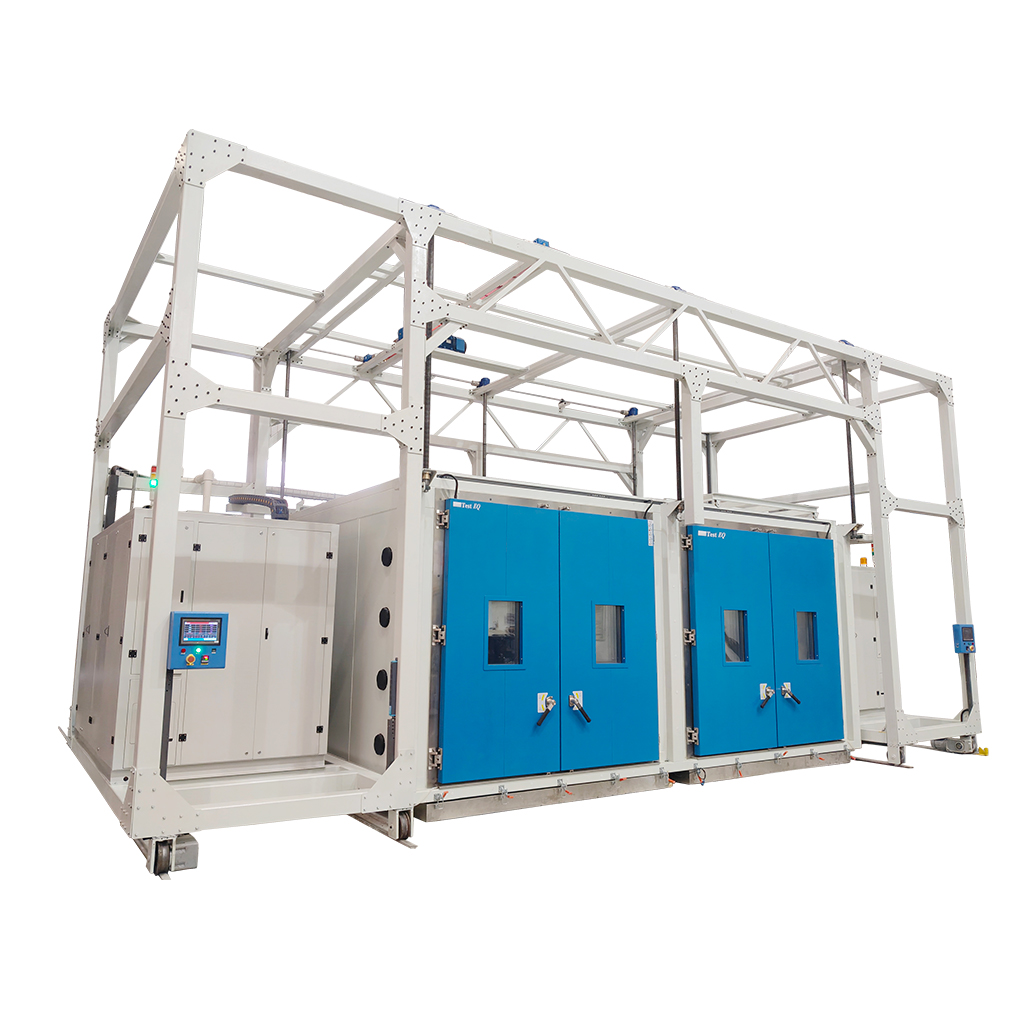
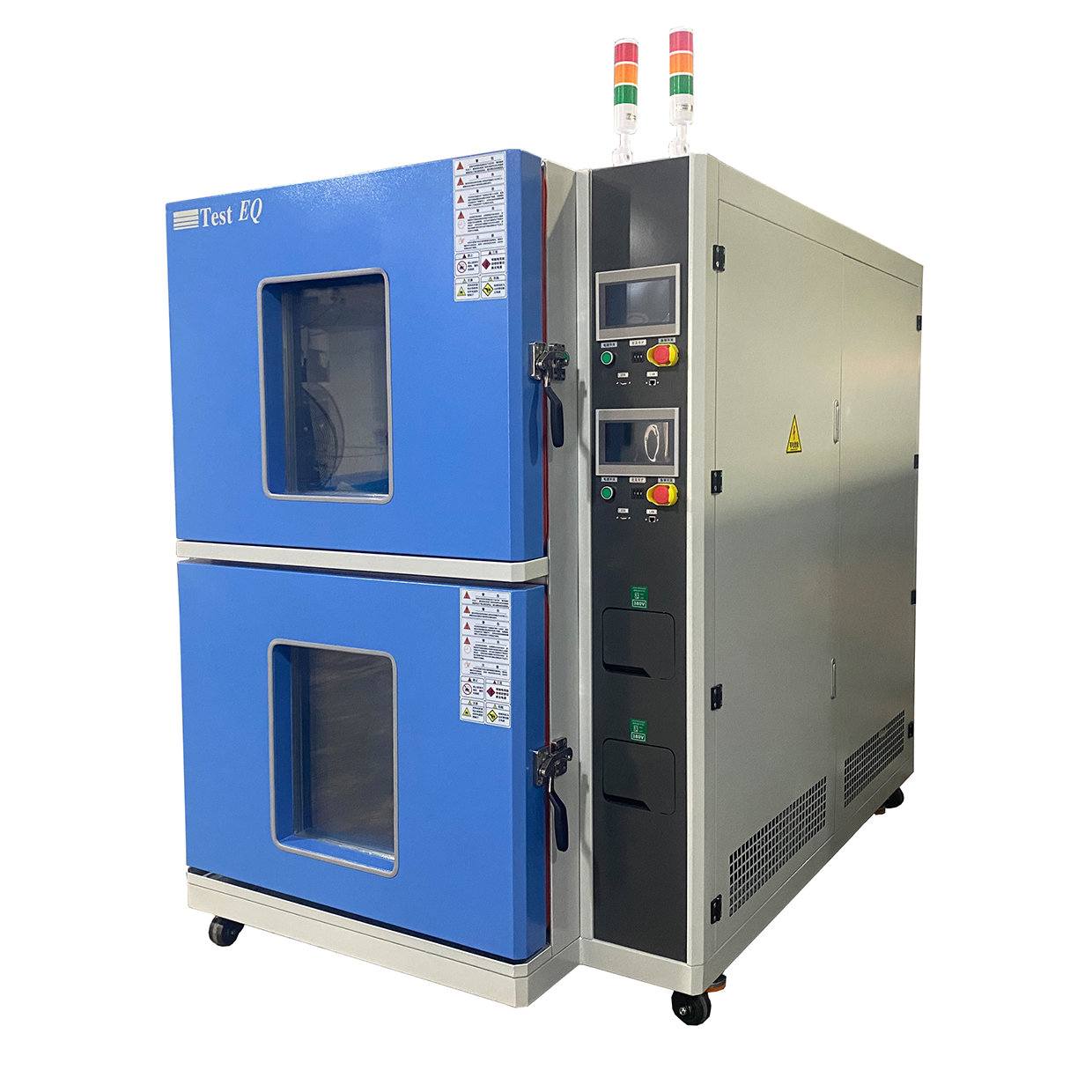
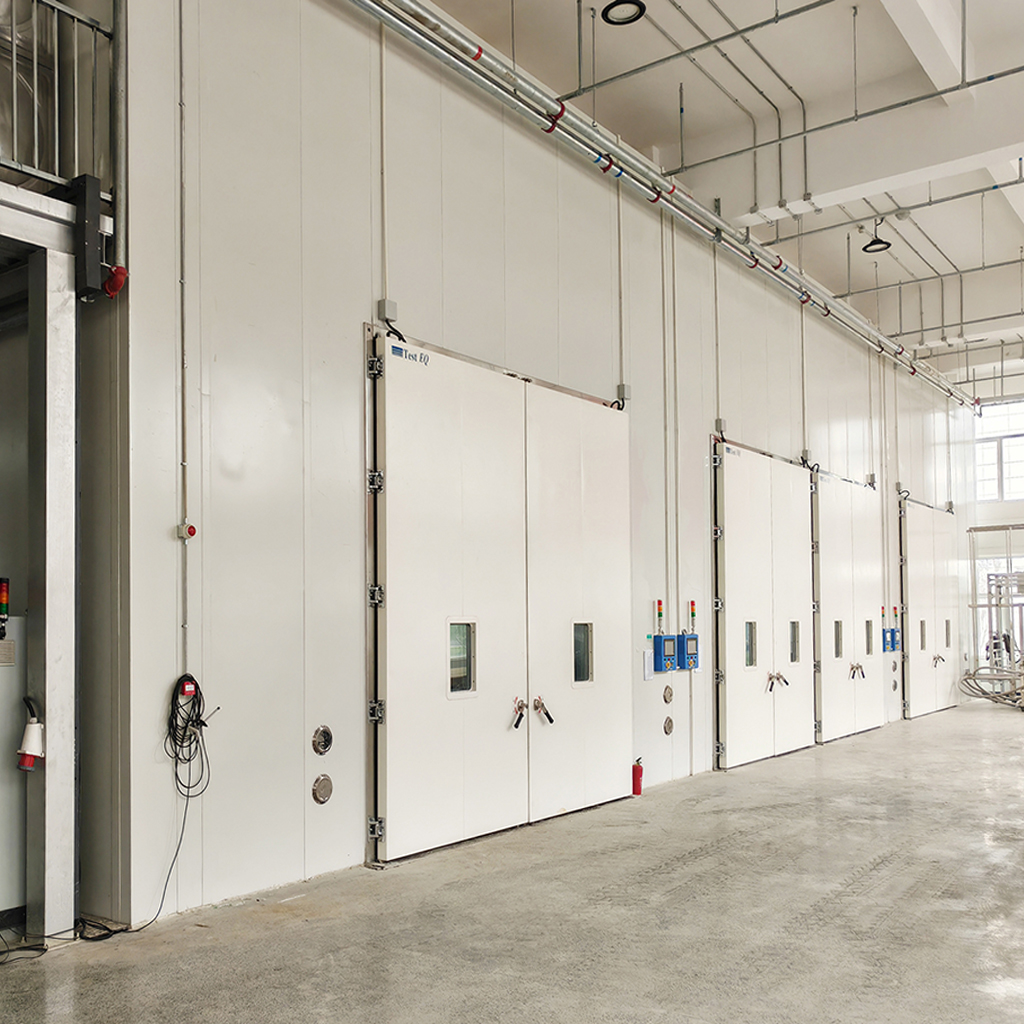
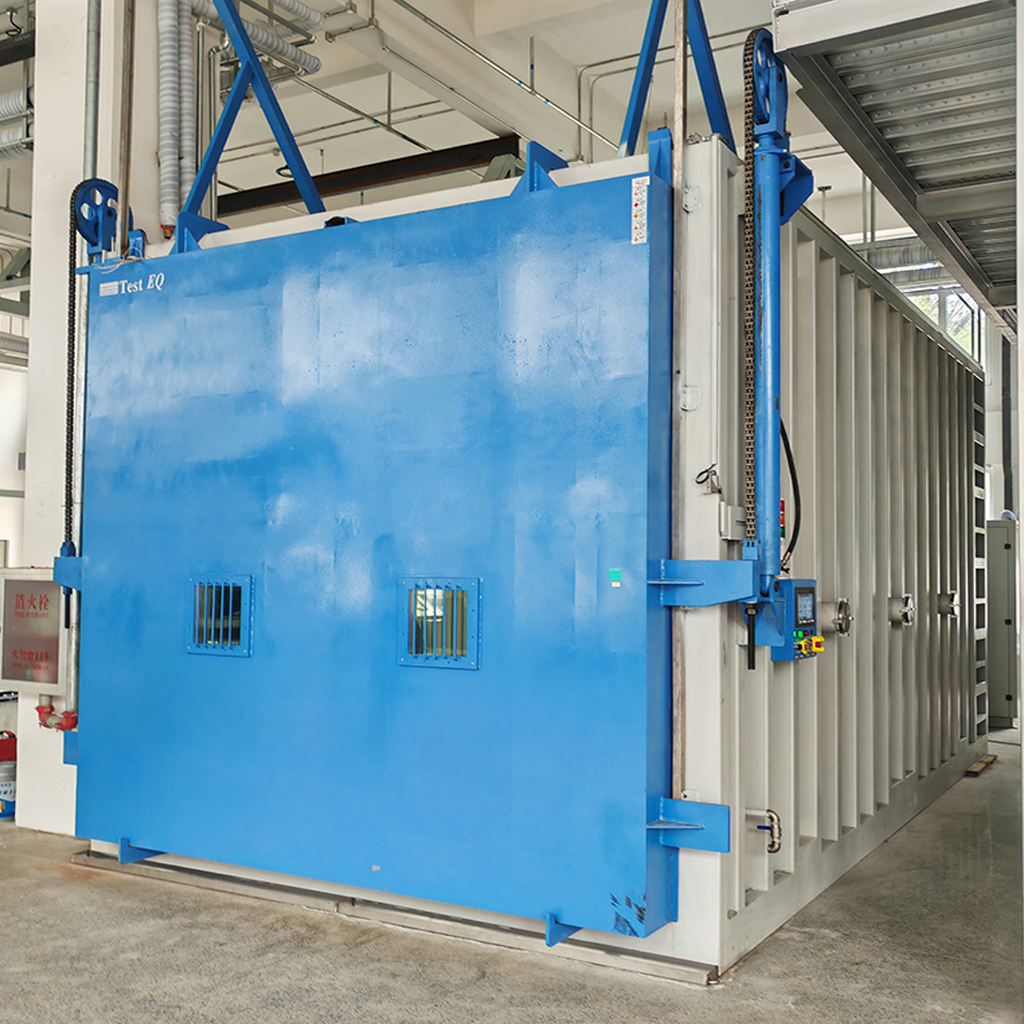
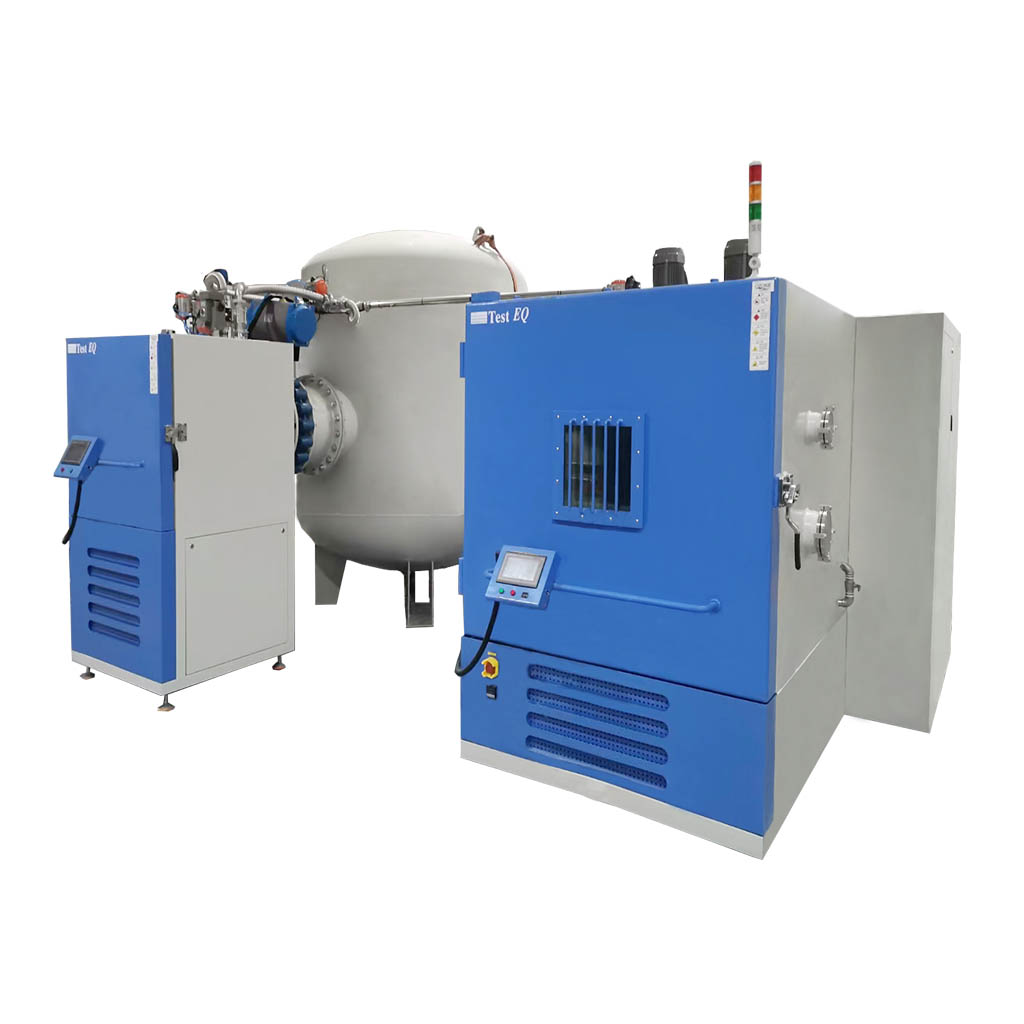
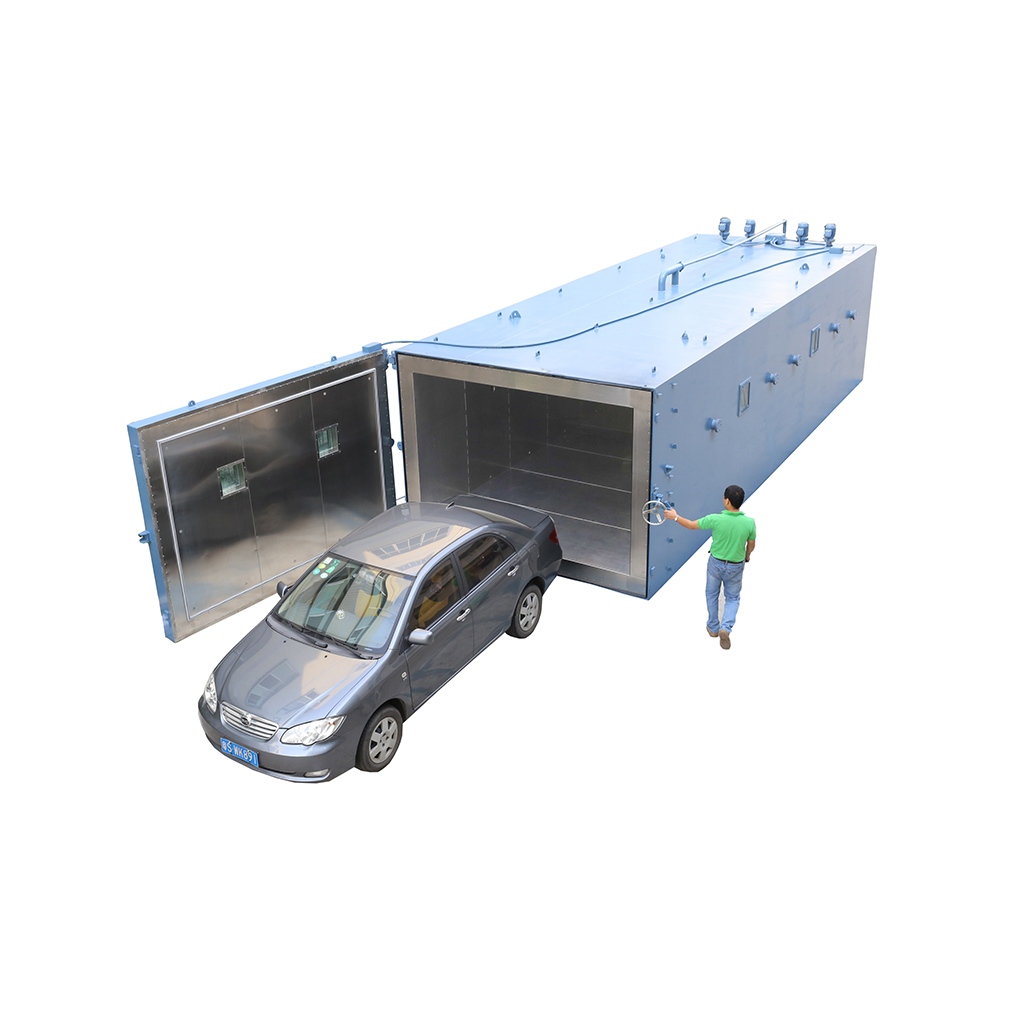
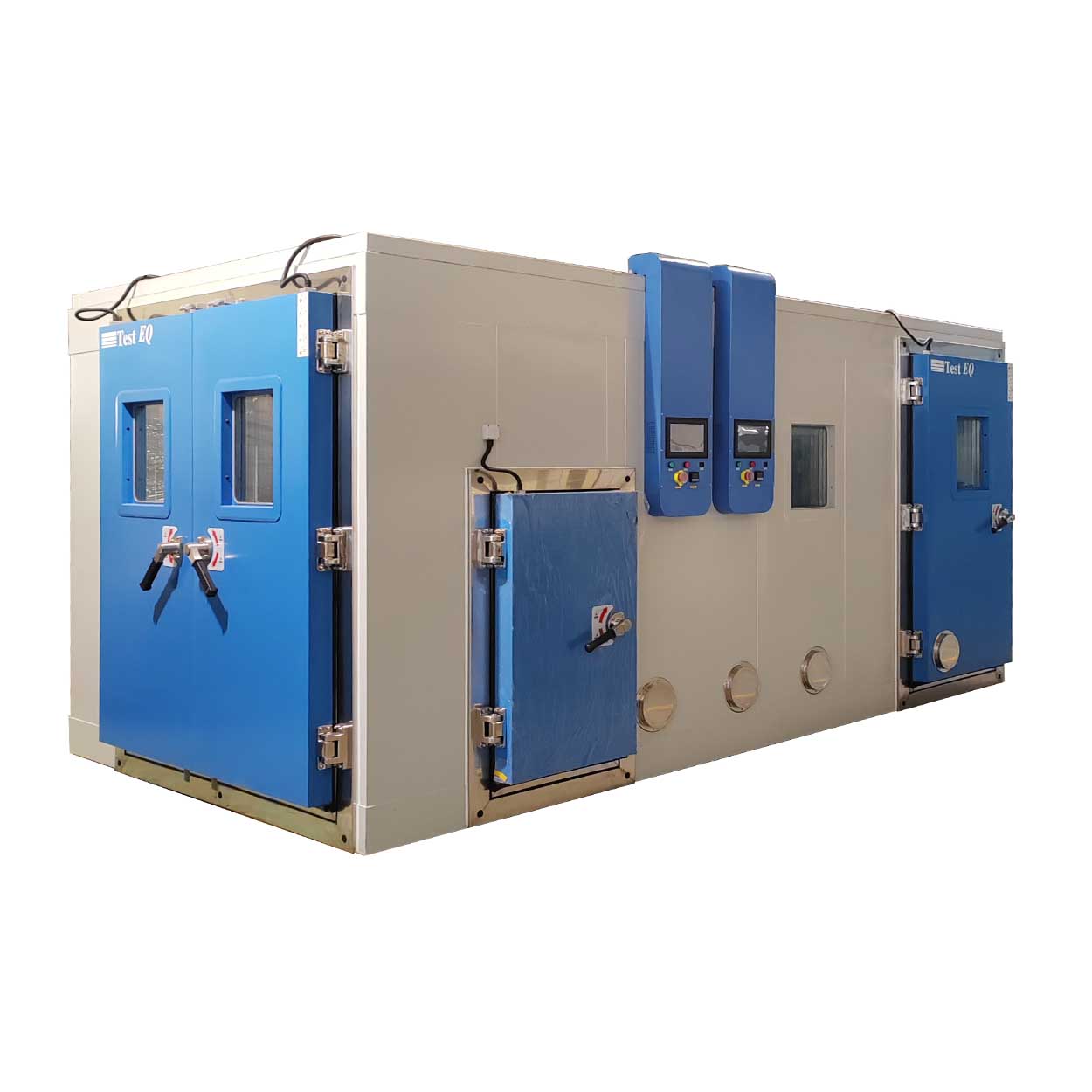
TVAC Chamber for Space Simulation & Custom Aerospace Testing
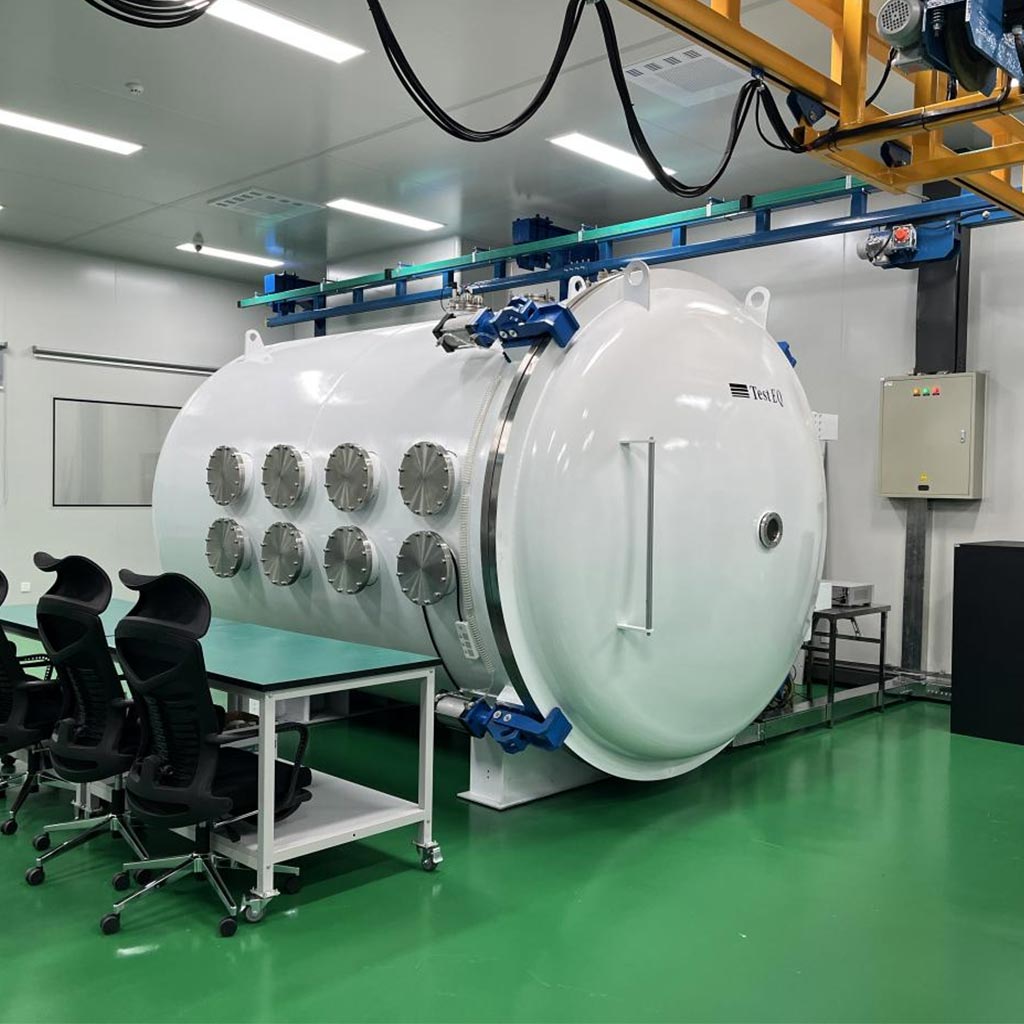
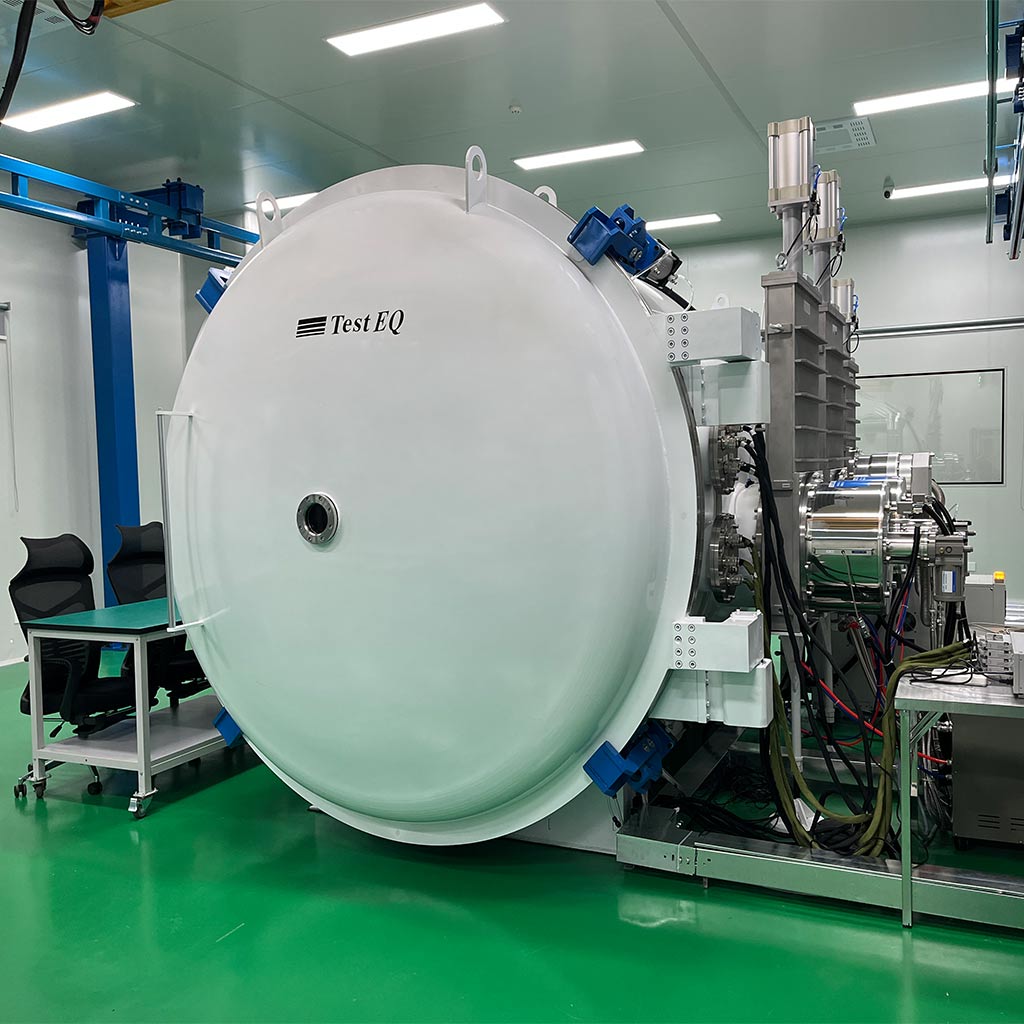
TestEQ TVAC Chambers are engineered environmental simulation systems for reproducing controlled vacuum and thermal conditions required by aerospace, satellite, spacecraft, optical, electronic and research applications.
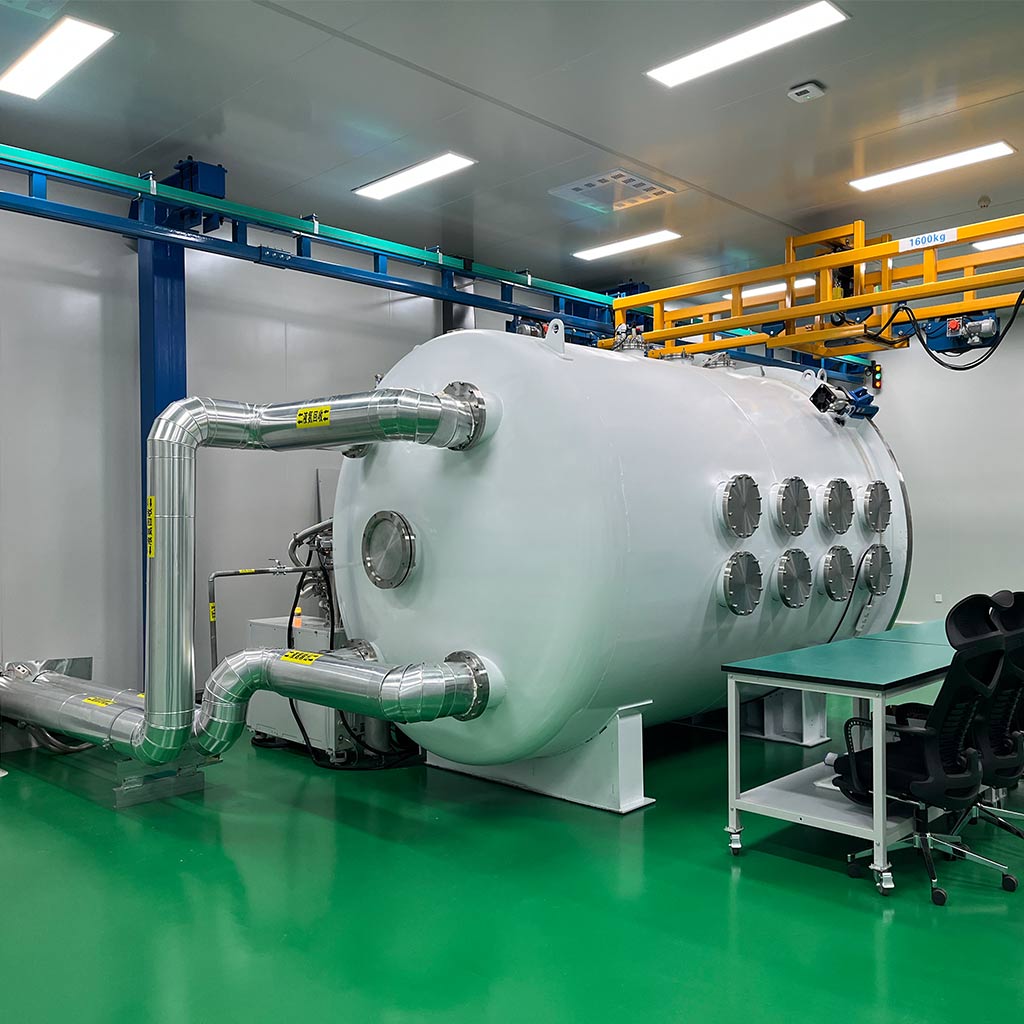
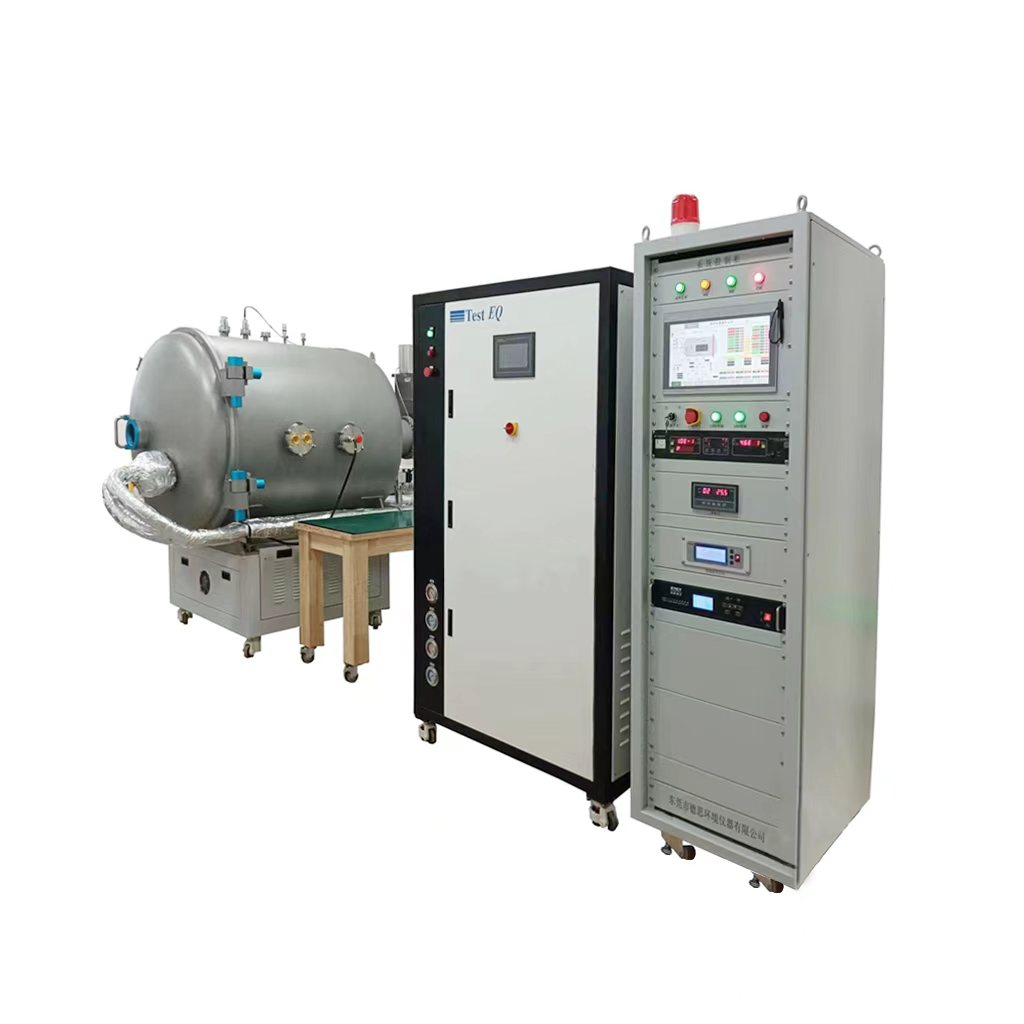
A TVAC chamber integrates a vacuum vessel with thermal control hardware, vacuum pumping equipment, thermal shrouds or cold plates, heating and cooling systems, instrumentation and automated control.
TestEQ develops standard and custom TVAC chamber systems according to chamber volume, payload dimensions, required vacuum level, temperature range, thermal load, cooling technology, fixture configuration and customer qualification requirements.
TVAC Chamber Engineering Overview
A TVAC chamber is more than a vacuum vessel. Reliable thermal-vacuum performance depends on the coordinated design of several subsystems.
A typical TestEQ TVAC system can include:
The configuration is selected according to the application rather than using a single fixed architecture for every project.
What Is a TVAC Chamber?
A TVAC chamber (Thermal Vacuum Chamber) is an environmental test system designed to simulate the extreme thermal and vacuum conditions experienced by spacecraft, satellites, aerospace components, and other high-reliability products during operation in space environments.
By controlling temperature, pressure, and vacuum levels inside the chamber, a TVAC system reproduces the conditions of space, including thermal cycling, vacuum exposure, and outgassing environments. It allows engineers to verify product performance, reliability, and durability before deployment.
TVAC chambers are widely used for spacecraft qualification testing, satellite components, aerospace electronics, optical systems, and advanced materials that require validation under extreme space-like conditions.
Custom TVAC Chamber Design
TestEQ designs custom TVAC chambers for applications where standard environmental chambers cannot provide the required combination of vacuum, thermal performance, chamber dimensions and payload integration.
Customization can include:
Chamber Dimensions
The chamber diameter, length, height and internal volume can be engineered around the payload.
Vacuum Architecture
The pumping system can be selected according to:
Chamber volume
Required ultimate vacuum
Pump-down requirements
Test duration
Payload outgassing
Cleanliness requirements
Thermal Shroud
Thermal shrouds provide controlled radiative thermal conditions around the payload.
Depending on the application, the shroud can be designed for different thermal zones and temperature requirements.
Cold Plate
A cold plate can provide direct thermal control for selected payloads and is particularly useful for applications requiring controlled conductive heat transfer.
Cooling System
Available cooling approaches can include:
The appropriate technology depends on temperature range, thermal load, chamber volume and operating requirements.
Payload Fixture
Custom fixtures can accommodate:
Satellite subsystems
Aerospace electronics
Optical instruments
Sensors
Materials
Batteries
Mechanical assemblies
Fixture design can include mounting interfaces, cable routing, thermal interfaces and electrical connections.
TVAC Chamber Configuration Options
| System Component | Standard Configuration | Custom Configuration |
|---|
| Vacuum Vessel | ✓ | ✓ |
| Chamber Volume | ✓ | ✓ |
| Vacuum Pumping System | ✓ | ✓ |
| Thermal Shroud | ✓ | ✓ |
| Cold Plate | Optional | ✓ |
| Heating System | ✓ | ✓ |
| Cooling System | ✓ | ✓ |
| Payload Fixture | Optional | ✓ |
| Electrical Feedthrough | Optional | ✓ |
| Residual Gas Analyzer (RGA) | Optional | ✓ |
| Data Acquisition System | Optional | ✓ |
| Thermal Balance | Optional | ✓ |
| Solar Simulation | Optional | ✓ |
| Automated Control | ✓ | ✓ |
TVAC Vacuum System
The vacuum system is one of the most important parts of a TVAC chamber.
The pumping architecture can be configured according to the required vacuum level, chamber volume and payload characteristics.
Possible vacuum technologies include:
Mechanical Vacuum Pump
Used as the initial pumping stage and for applications where moderate vacuum levels are sufficient.
Roots Pump
Used to increase pumping speed and improve pump-down performance for larger chamber volumes.
Molecular Pump
Suitable for applications requiring high-vacuum performance.
Cryogenic Pumping
Can be considered for applications requiring high vacuum and specific contamination-control characteristics.
The final pumping configuration should be determined according to the required pressure, chamber volume, payload outgassing and test procedure.
TVAC Thermal Control System
Thermal control determines how accurately the chamber can reproduce the required hot and cold conditions.
TestEQ TVAC configurations can integrate:
The thermal architecture can be designed according to the payload's heat dissipation, required temperature range and thermal balance requirements.
TVAC Chamber for Space Simulation
TVAC chambers are widely used to simulate important environmental conditions encountered by space hardware.
Applications include:
Satellite Subsystems
Testing communication systems, avionics, power electronics, sensors and other satellite subsystems.
Spacecraft Components
Evaluating structural, electrical and thermal performance of spacecraft hardware.
Aerospace Electronics
Testing electronic assemblies under combined vacuum and extreme thermal conditions.
Optical Payloads
Evaluating imaging systems, optical sensors and precision instruments where thermal stability and vacuum compatibility are important.
Space Materials
Evaluating material behavior and vacuum compatibility.
Research and Development
Supporting aerospace laboratories, universities, government research organizations and industrial R&D programs.
TVAC Chamber for Thermal Balance Testing
Thermal balance testing is used to verify spacecraft thermal models and evaluate the thermal behavior of hardware under simulated space conditions.
A suitable TVAC configuration can incorporate:
The number of thermal zones, sensor channels and control parameters can be customized according to the spacecraft or payload architecture.
TVAC Chamber Instrumentation
A complete TVAC system may require more than temperature and pressure control.
Optional instrumentation includes:
Temperature sensors
Vacuum gauges
Pressure monitoring
Electrical feedthroughs
Data acquisition
RGA
Payload monitoring
Automated alarms
Remote monitoring
For complex aerospace programs, instrumentation should be defined together with the test article and qualification plan.
How to Select a Thermal Vacuum Chamber for Aerospace Testing
Selecting a thermal vacuum chamber requires engineers to evaluate several critical parameters, including vacuum level, temperature range, thermal uniformity, payload size, thermal cycling capability and test standards.
The key factors include:
1. Vacuum Performance
Aerospace thermal vacuum testing usually requires high vacuum environments to simulate orbital conditions. Engineers should evaluate ultimate pressure, leakage rate and pressure stability.
2. Temperature Capability
The chamber should reproduce extreme hot and cold conditions experienced during space missions, including thermal cycling between hot soak and cold soak periods.
3. Thermal Control Accuracy
Stable thermal control is essential for spacecraft components, satellite payloads and aerospace electronics qualification.
4. Payload Configuration
The chamber size, thermal shroud design and fixture integration should match the tested hardware, from electronic components to satellite subsystems.
How a TVAC Chamber Works
A TVAC chamber combines:
Vacuum Generation System
Creates low-pressure / high-vacuum environments using multi-stage pumping systems.
Thermal Shroud / Cold Plate
Controls radiative heating and cooling of the test article.
Thermal Cycling Control
Simulates orbital hot/cold transitions through programmable temperature profiles.
Unlike standard environmental chambers, heat transfer in vacuum occurs primarily through radiation and conduction rather than convection, making thermal-vacuum testing fundamentally different from ambient thermal testing.
Why TVAC Testing Is Critical
TVAC testing helps engineers identify failure modes that may not appear in ambient testing, including:
Vacuum-induced overheating
Material outgassing contamination
Seal leakage under vacuum
Thermal distortion of structures
Cold-soak / hot-soak electronic drift
Radiative heat imbalance in vacuum
Industry practitioners note that hardware can pass ambient thermal tests yet fail TVAC due to vacuum-specific thermal behavior and outgassing effects.
TVAC Chamber vs Standard Environmental Chamber:
| Feature | TVAC Chamber | Standard Temperature Chamber |
|---|
| Vacuum Capability | Yes | No |
| Space Simulation | Yes | No |
| Heat Transfer Mode | Radiation / Conduction | Convection |
| Outgassing Test | Yes | No |
| Aerospace Qualification | Required | Not Applicable |
How to Select a TVAC Chamber
When selecting a TVAC chamber, procurement and engineering teams should evaluate the complete system rather than focusing on temperature range alone.
Chamber Volume
The usable chamber volume should accommodate the payload, fixtures, thermal shroud and required clearance.
Vacuum Performance
Define ultimate vacuum, operating pressure, pressure stability and leak-rate requirements.
Thermal Range
Confirm hot and cold limits together with the actual thermal load.
Thermal Shroud
Determine whether single-zone or multi-zone thermal control is required.
Cooling Technology
Select mechanical refrigeration, GN₂, LN₂ or a combined architecture according to the application.
Payload Interface
Consider fixtures, electrical feedthroughs, optical windows, RF interfaces and cable routing.
Instrumentation
Determine the required sensors, vacuum gauges, RGA and data acquisition channels.
Future Expansion
For research laboratories and aerospace organizations, a modular configuration can provide greater flexibility for future test programs.
Why Choose TestEQ as Your TVAC Chamber Manufacturer?
TestEQ provides environmental simulation equipment and custom chamber engineering for demanding reliability and aerospace applications.
Our TVAC engineering approach focuses on:
Application-Based Design
The chamber is configured according to the actual payload, thermal load and vacuum requirements.
Custom Manufacturing
Chamber dimensions, fixtures, ports, thermal systems and instrumentation can be customized.
Integrated System Engineering
Vacuum, thermal control, instrumentation and automation can be integrated into one complete system.
Aerospace Applications
Our equipment can be configured for satellite, spacecraft, aerospace electronics, optical and research applications.
Project-Specific Configuration
Customers can specify:
Chamber dimensions
Vacuum level
Temperature range
Thermal load
Cooling technology
Thermal shroud
Payload fixture
Instrumentation
RGA
Data acquisition
Automation
Thermal Vacuum Testing Standards and Requirements
Thermal vacuum testing is commonly performed according to aerospace qualification standards, including:
- NASA thermal vacuum testing requirements
- ECSS-Q-ST-70-02 spacecraft thermal vacuum testing
- MIL-STD-810 low pressure and temperature testing
- ASTM E595 outgassing testing
These standards define requirements for vacuum level, thermal cycling, contamination control and spacecraft reliability validation.
TVAC Chamber FAQ
1. What Does TVAC Stand For?
TVAC stands for Thermal Vacuum. A TVAC chamber is a specialized environmental simulation system that combines controlled vacuum and thermal conditions to reproduce important aspects of the space environment.
2. What Is a TVAC Chamber Used For?
A TVAC chamber is used to evaluate aerospace, satellite, spacecraft, optical, electronic, and other high-reliability products under controlled vacuum and temperature conditions.
Typical applications include:
Satellite subsystem testing
Spacecraft component testing
Aerospace electronics testing
Thermal balance testing
Vacuum compatibility testing
Optical instrument testing
Material evaluation
Research and development
3. What Vacuum Level Can a TVAC Chamber Achieve?
The required vacuum level depends on the chamber configuration, payload, test procedure, and qualification requirements. TestEQ TVAC systems can be engineered for high-vacuum performance down to approximately 1×10⁻⁷ mbar, depending on chamber size, pumping architecture, payload outgassing, and test conditions.
The final vacuum specification should be defined according to the applicable aerospace or customer-specific test requirements.
4. How Does a TVAC Chamber Control Temperature in a Vacuum Environment?
A TVAC chamber primarily uses thermal shrouds, cold plates, heating systems, cooling systems, and controlled radiation to establish the required thermal environment.
Because convection is greatly reduced under vacuum, thermal design focuses on radiative and conductive heat transfer. Depending on the application, TestEQ can configure mechanical refrigeration, gaseous nitrogen, liquid nitrogen, thermal shrouds, and cold plates to meet specific thermal requirements.
5. Can a TVAC Chamber Be Customized?
Yes. TestEQ provides customized TVAC chamber configurations according to payload dimensions, thermal load, vacuum requirements, test profile, and qualification standards.
Customization can include:
Chamber volume and dimensions
Vacuum pumping system
Thermal shroud
Cold plate
Heating and cooling systems
Payload fixtures
Electrical feedthroughs
Optical windows
RGA integration
Data acquisition
Automated control
Thermal balance configuration
6. What Cooling Systems Are Available for a TVAC Chamber?
The cooling system depends on the required temperature range, chamber volume, payload thermal load, and test duration.
Available configurations may include:
Mechanical refrigeration
Gaseous nitrogen (GN₂)
Liquid nitrogen (LN₂)
Combined cooling systems
TestEQ can select and integrate the appropriate cooling architecture according to the project requirements.
7. Can a TVAC Chamber Perform Thermal Balance Testing?
Yes. A TVAC chamber can be configured for thermal balance testing using thermal shrouds, multi-zone temperature control, cold plates, temperature sensors, data acquisition, and programmable thermal profiles.
Thermal balance configurations can be customized according to spacecraft size, thermal zones, payload interfaces, and the requirements of the qualification program.
8. Can a TVAC Chamber Include an RGA System?
Yes. A Residual Gas Analyzer (RGA) can be integrated into a TVAC system when vacuum composition, contamination, or outgassing-related monitoring is required.
RGA integration can help engineers monitor residual gas species during vacuum testing and support contamination-control requirements for sensitive aerospace and optical applications.
9. What Should I Consider When Selecting a TVAC Chamber?
When selecting a TVAC chamber, engineers and procurement teams should evaluate the complete system rather than temperature range alone.
Key considerations include:
Chamber volume and payload dimensions
Required vacuum level
Temperature range
Thermal load
Thermal shroud configuration
Cooling technology
Thermal cycling requirements
Thermal balance requirements
Payload fixture design
Electrical and instrumentation interfaces
RGA requirements
Data acquisition
Applicable qualification standards
Future testing requirements
A properly configured TVAC system should be designed around the actual payload and test program.
10. Does TestEQ Manufacture Custom TVAC Chambers?
Yes. TestEQ designs and manufactures custom TVAC chamber systems for aerospace, satellite, spacecraft, electronics, optical, research, and other high-reliability applications.
Depending on the project, TestEQ can integrate the vacuum vessel, pumping system, thermal shroud, cooling and heating systems, payload fixtures, instrumentation, RGA, data acquisition, and automated control into a complete TVAC testing solution.
For a custom quotation, provide the payload dimensions, payload weight, required vacuum level, temperature range, thermal load, test profile, and applicable standard.
Internal Linking Module
Recommended Equipment
Explore thermal vacuum testing solutions for spacecraft, satellite systems and aerospace hardware, including test conditions, qualification requirements and reliability validation.
Simulates low-pressure and high-altitude environments for aerospace, aviation, defense electronics and battery testing. Ideal for evaluating product performance under rapid decompression and altitude stress conditions.
Related Standards
Explore ECSS-E-ST-10-03C Rev.1 for space hardware testing, including qualification, acceptance, protoflight, environmental and thermal vacuum test requirements.
Learn how ECSS qualification requirements define thermal vacuum testing, thermal cycling, outgassing verification, and environmental simulation procedures for spacecraft and satellite systems.
Review thermal vacuum testing standards and qualification requirements used for spacecraft, satellite and aerospace environmental testing.
Technical Resources
A complete guide covering TVAC chamber principles, vacuum generation systems, thermal shrouds, temperature control methods and common aerospace testing applications.
Understand the differences between thermal vacuum testing and conventional environmental chamber testing, including heat transfer mechanisms, outgassing effects, and qualification requirements. TVAC testing is critical because vacuum-specific thermal behavior can reveal failure modes not seen in ambient testing.