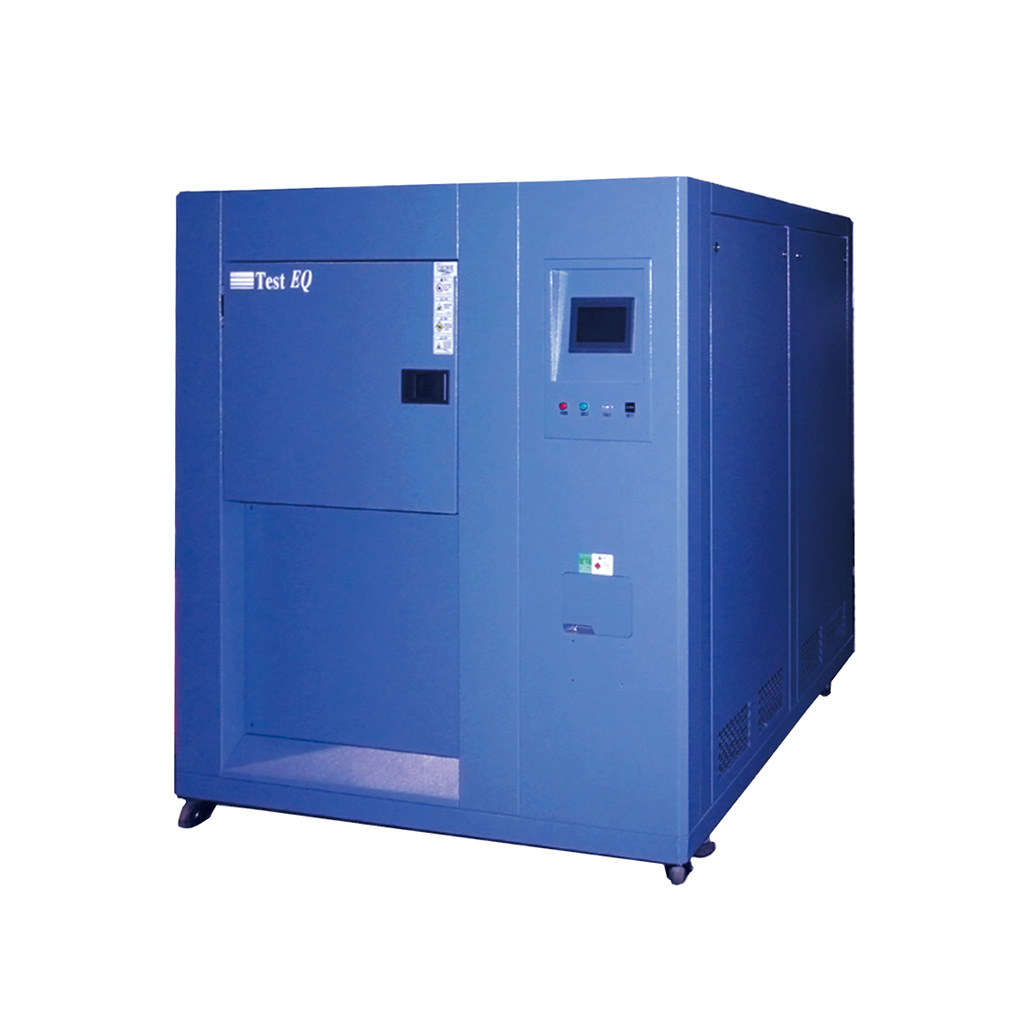
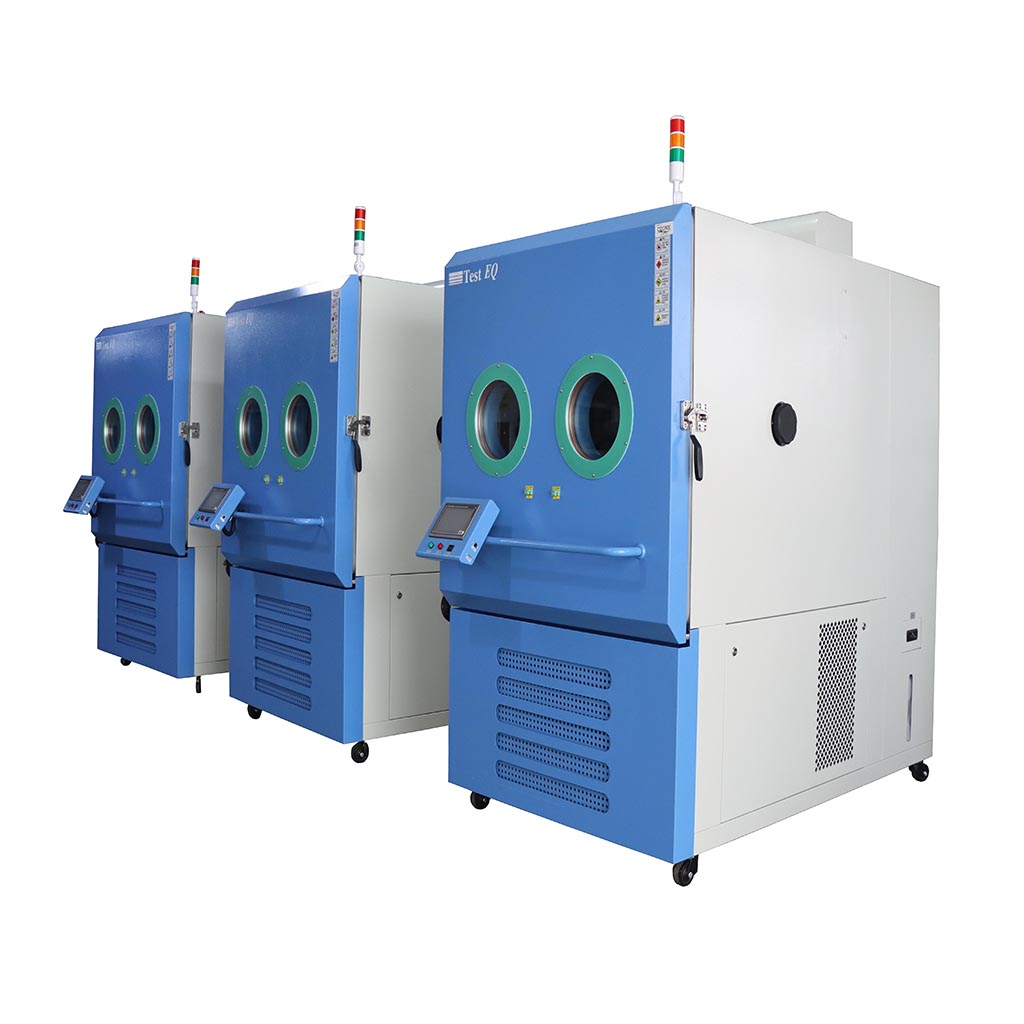
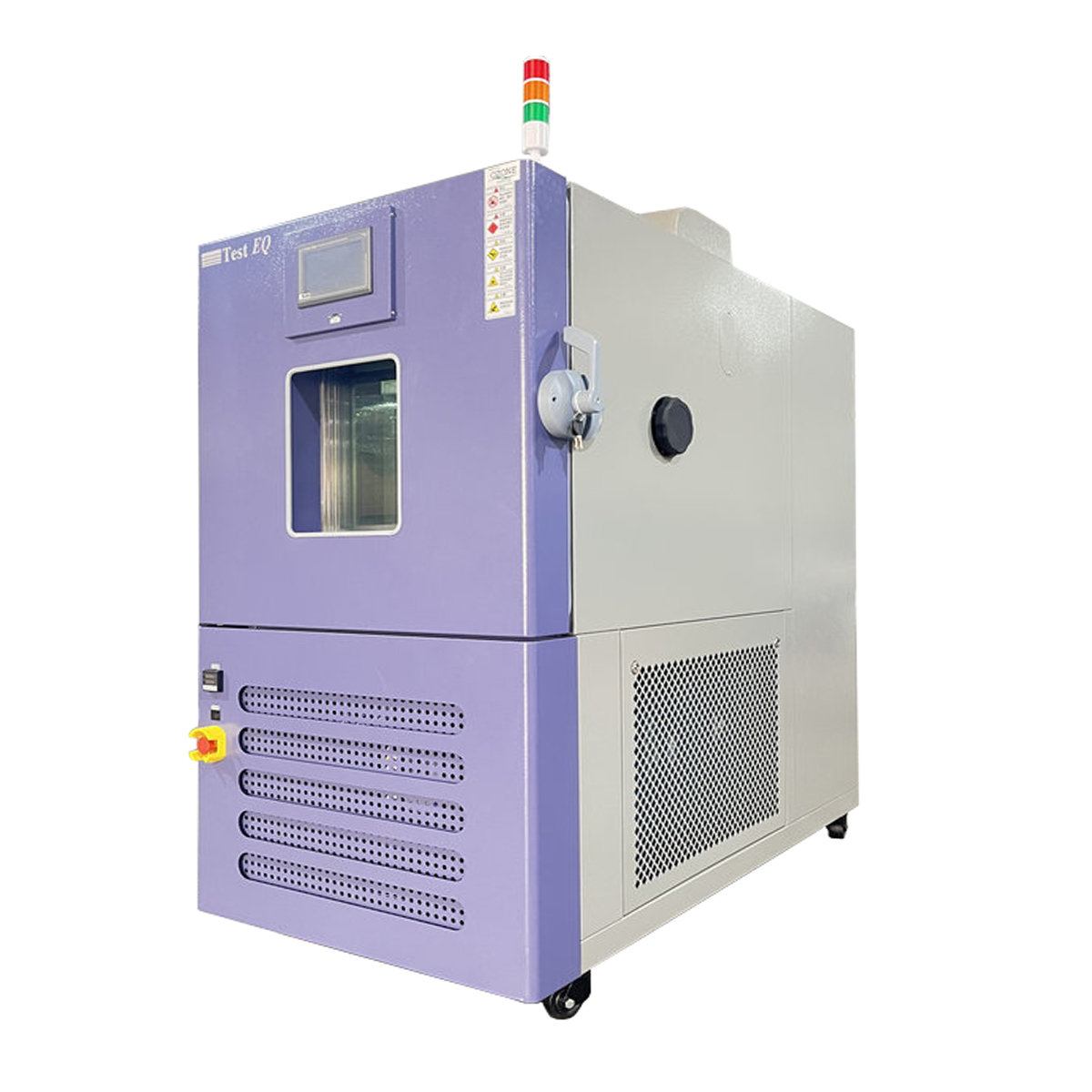
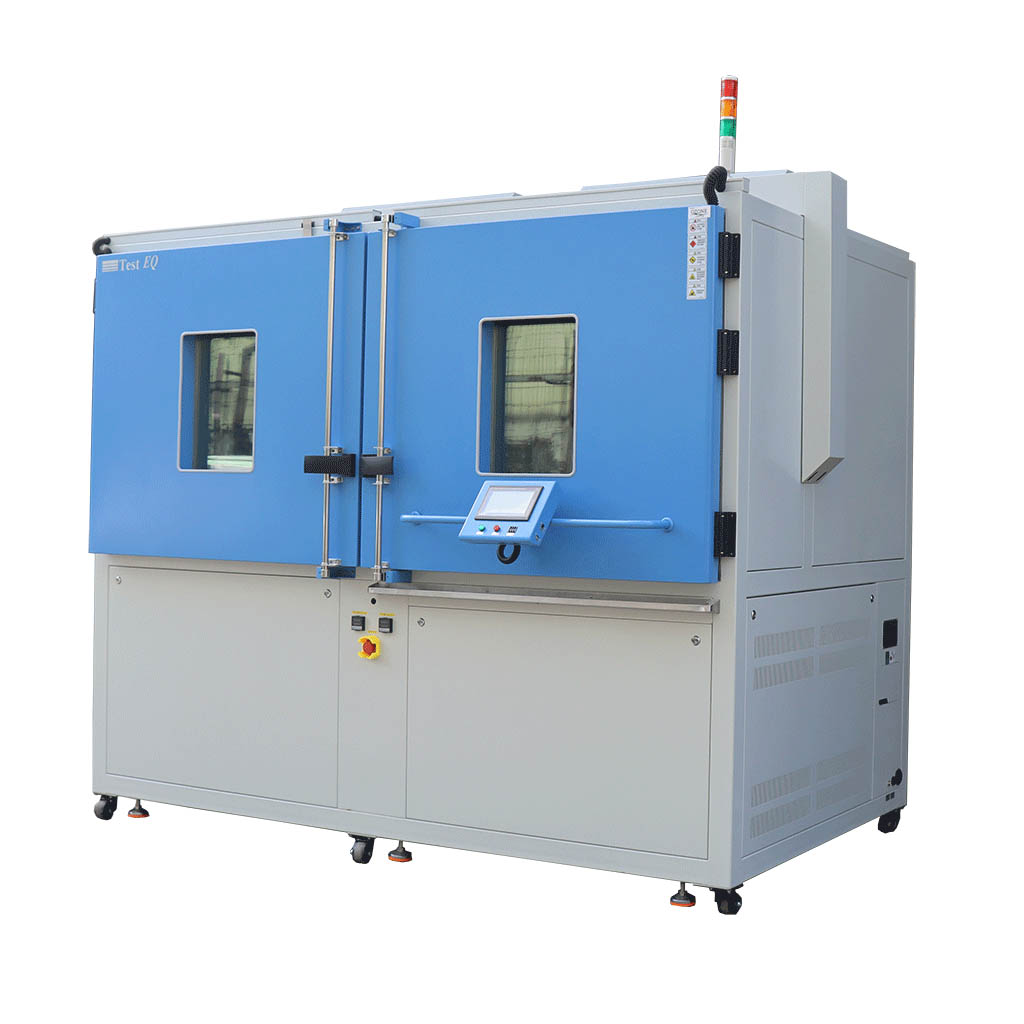
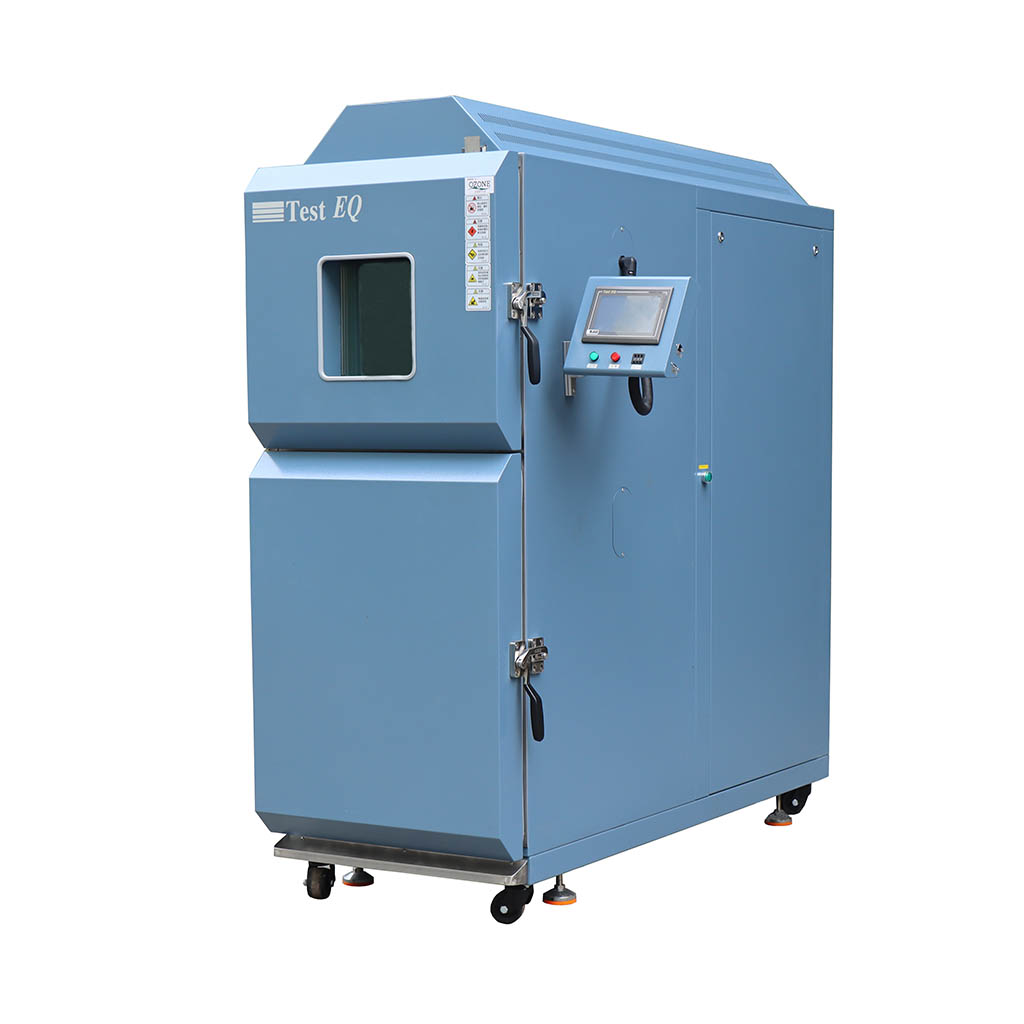
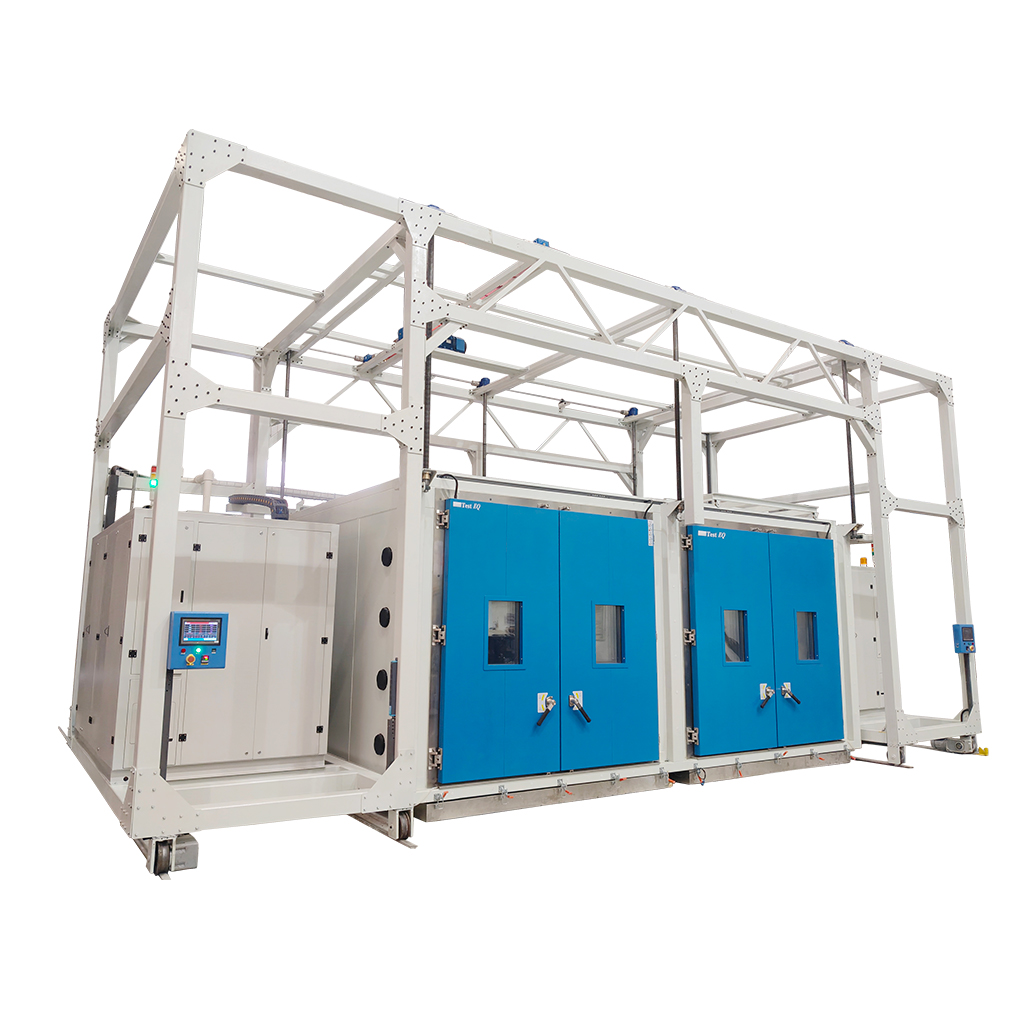
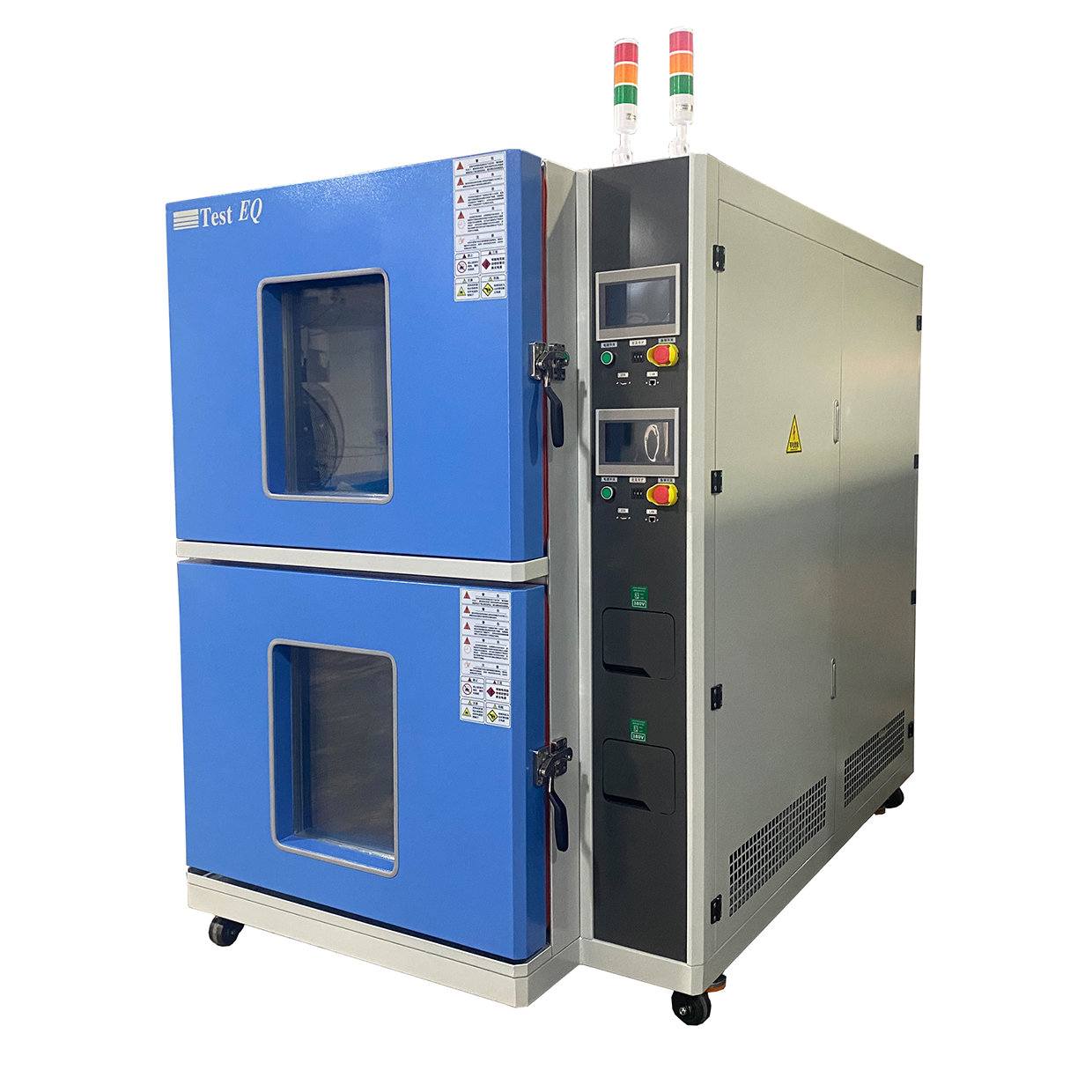
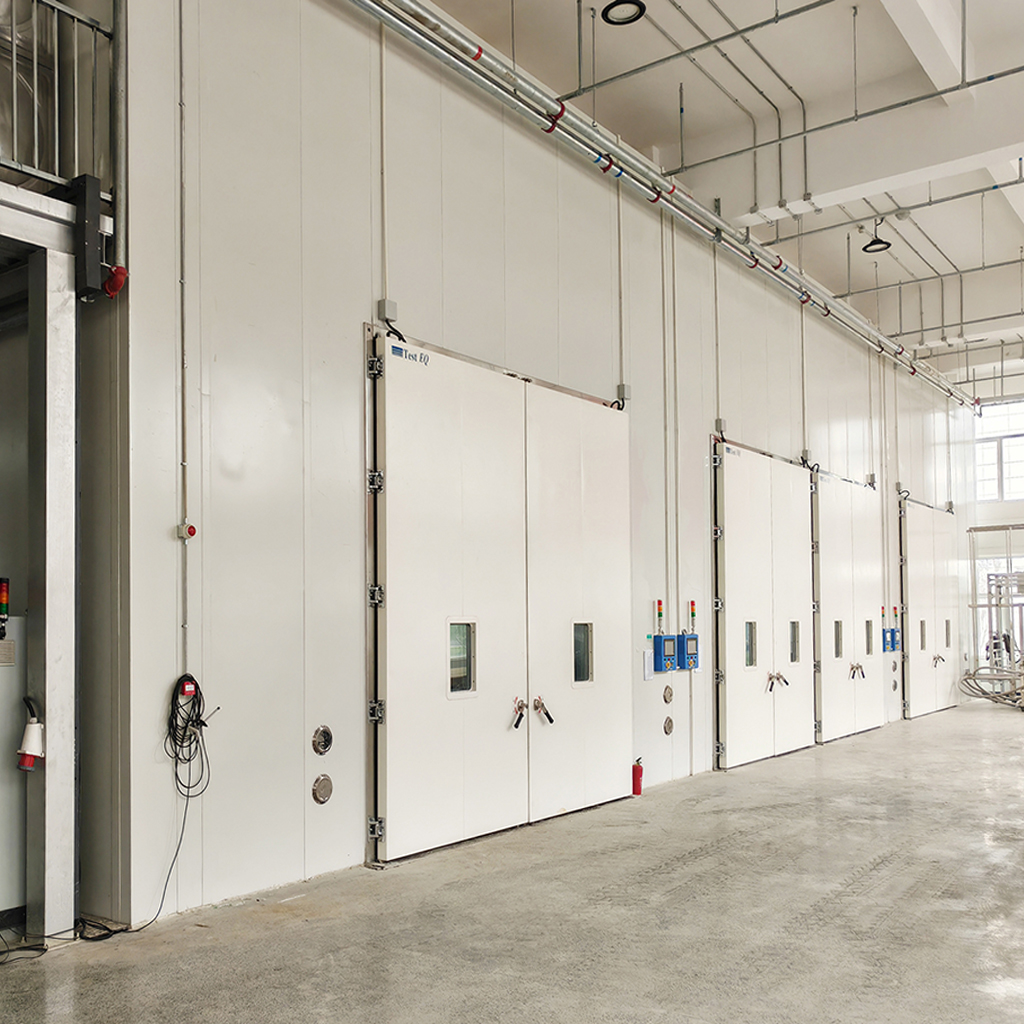
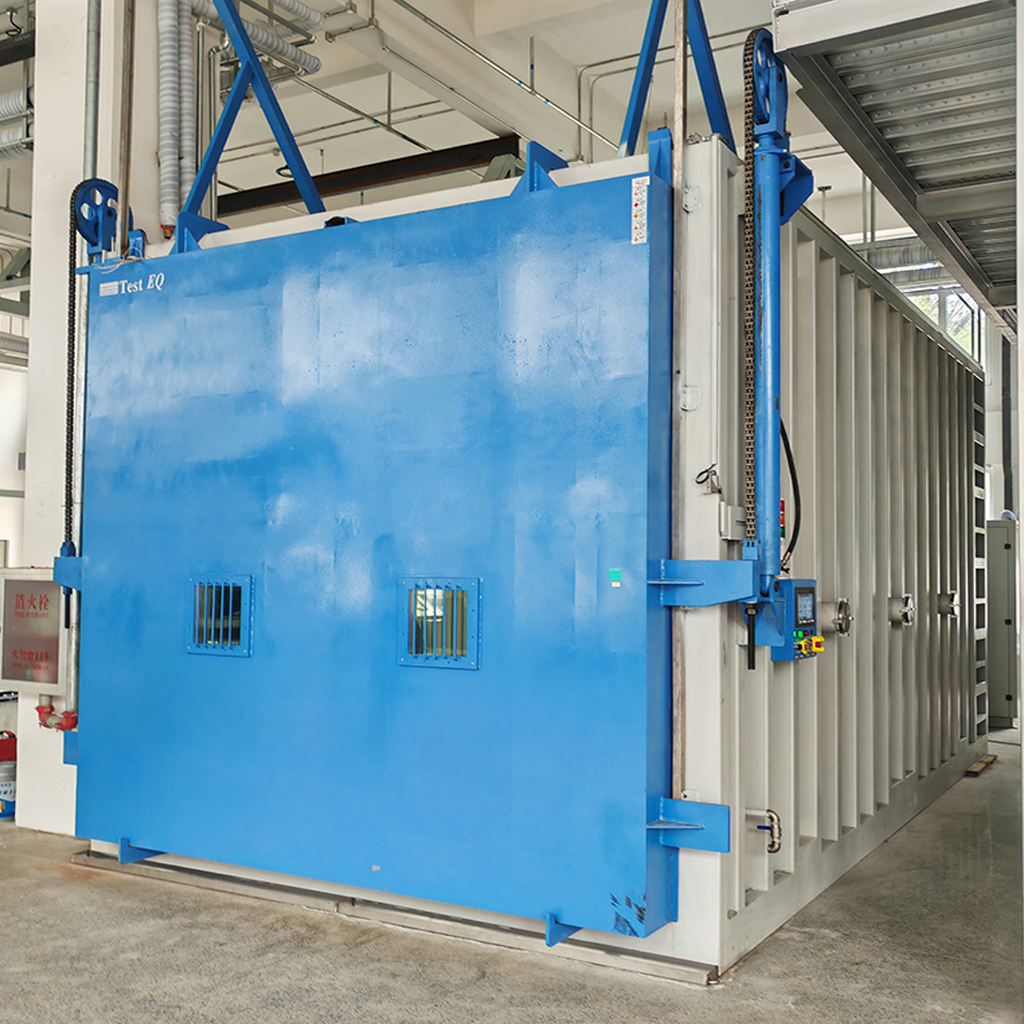
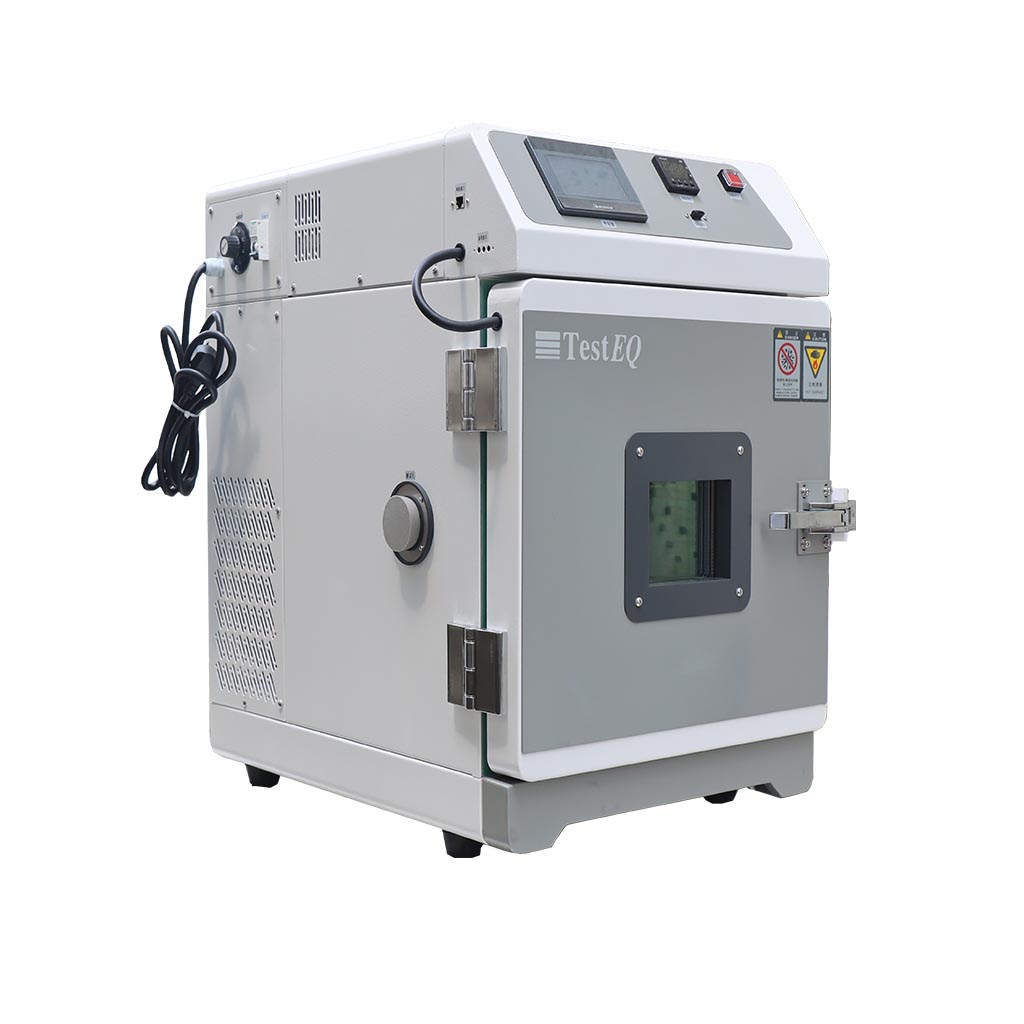
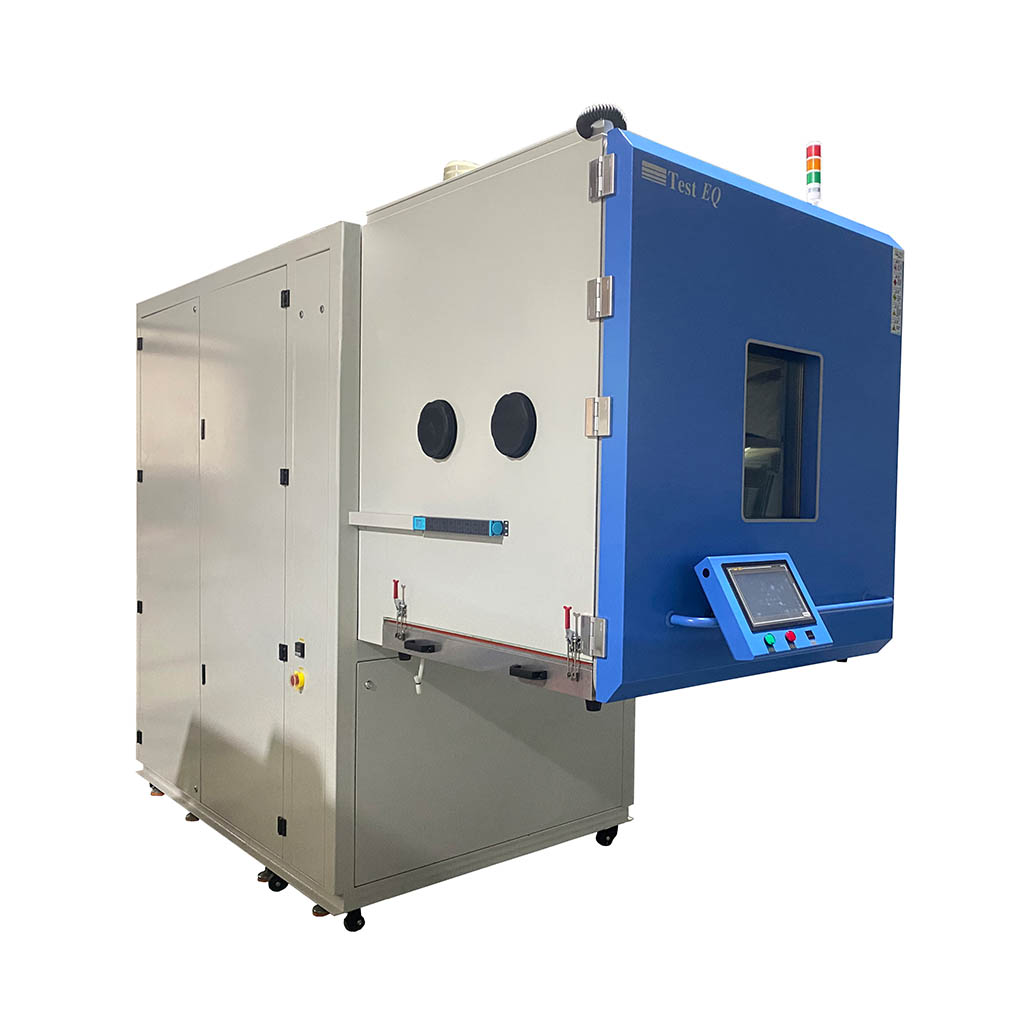
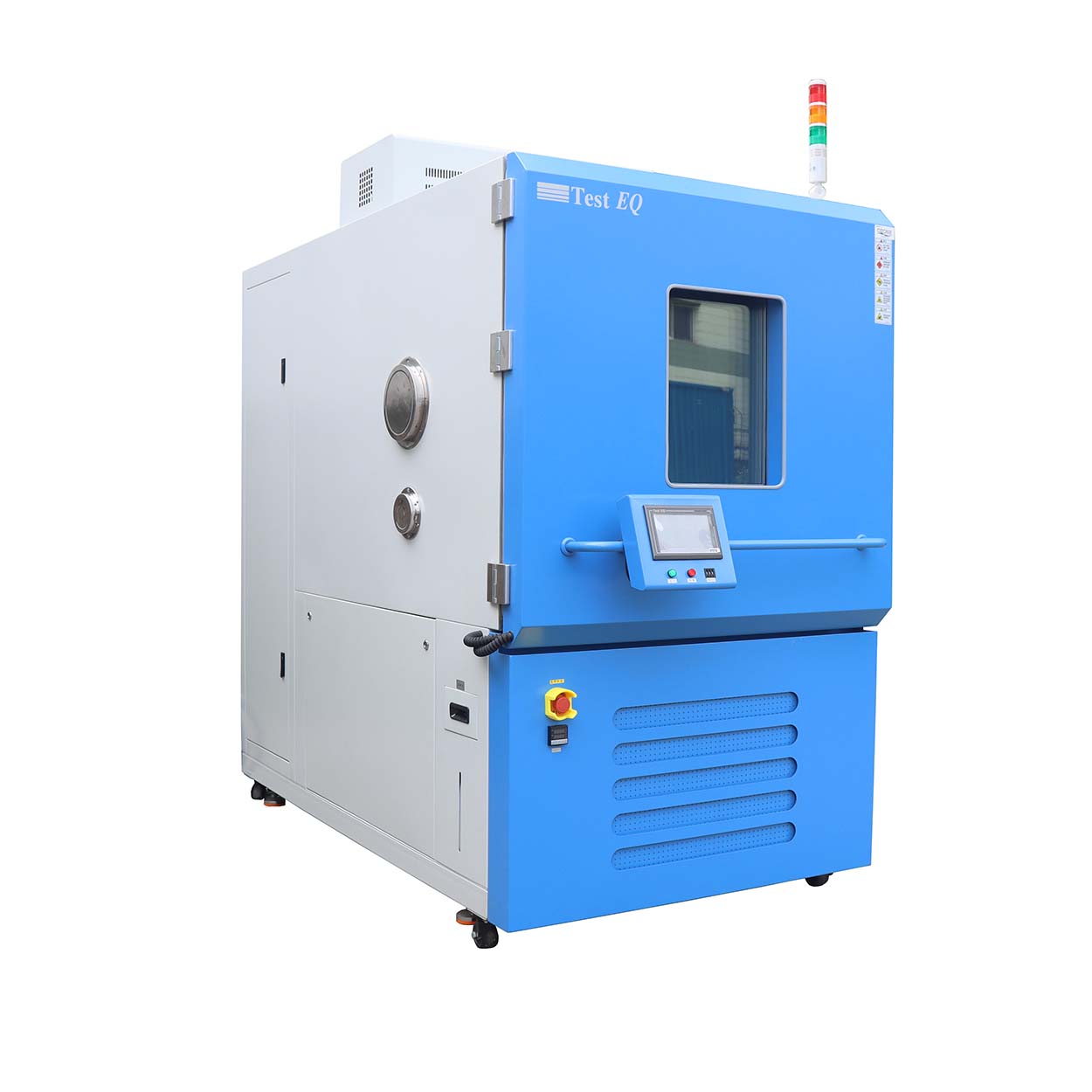
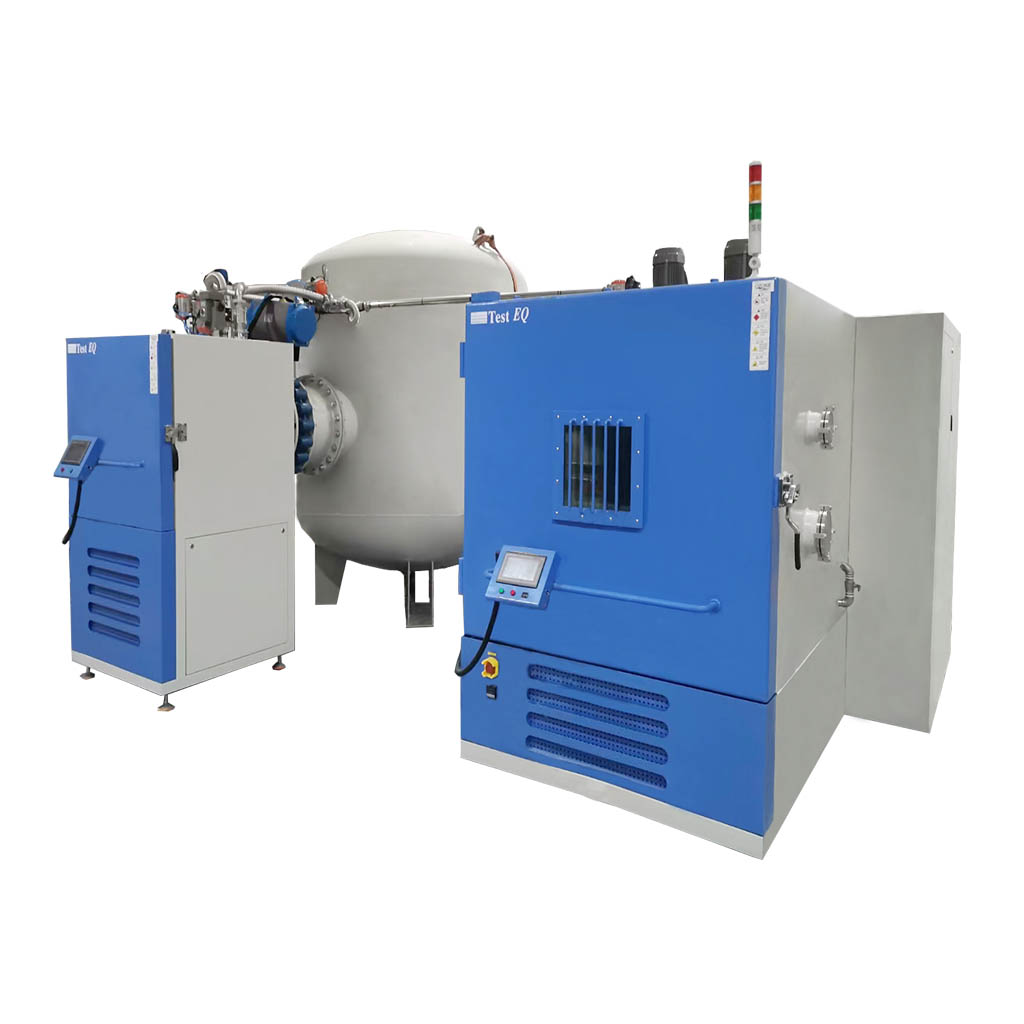
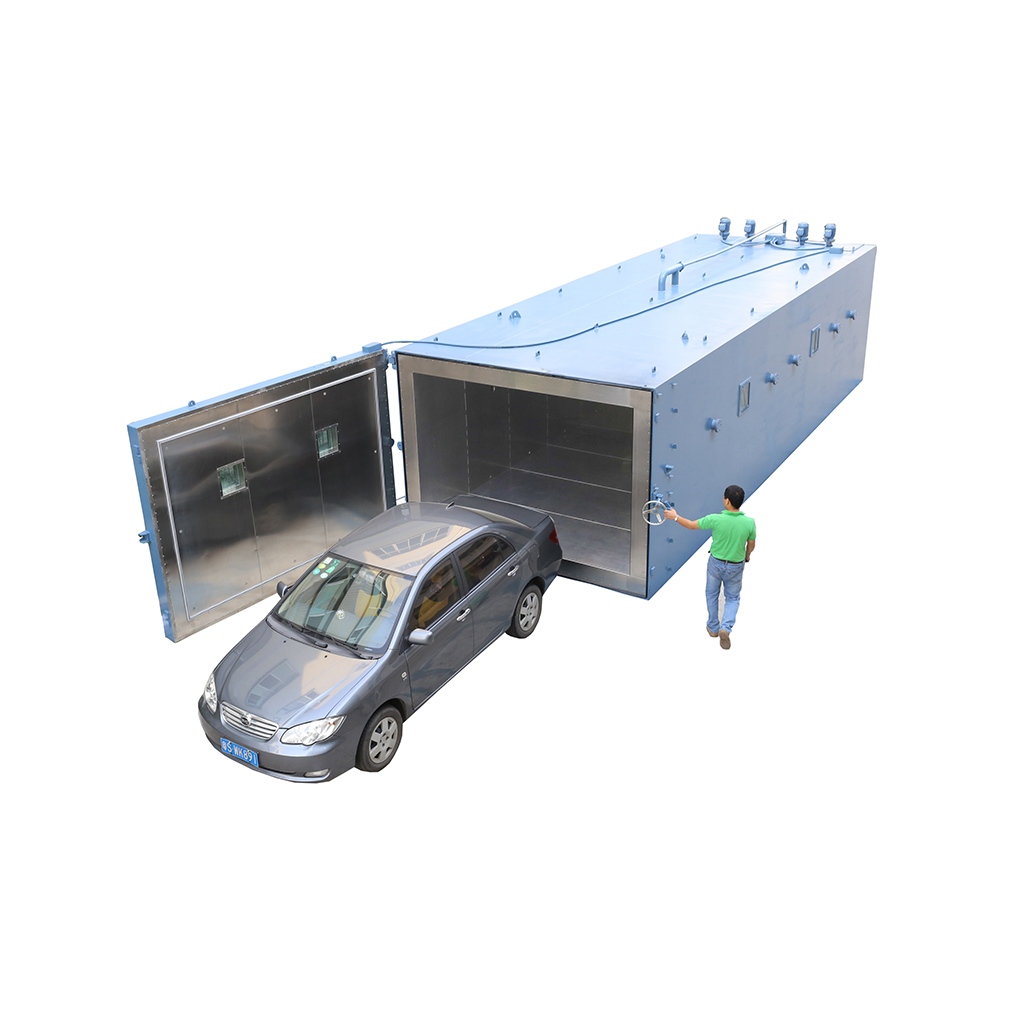
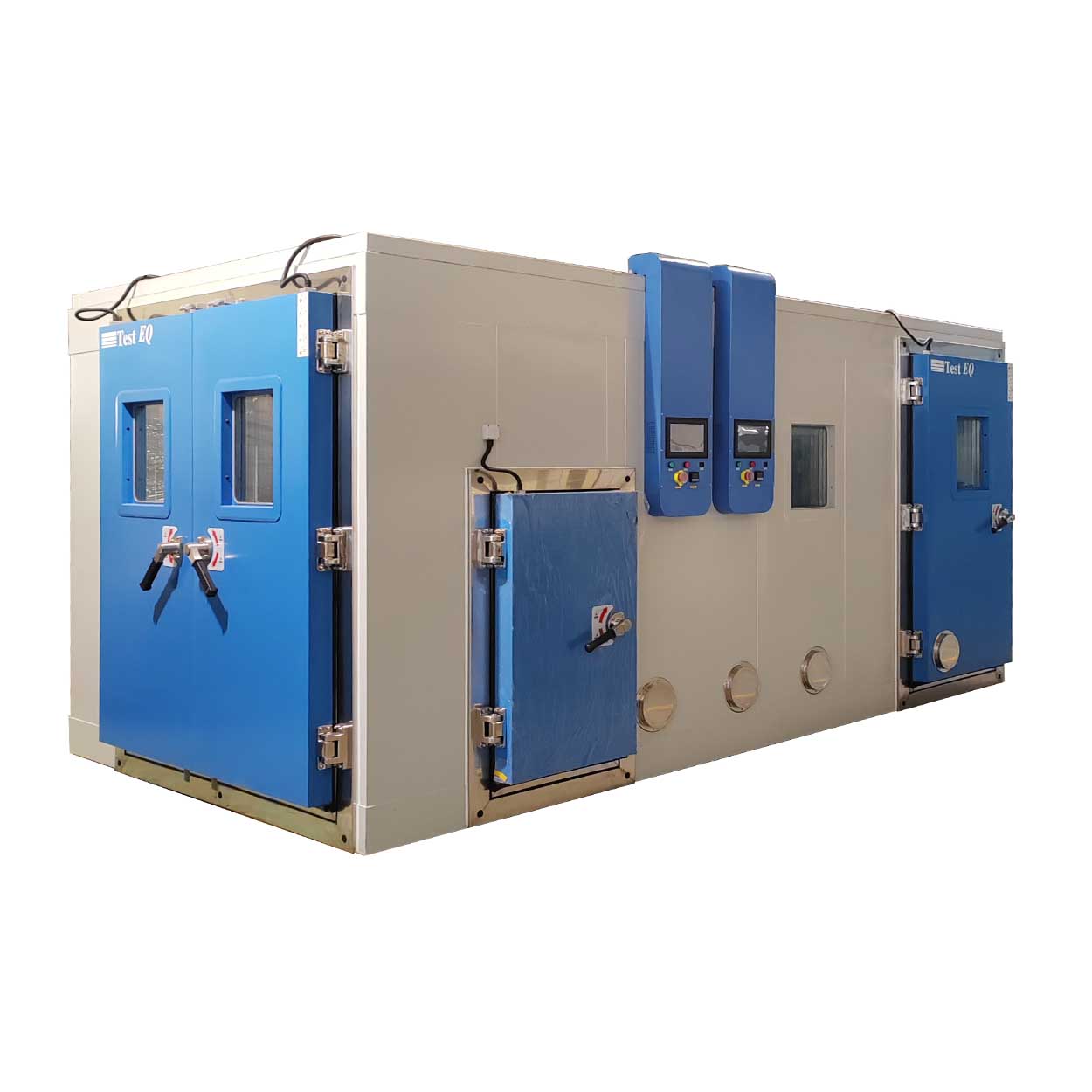
Three-Zone Thermal Shock Chamber
A three-zone thermal shock chamber consists of a high-temperature zone, a low-temperature zone and a dedicated test zone.
Unlike a conventional two-zone system that transfers the specimen between hot and cold zones, the three-zone architecture allows the specimen to remain in the test zone while the thermal environment changes around it.
This configuration can be advantageous for sensitive electronic components, semiconductor packages, large specimens and applications where minimizing specimen movement is important.
When Should You Choose a Three-Zone Thermal Shock Chamber?
Selecting the right thermal shock chamber depends on the required testing objectives rather than simply the temperature range.
A three-zone thermal shock chamber is the preferred solution when specimens must remain stationary during testing, ensuring maximum temperature uniformity and eliminating mechanical stress caused by basket transfer. This configuration is particularly valuable for precision electronic assemblies, semiconductor devices, aerospace components, and other products where repeatability and data consistency are critical.
Compared with a two-zone design, a three-zone chamber offers:
Better temperature uniformity around the specimen
Improved test repeatability
Reduced mechanical vibration during testing
Higher reliability for delicate electronic components
Easier compliance with demanding qualification standards such as IEC 60068-2-14 and MIL-STD-810H
If testing is primarily intended for high-volume production screening where cost efficiency is the main concern, a two-zone chamber may be sufficient. For product qualification, reliability verification, and research applications, a three-zone chamber is generally the recommended choice.
How Does a Three-Zone Thermal Shock Chamber Work?
The three-zone configuration typically includes:
During the test, hot or cold air is directed into the test zone according to the programmed temperature profile.
Because the specimen remains in the test zone, mechanical movement during temperature transitions can be minimized.
Advantages of Three-Zone Thermal Shock Testing
Stationary Specimen
The test specimen remains in the dedicated test zone instead of being repeatedly moved between temperature chambers.
Reduced Mechanical Disturbance
Stationary testing can be beneficial for sensitive or heavy specimens where mechanical movement is undesirable.
Flexible Test Configuration
Three-zone systems can be configured for different specimen dimensions, thermal loads and test requirements.
Precision Reliability Testing
The architecture is suitable for applications requiring controlled thermal transitions and repeatable test conditions.
Two-Zone vs Three-Zone Thermal Shock Chamber
| Feature | Three-Zone Thermal Shock Chamber | Two-Zone Thermal Shock Chamber |
|---|
| Sample Movement | Specimens remain stationary in the test zone; only hot and cold air is switched. | Specimens are mechanically transferred between hot and cold zones using a basket. |
| Temperature Stability | Excellent temperature uniformity with minimal disturbance to the specimen. | Good stability, but specimen movement may introduce slight temperature fluctuations. |
| Thermal Recovery Time | Faster recovery due to dedicated hot and cold chambers and stationary testing. | Standard recovery time depending on basket transfer speed and chamber design. |
| Mechanical Stress on Specimens | Lower mechanical stress, making it ideal for delicate electronic components. | Higher mechanical stress caused by repeated basket movement. |
| Large or Heavy Specimens | Better suited for larger or heavier samples because no physical movement is required. | Moderate capability; specimen size and weight are limited by the transfer mechanism. |
| Semiconductor Reliability Testing | Highly recommended for semiconductor packaging, ICs, and precision electronic assemblies. | Suitable for general qualification testing where specimen movement is acceptable. |
| Aerospace & Defense Qualification | Recommended for mission-critical components requiring high repeatability and precise thermal control. | Suitable for standard environmental qualification tests with moderate accuracy requirements. |
| Typical Applications | Aerospace, semiconductor, automotive electronics, military equipment, medical devices, and research laboratories. | Consumer electronics, general industrial products, automotive components, and routine production testing. |
| Initial Investment | Higher initial investment due to more complex chamber design and control system. | Lower equipment cost, making it suitable for cost-sensitive applications. |
| Best Choice When... | High accuracy, repeatability, and protection of sensitive test specimens are the primary priorities. | Budget, testing throughput, and routine qualification are the primary considerations. |
Actual chamber performance should be evaluated using the intended specimen and thermal load.
Thermal Shock vs Thermal Cycling:
| Feature | Three-Zone Thermal Shock | Thermal Cycling |
|---|
| Temperature Transition | Instant | Gradual |
| Stress Type | Extreme | Controlled |
| Typical Application | Military, Aerospace | Electronics, PCB |
| Standard | MIL-STD, IEC | JESD22
|
Typical Failures Detected During Thermal Shock Testing
Thermal shock testing is designed to accelerate failures caused by sudden temperature transitions.
Typical failure mechanisms include:
Solder joint cracking
PCB delamination
CTE mismatch
Ceramic package cracking
Connector fatigue
Seal leakage
Adhesive separation
Plastic deformation
How to Select the Correct Chamber Capacity
When selecting a thermal shock chamber, engineers should consider:
Specimen dimensions
Product weight
Required temperature range
Number of samples per cycle
Recovery time requirements
Applicable testing standards
Future production expansion
Selecting an oversized chamber may increase energy consumption, while an undersized chamber can reduce airflow uniformity and testing accuracy.
Why Choose TestEQ:
Expertise in high-end environmental testing systems
Stable performance under extreme thermal stress
Advanced airflow & thermal balance technology
Custom engineering for military, aerospace, and semiconductor standards
Energy-efficient design reducing operational costs
Optional Configurations:
LN₂ cooling system (-196°C) for ultra-low temperature testing
Remote monitoring & IoT integration
Large-volume chambers up to 12,000L
Semiconductor testing optimization (JEDEC compliant)
Custom control systems for precise temperature profiles
Applicable Standards
GJB150.5A-2009 Temperature shock test
GB/2424.13-2002 Temperature shock test
GJB360B-2009 Temperature shock test
GB2423.1-2008/IEC6008-2-1-2007 Low-temperature test methods
GB2423.2-2008 High-temperature test methods
GBT 10589-2008 Technical conditions for low-temperature test chambers
GBT 11158-2008 Technical conditions and specifications for high-temperature test chambers
FAQ:
1.What is a three-zone thermal shock chamber?
It is a test system with high, low, and test zones, designed to rapidly transfer samples between extreme temperatures for reliability testing.
2.What industries use three-zone thermal shock chambers?
Aerospace, defense, automotive electronics, semiconductors, and high-reliability materials testing.
3.How fast can it change temperature?
Typically ≤3–10 seconds, depending on chamber configuration.
4.What standards does it comply with?
Supports MIL-STD-810, IEC 60068, JESD22, and other international testing standards.
5.How to choose a three-zone thermal shock chamber?
Key factors: temperature range, transition time, chamber capacity, standard compliance, and application type.
6: What is temperature recovery time in a three-zone thermal shock chamber?
Temperature recovery time refers to the period required for the test zone to return to the specified temperature after a thermal shock cycle. Faster recovery ensures more consistent test conditions, improves repeatability, and is especially important for semiconductor, aerospace, and automotive reliability testing.
7: How often should a three-zone thermal shock chamber be calibrated?
Calibration frequency depends on laboratory quality requirements and applicable standards. Most laboratories perform annual calibration, while facilities operating under ISO/IEC 17025 or other regulated quality systems may require more frequent verification to ensure temperature accuracy and uniformity.
8: Can a three-zone thermal shock chamber be customized for specific testing requirements?
Yes. Three-zone thermal shock chambers can be customized to meet specific testing needs, including chamber size, temperature range, specimen fixtures, cooling systems, automation, remote monitoring, and compliance with industry-specific standards. Custom configurations help optimize testing efficiency and accommodate unique product requirements.
Internal Linking Module
Recommended Equipment
Explore related thermal shock and environmental reliability test systems for different testing configurations and applications.
A configurable thermal shock testing system for rapid temperature transitions in electronics, semiconductor, automotive, aerospace, and industrial reliability testing.
A dedicated thermal shock testing solution for semiconductor packages, PCB assemblies, connectors, sensors, and automotive electronic components.
A high-speed temperature change system designed for semiconductor, PCB, and automotive reliability testing with fast ramp rate control.
Test Standards
Explore the environmental and reliability standards commonly referenced when developing thermal shock and temperature-change test programs.
A military environmental test method for evaluating equipment exposed to rapid changes between high- and low-temperature environments.
An international environmental testing standard covering temperature-change test methods for evaluating the effects of temperature variations on products, components, and materials.
Widely used semiconductor reliability standards defining thermal cycling stress conditions for IC, packaging, and solder joint reliability.
Resources
Learn more about thermal shock testing, chamber configuration, test methods, and environmental reliability engineering.
Compare thermal shock and thermal cycling in terms of temperature transition, test mechanism, applications, and typical reliability concerns.
A practical guide for engineers and procurement teams covering temperature range, transition requirements, specimen size, thermal load, chamber configuration, and applicable test standards.
A practical guide for engineers and procurement teams to select the right environmental test chamber based on application and standards.