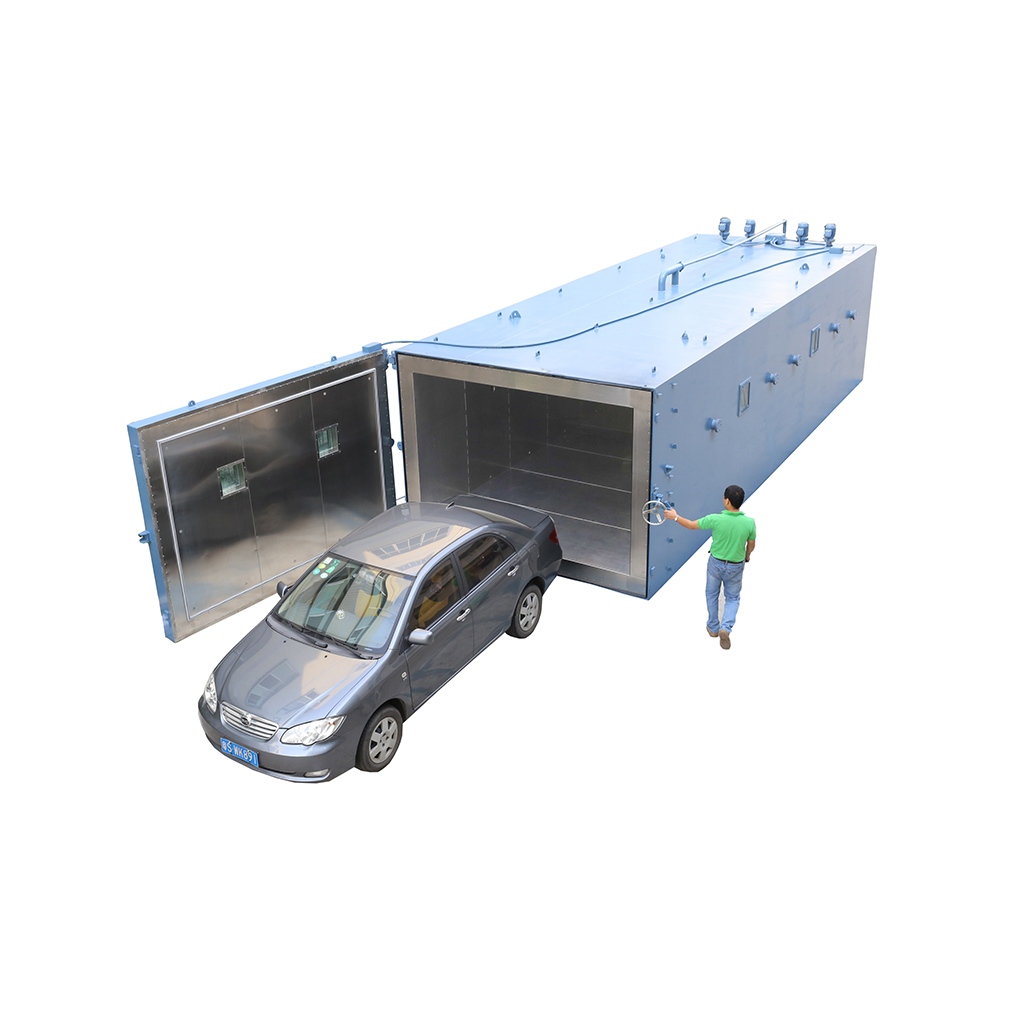
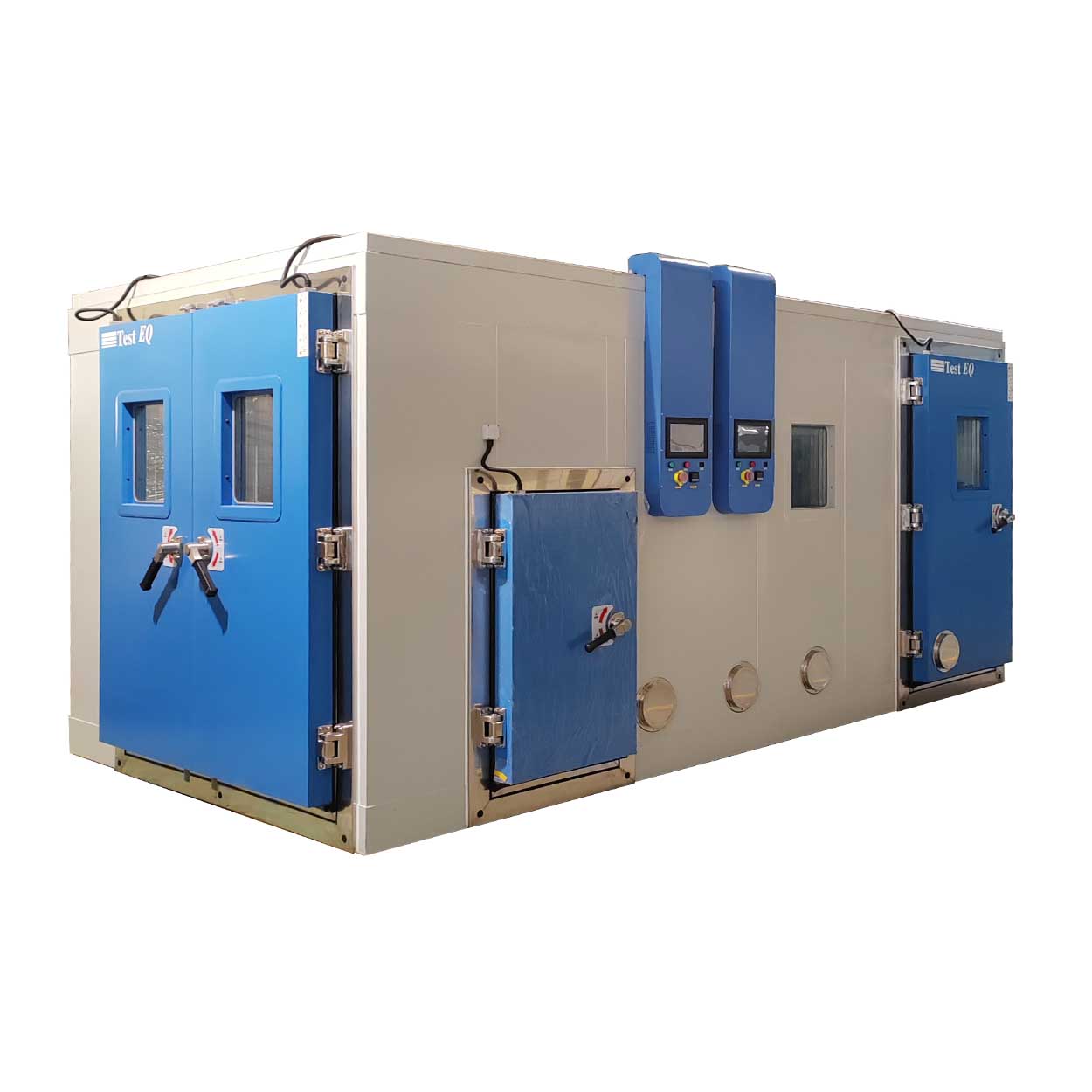
Icing Test Chamber for Vehicle and Environmental Testing
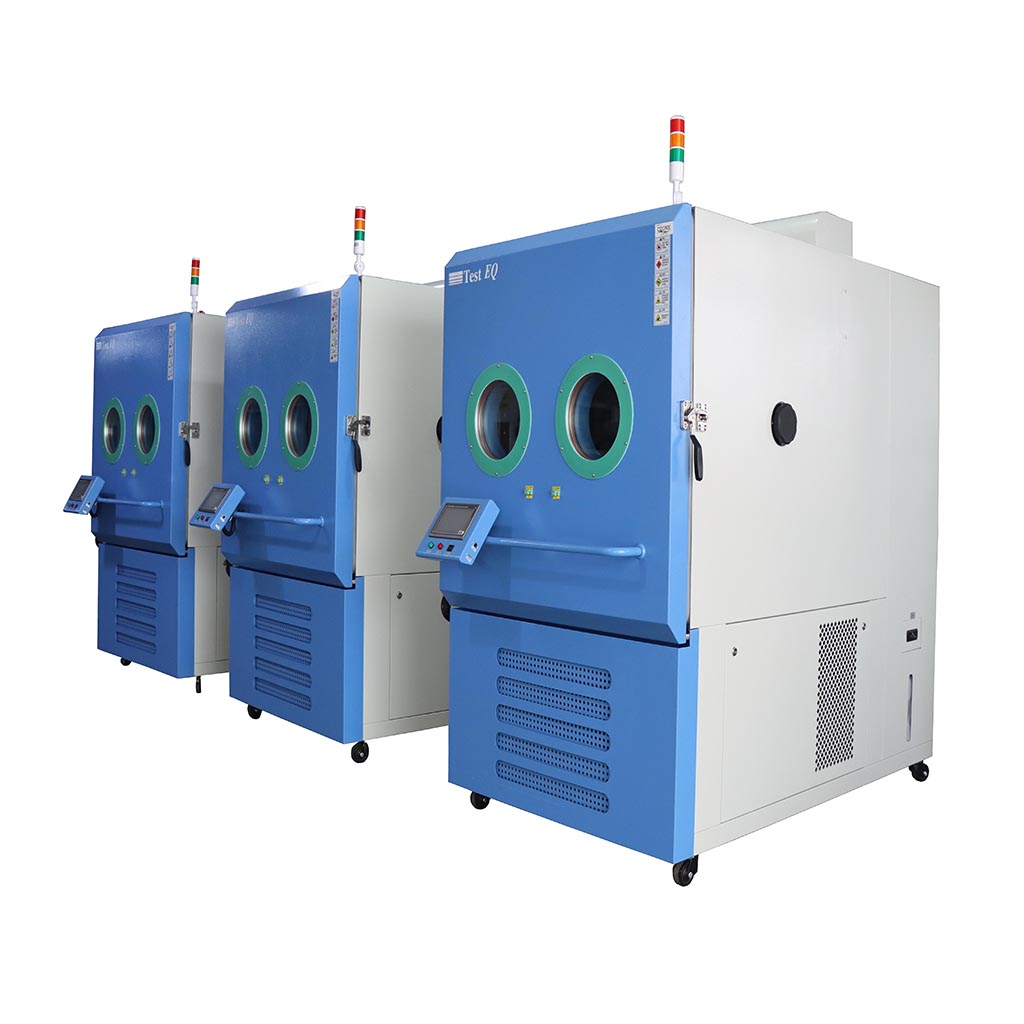
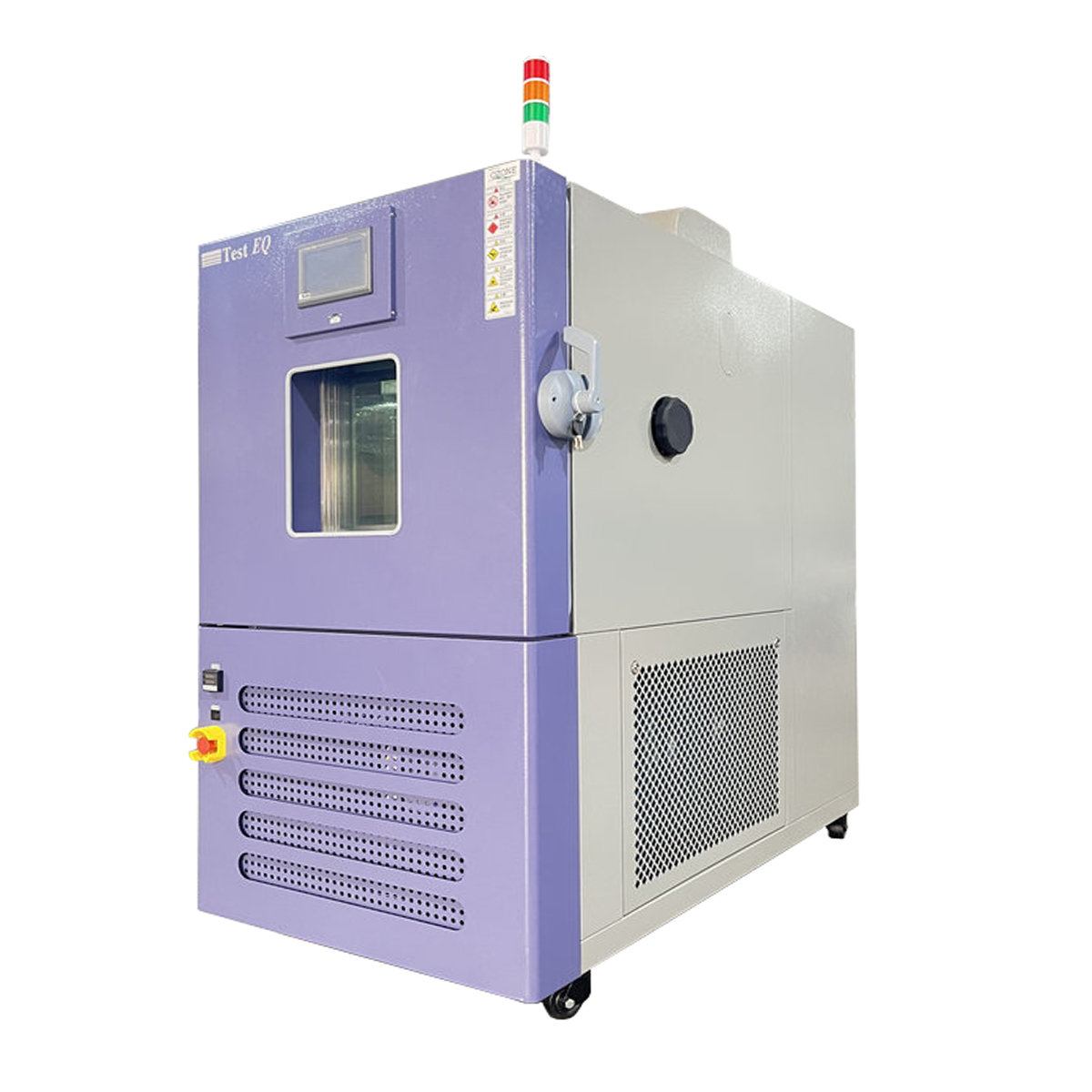
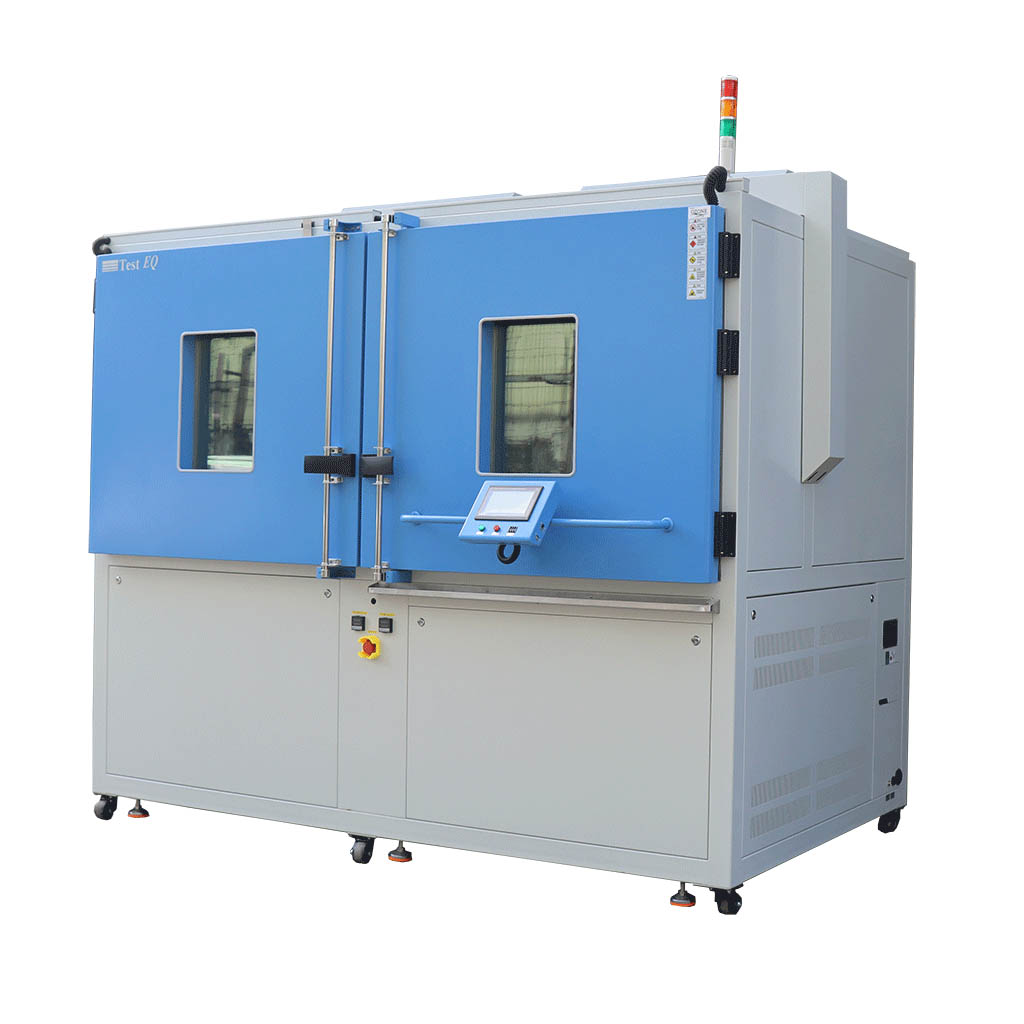
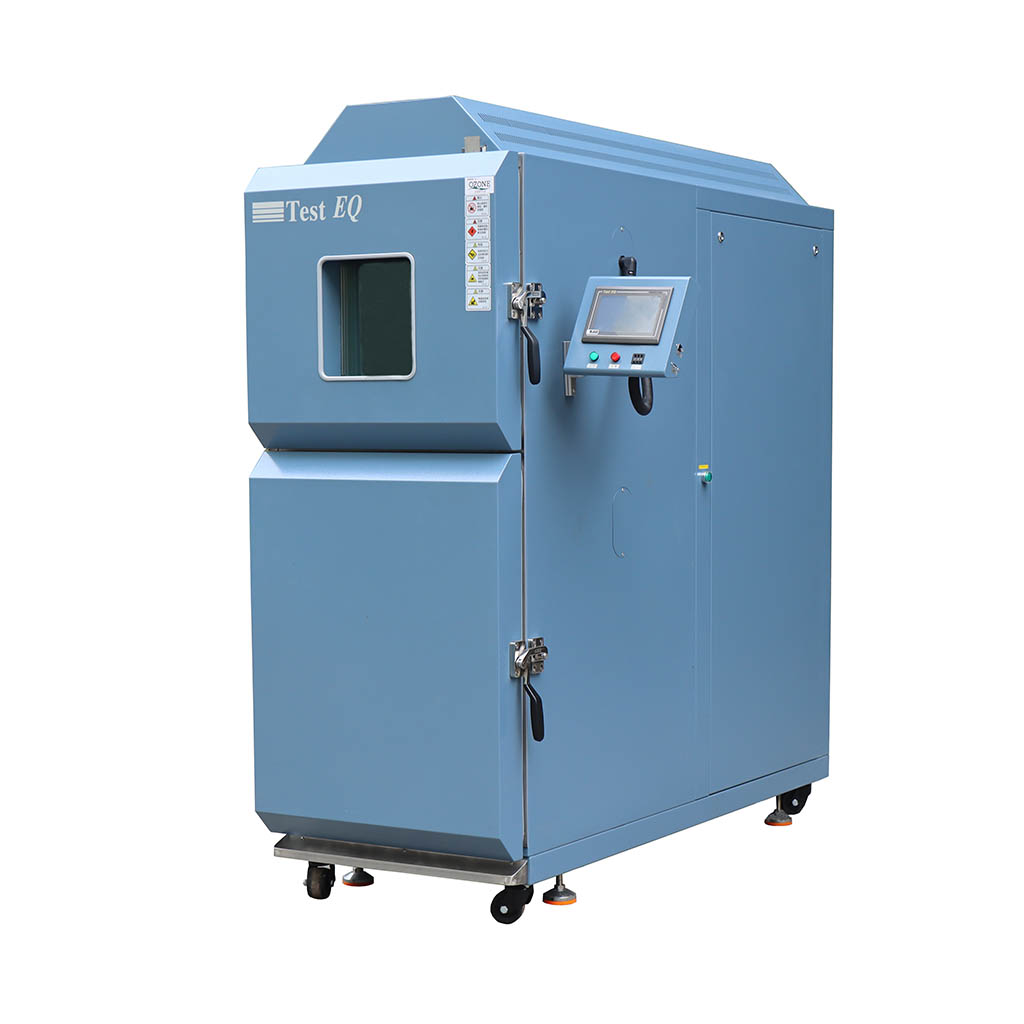
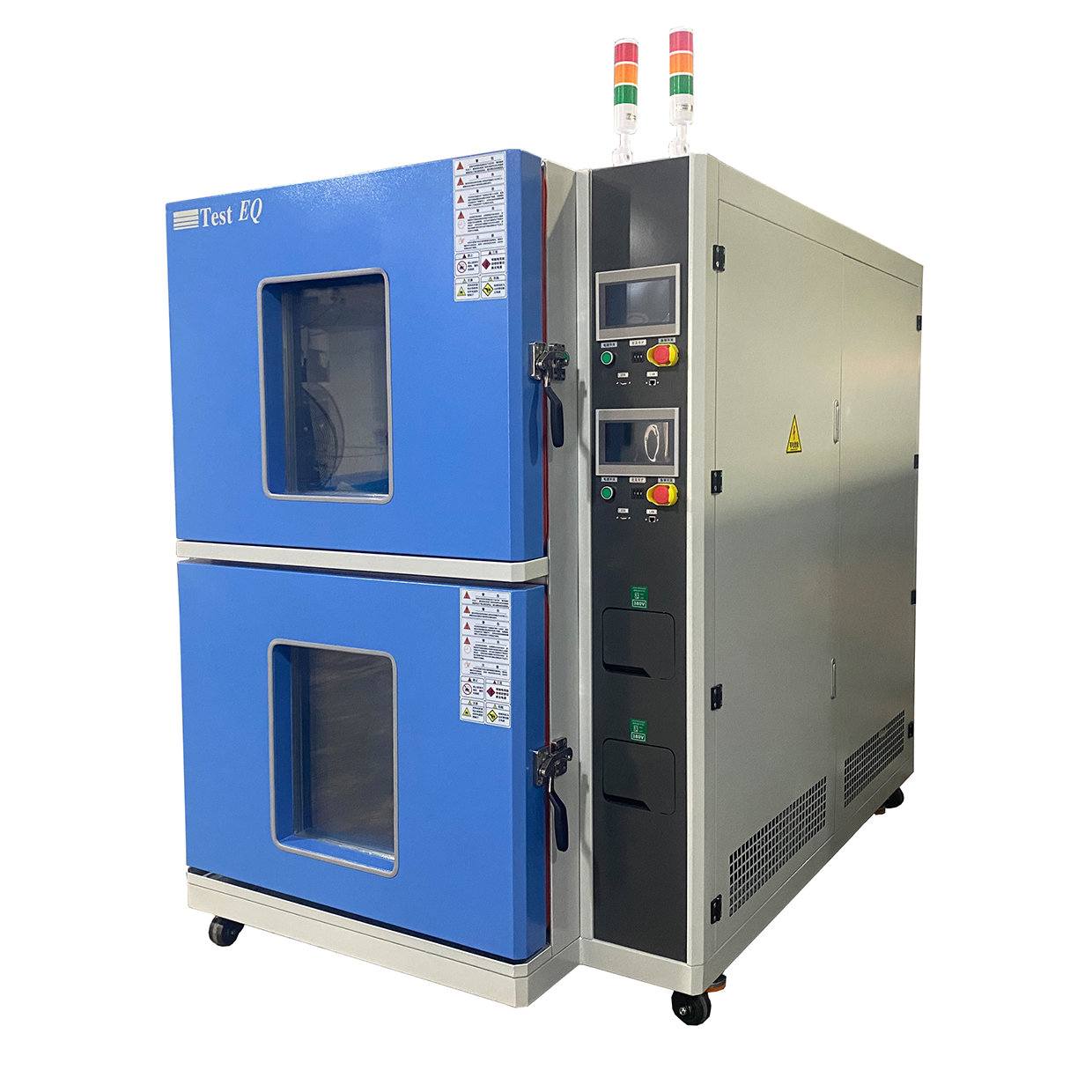
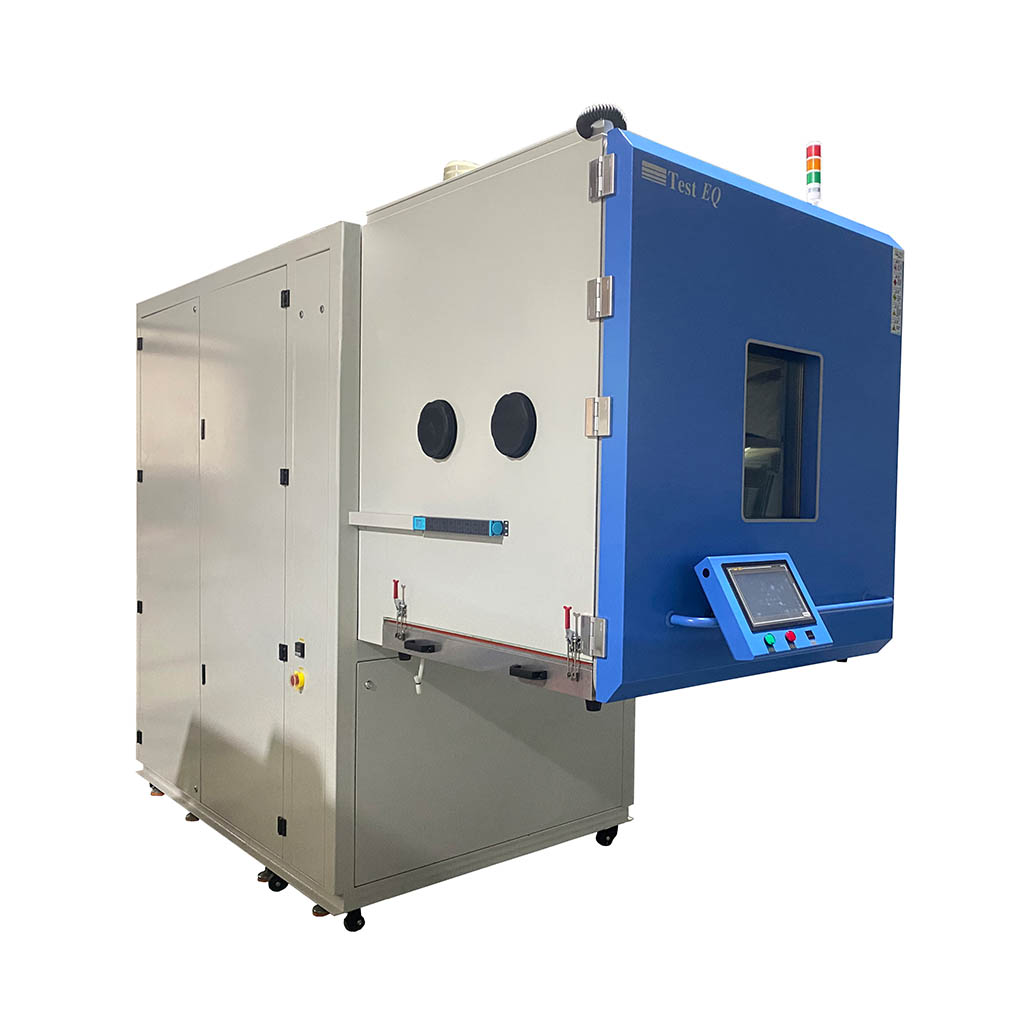
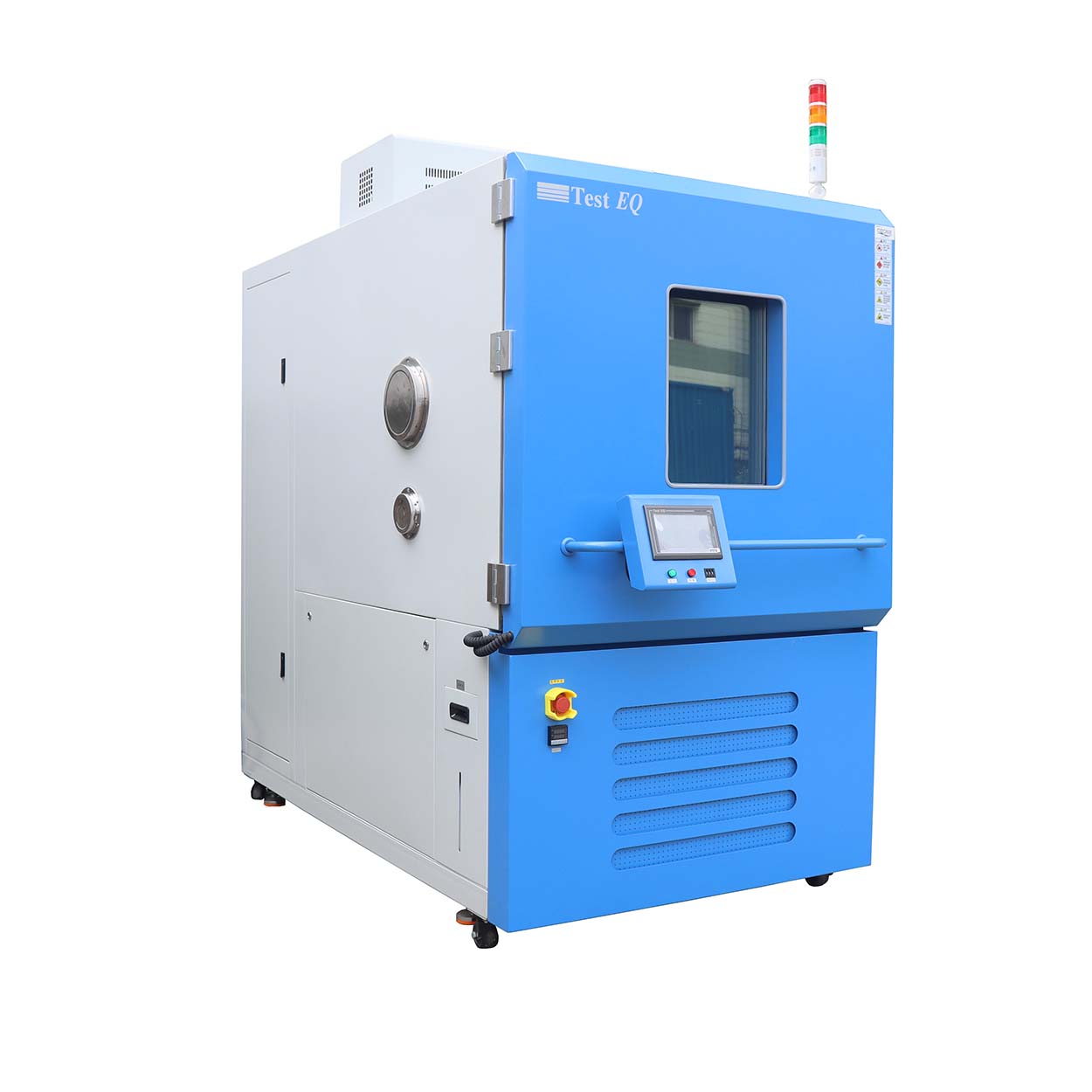
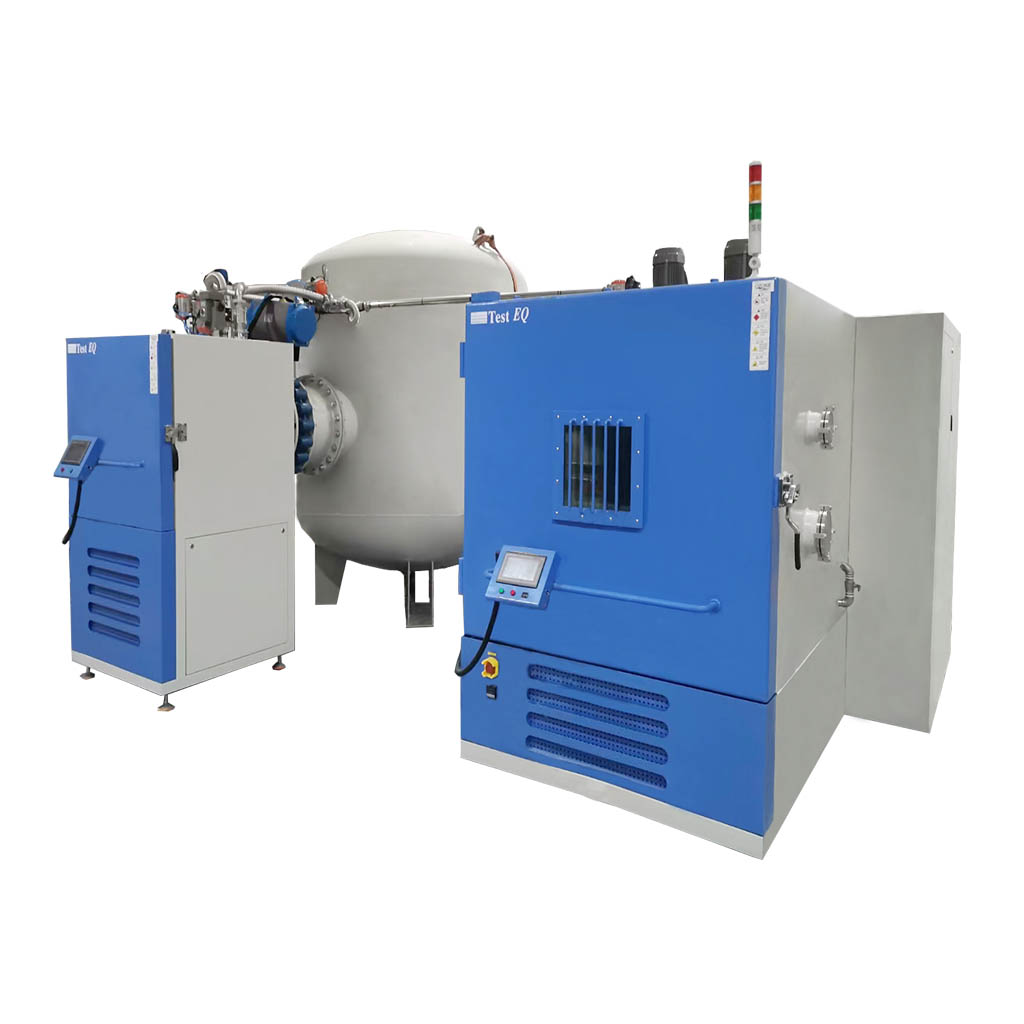
TestEQ Icing Test Chamber is an engineered environmental simulation system designed to reproduce controlled icing, ice accretion, freezing rain and low-temperature moisture conditions for reliability and functional testing.
Unlike a conventional temperature chamber, an icing test chamber combines thermal conditioning with controlled water or spray delivery to create repeatable ice formation on a test specimen. This allows engineers to evaluate how vehicles, components, sensors, electrical systems, enclosures and other products perform when ice accumulates on critical surfaces.
TestEQ provides configurable icing test chamber solutions for automotive, electric vehicle, aerospace, electronics and other applications where controlled ice formation is required.
What Is an Icing Test Chamber?
An icing test chamber is an environmental test system used to simulate controlled ice formation under defined temperature, water and exposure conditions.
The objective is not simply to cool a test item below 0°C. The test system must control the relationship between the test-item surface temperature, ambient temperature, water delivery and exposure time so that ice can form in a repeatable manner.
Depending on the application, an icing test chamber may be configured for:
• Ice accretion testing
• Freezing rain simulation
• Localized icing
• Low-temperature water spray
• Ice accumulation evaluation
• Icing and de-icing cycle testing
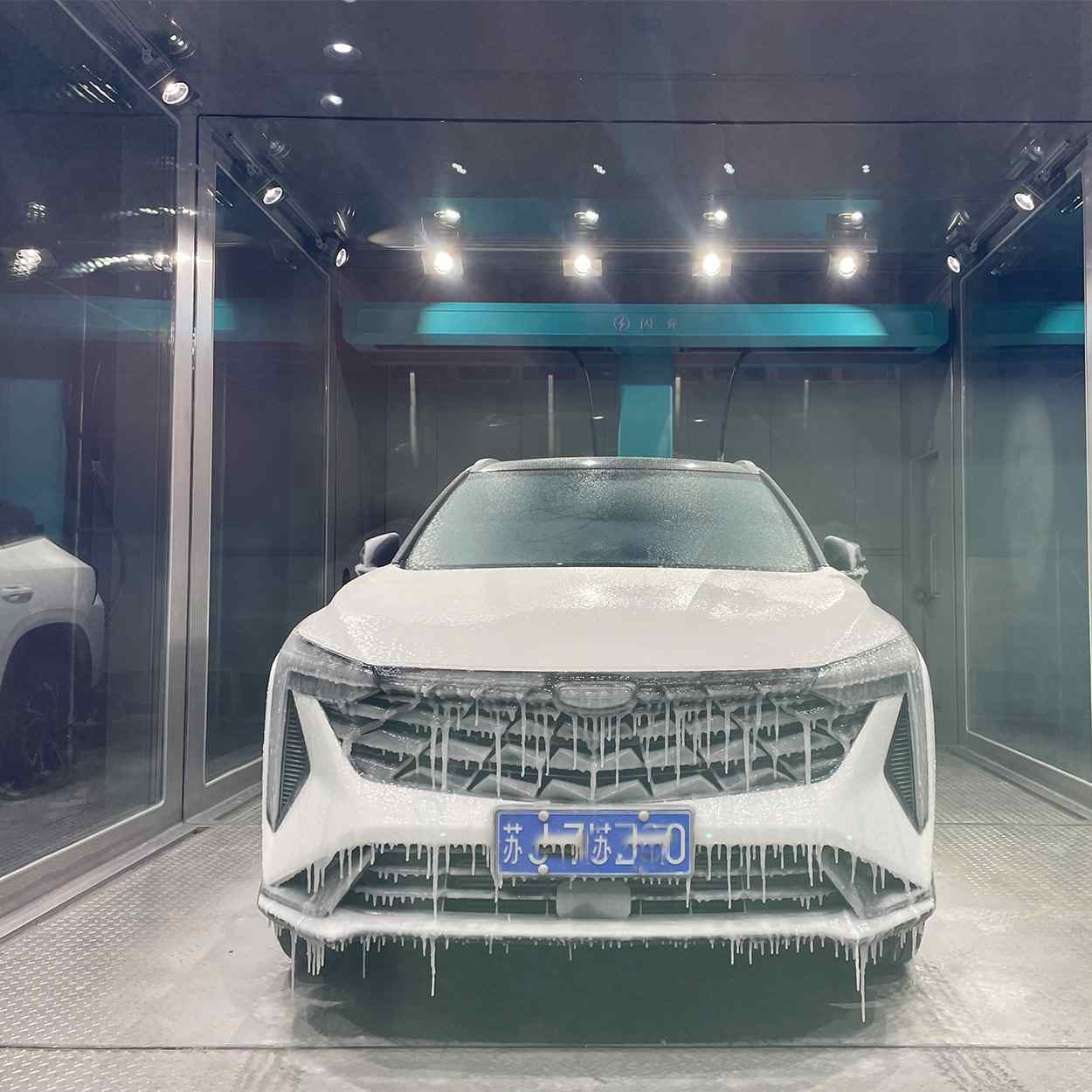
• Vehicle-level icing simulation
• Component-level icing testing
• Functional verification under ice-covered conditions
This makes icing testing different from conventional temperature and humidity testing. The environmental condition must be connected to a measurable physical effect: the formation, accumulation, persistence or removal of ice.
How Does an Icing Test Chamber Work?
A typical icing test sequence combines controlled cooling with a calibrated icing mechanism.
The process can be configured around the following engineering variables:
1. Temperature Conditioning
The chamber first establishes the required low-temperature environment.
The cooling profile can be programmed according to the test procedure, product specification or customer-defined environmental profile.
2. Controlled Water or Spray Delivery
A controlled spray system introduces water to selected surfaces or throughout the defined test area.
The spray system can be engineered according to the required:
• Water delivery rate
• Spray pattern
• Droplet characteristics
• Nozzle arrangement
• Coverage area
• Water temperature
• Exposure duration
3. Ice Initiation
When water reaches a sufficiently cold test surface, freezing begins.
The system controls the environmental conditions required to initiate and maintain ice formation without relying on uncontrolled laboratory conditions.
4. Ice Accretion
The test continues until the required icing condition or ice accumulation level is achieved.
For engineering validation, the important parameter is not only whether ice forms, but whether the resulting condition can be reproduced from one test cycle to another.
5. Functional Verification
The test item can then be inspected or operated under the icing condition.
Depending on the application, engineers may evaluate:
• Mechanical operation
• Electrical functionality
• Sensor performance
• Camera visibility
• Connector operation
• Sealing performance
• Door and handle operation
• De-icing performance
• Structural response
• Control-system behavior
Why Is Ice Accretion Control Important?
Natural icing conditions are highly variable. Wind, water availability, temperature, surface temperature and exposure duration can all influence the resulting ice layer.
For laboratory reliability testing, uncontrolled icing can make test results difficult to compare.
An engineered icing test chamber therefore needs to provide repeatable control over the variables that determine ice formation.
TestEQ focuses on the relationship between:
Temperature + Water Delivery + Surface Condition + Exposure Time + Ice Formation
This approach allows engineers to define a repeatable environmental condition rather than simply exposing a product to cold air.
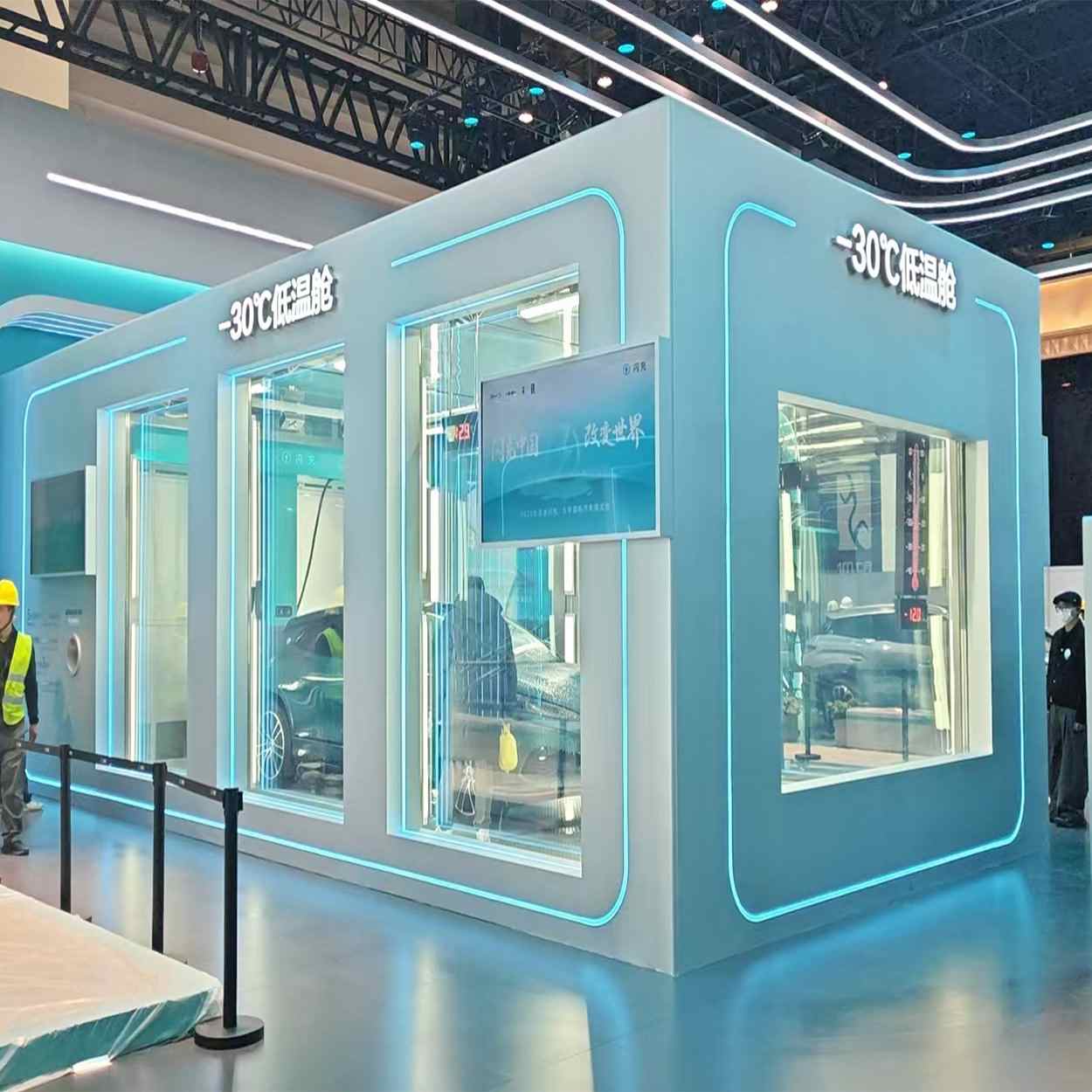
Icing Test Chamber for Automotive and Vehicle Testing
Vehicle icing testing is increasingly relevant to automotive reliability validation, particularly for electric vehicles and vehicles equipped with cameras, sensors and electronically controlled access systems.
A vehicle icing test chamber can be configured for component-level or full-vehicle testing depending on the required test volume.
Typical applications include:
EV charging port icing
Door and handle freezing
Windshield icing
Mirror icing
Exterior sensor icing
Camera and ADAS sensor icing
Lighting-system icing
Connector and sealing evaluation
Wiper-system testing
De-icing system validation
Low-temperature vehicle operation
Repeated icing and de-icing cycles
The test objective can be defined around the actual product function rather than temperature exposure alone.
For example, an automotive engineer may need to determine whether an exterior sensor continues to provide usable information after ice accumulates on its surface, or whether a vehicle charging interface can be accessed after exposure to freezing conditions.
This makes vehicle icing testing particularly useful during design verification and reliability validation.
Rapid Icing Testing
Rapid icing testing is used when the test program requires ice formation to begin within a controlled and repeatable time period.
The term "rapid icing" should not be interpreted simply as a high cooling rate. A fast chamber temperature transition does not automatically produce fast or uniform ice formation.
Rapid icing performance depends on the complete test system, including:
TestEQ can engineer the chamber and icing system around the required icing initiation and accumulation profile.
This allows customers to define performance requirements based on the actual test objective rather than selecting equipment solely by nominal chamber temperature.
Icing Test Chamber vs. Conventional Environmental Chamber
A conventional temperature or temperature-humidity chamber primarily controls atmospheric temperature and humidity.
An icing test chamber adds a physical ice-formation mechanism.
| Test Requirement | Conventional Environmental Chamber | Icing Test Chamber |
|---|
| Temperature Control | Yes | Yes |
| Humidity Control | Application dependent | Application dependent |
| Low-Temperature Exposure | Yes | Yes |
| Controlled Water Delivery | Normally not available | Yes |
| Ice Formation | Not normally supported | Yes |
| Ice Accumulation Evaluation | Limited | Yes |
| Freezing Rain Simulation | Not normally supported | Configurable |
| Vehicle Icing Testing | Limited | Yes |
| De-Icing Validation | Limited | Yes |
| Ice-Related Functional Testing | Limited | Yes |
The key distinction is therefore the ability to create and control the physical icing condition.
Engineering Configuration Options
TestEQ designs icing test chambers according to the required test object, chamber volume and environmental profile.
Typical configuration areas include:
Temperature System
The refrigeration and heating system can be selected according to the required low-temperature range, cooling load and transition profile.
Icing Spray System
The spray system can be configured for the required water distribution, coverage and icing mechanism.
Airflow Management
Air circulation can be engineered to improve environmental uniformity and support repeatable exposure conditions.
Test Fixture
Fixtures can be designed around the geometry and orientation of the DUT.
This is particularly important for:
• Vehicle components
• Sensors
• Cameras
• Electrical enclosures
• Charging interfaces
• Aerospace components
• Large assemblies
Observation and Data Acquisition
The chamber can be configured with temperature sensors, test-item monitoring, data logging and external interfaces according to the customer's validation requirements.
Custom Chamber Volume
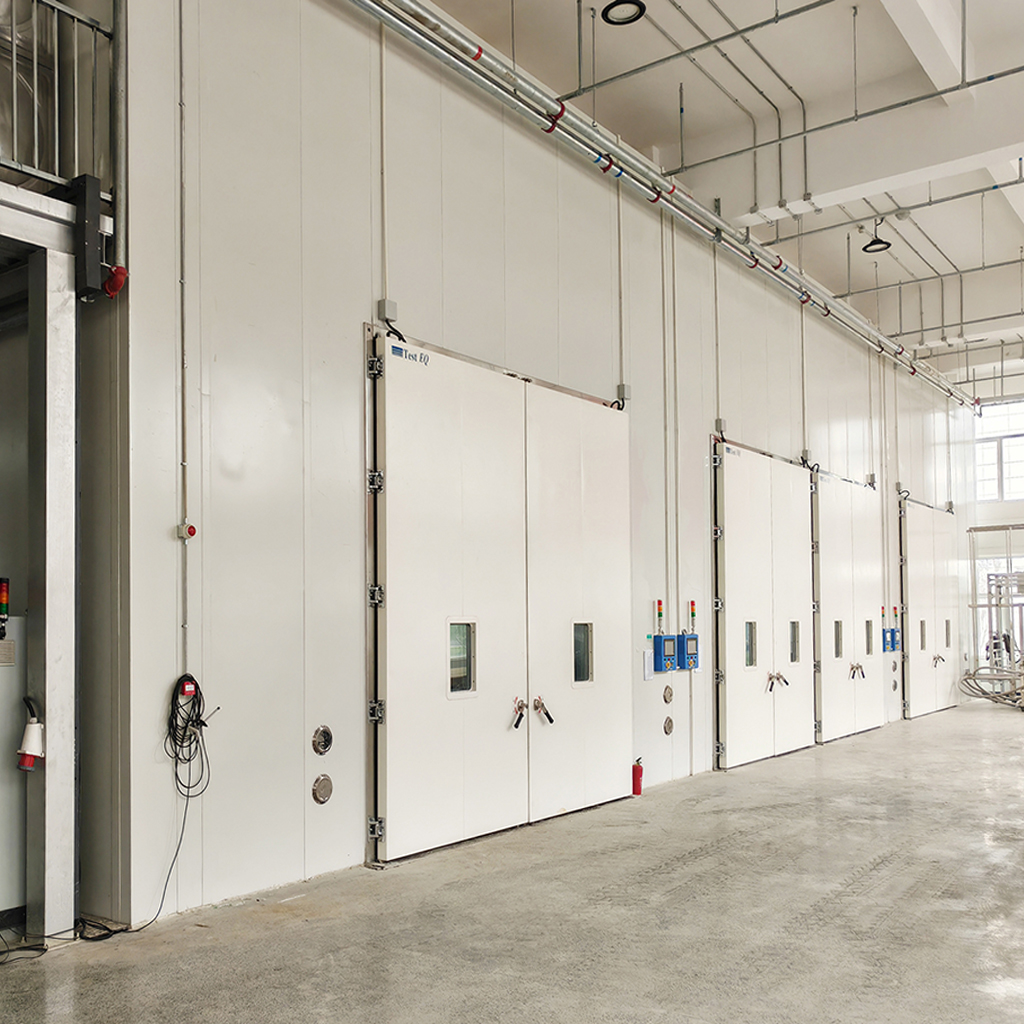
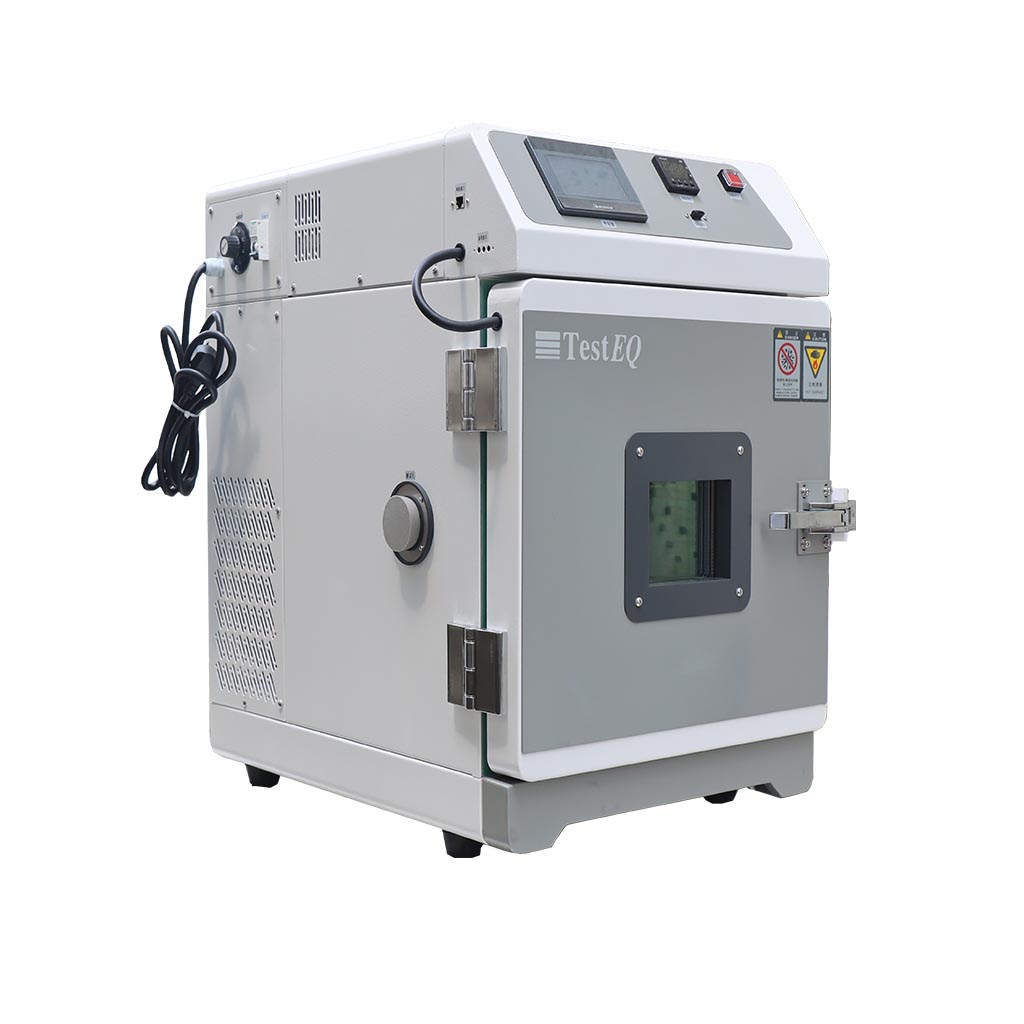
Small laboratory systems can be designed for components and assemblies, while larger systems can be engineered for vehicle-level or large-equipment testing.
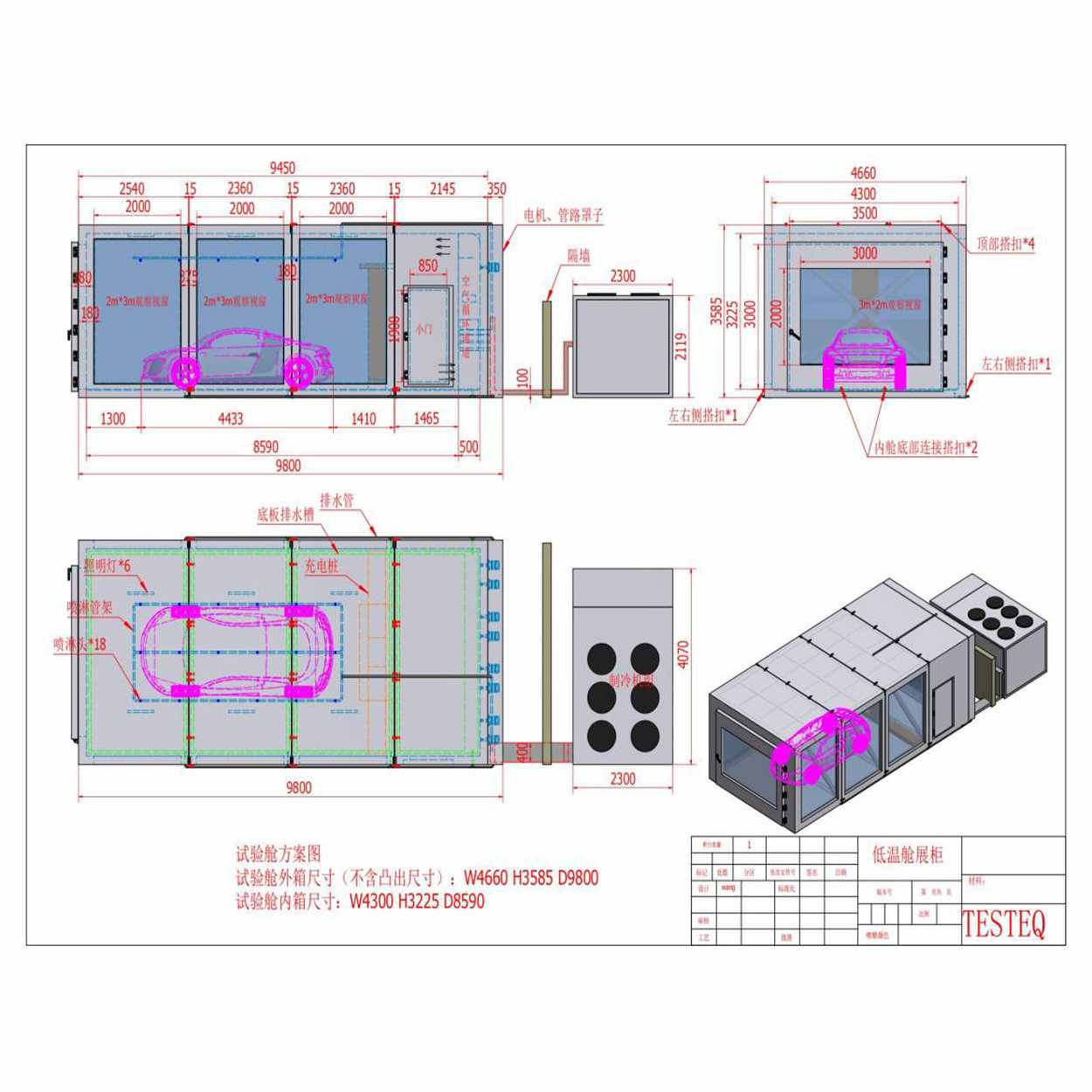
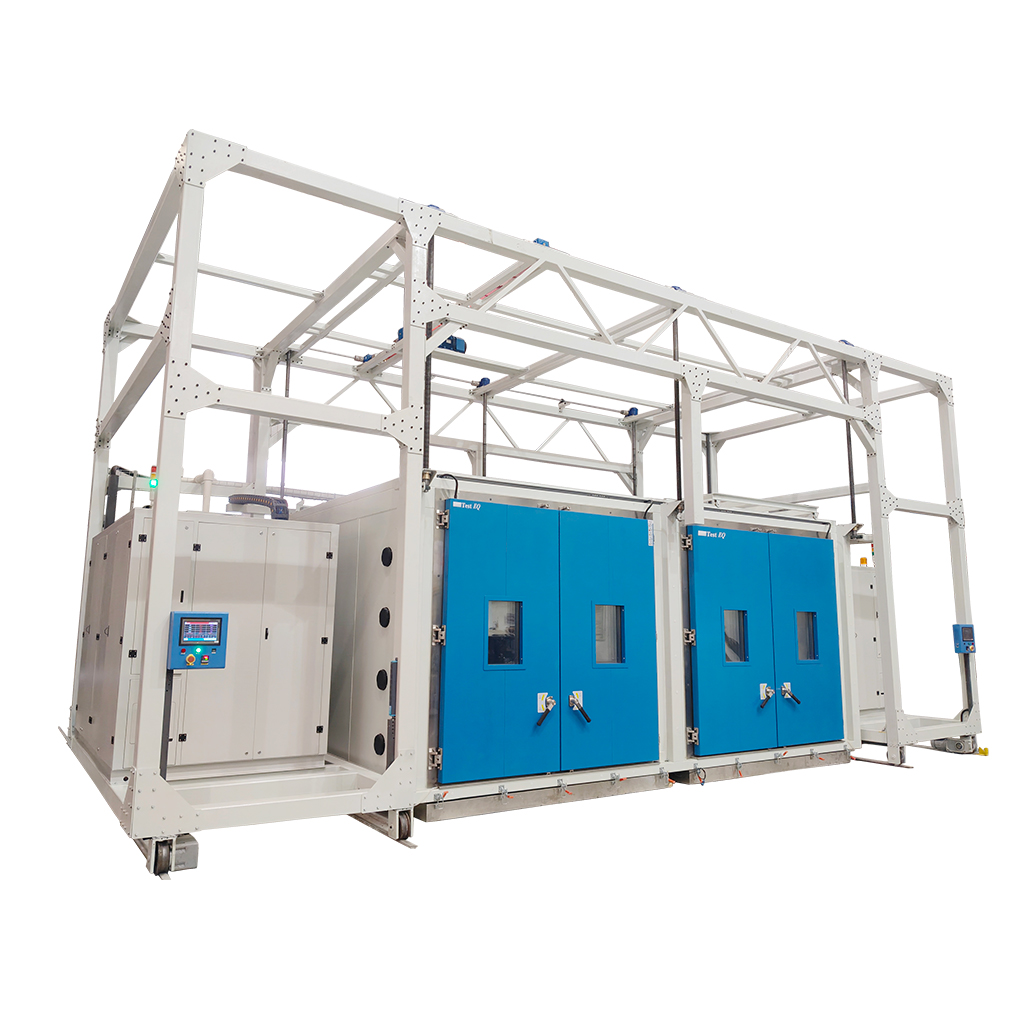
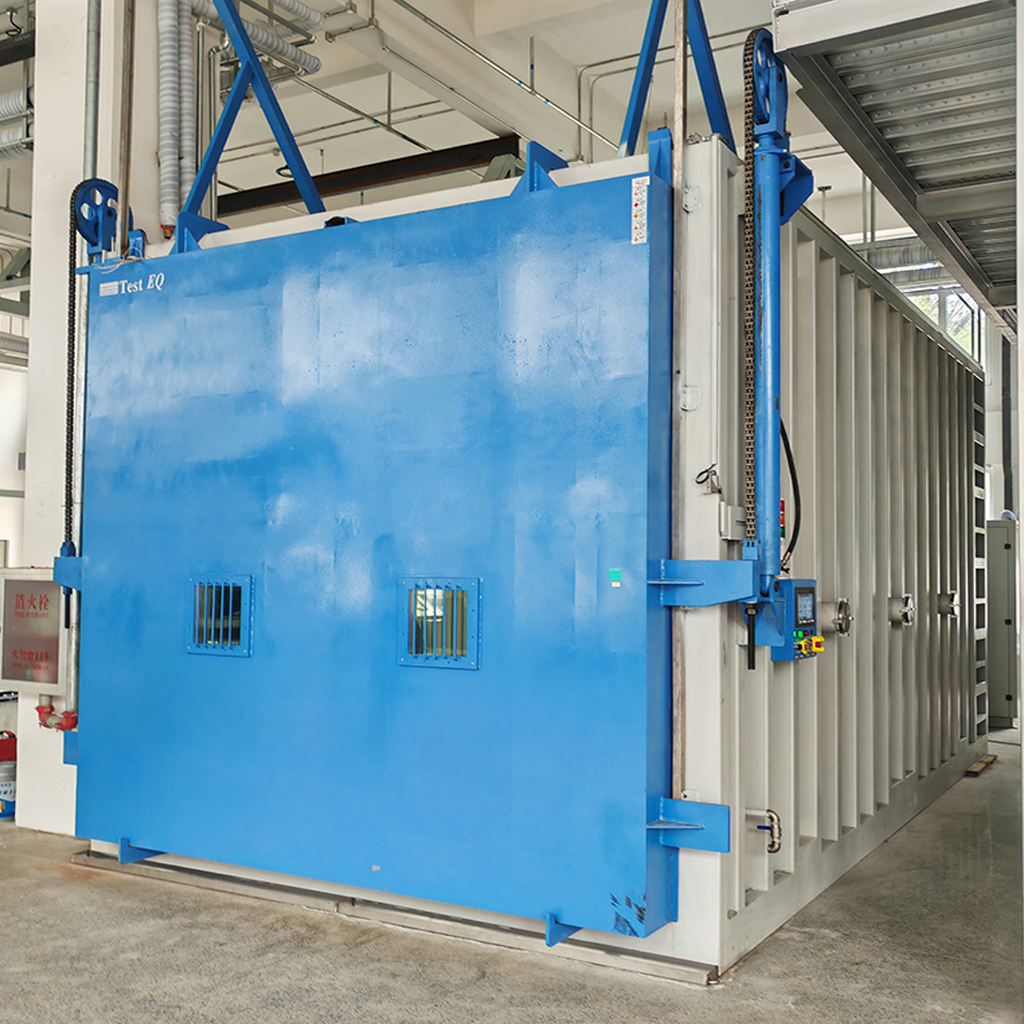
Full-Vehicle Icing Test Capability
For complete vehicle testing, the chamber must be designed around more than internal volume.
Engineering considerations can include:
• Vehicle dimensions
• Door clearance
• Vehicle access
• Air circulation
• Water drainage
• Spray coverage
• Electrical power supply
• Charging equipment
• Data acquisition
• Test personnel access
• Safety interlocks
• Condensate and ice management
TestEQ has developed large-scale vehicle environmental simulation systems for automotive reliability testing.
A TestEQ vehicle icing project for BYD incorporated a large chamber for full-vehicle testing, with controlled icing formation and low-temperature simulation. The delivered system was designed around vehicle-level validation rather than simply adapting a standard laboratory climatic chamber.
Standards and Test Methods
The applicable icing test standard depends on the industry, product and qualification program.
Potential references include:
MIL-STD-810
MIL-STD-810 includes environmental engineering and laboratory testing methods used to evaluate equipment against defined environmental stresses. Icing and freezing-rain testing should be configured according to the specific applicable method, revision and test procedure.
RTCA DO-160
RTCA DO-160 defines environmental conditions and test procedures for airborne equipment. The applicable icing-related test requirements should be determined from the customer's aircraft equipment qualification program and the applicable DO-160 revision.
RTCA identifies DO-160G as the published environmental conditions and test procedures standard for airborne equipment and separately provides supporting material for its use.
Customer-Specific Specifications
Automotive OEMs, Tier-1 suppliers, aerospace manufacturers and research laboratories may use internal test specifications in addition to published standards.
For this reason, TestEQ recommends defining the following before equipment selection:
• Test standard
• Test method
• Test item dimensions
• Target temperature
• Water or spray condition
• Ice formation requirement
• Exposure duration
• Functional test requirement
• Measurement method
• Data recording requirement
How to Select an Icing Test Chamber
Selecting an icing test chamber based only on temperature range can result in an unsuitable configuration.
Engineers and procurement teams should evaluate the following factors.
1. What Is the Test Item?
Define whether the equipment will test:
• Small components
• Electronic assemblies
• Automotive components
• Sensors
• Subsystems
• Large assemblies
• Complete vehicles
2. What Type of Ice Must Be Simulated?
The required condition may involve:
• Surface icing
• Ice accretion
• Freezing rain
• Localized icing
• Repeated icing and de-icing
The icing mechanism should match the actual qualification requirement.
3. How Much Ice Is Required?
The target ice condition should be defined using the applicable test specification.
Do not select a chamber solely by its minimum temperature.
4. How Fast Must Icing Begin?
If rapid icing is part of the requirement, specify the required icing initiation time and the conditions under which that time is measured.
5. How Large Is the Test Object?
Chamber volume should account for:
• DUT dimensions
• Fixture dimensions
• Spray coverage
• Air circulation
• Operator access
• Vehicle access where applicable
6. What Data Must Be Recorded?
For qualification testing, consider whether the system needs to record:
• Chamber temperature
• Test-item temperature
• Water temperature
• Spray sequence
• Test duration
• Alarm events
• Icing sequence
• De-icing sequence
Why Choose TestEQ for Icing Test Systems?
TestEQ approaches icing equipment as an environmental simulation engineering project rather than a standard temperature chamber with an additional spray nozzle.
The system can be engineered around the customer's:
• Test standard
• DUT geometry
• Icing mechanism
• Temperature profile
• Water delivery requirements
• Ice accumulation objective
• Vehicle dimensions
• Functional verification requirements
• Data acquisition requirements
TestEQ's experience with customized vehicle icing systems includes full-vehicle environmental simulation and controlled icing formation.
This engineering approach is particularly suitable when standard off-the-shelf chamber configurations cannot reproduce the customer's required test condition.
Icing Test Chamber Engineering Checklist
Before requesting a quotation, prepare the following information:
• Test item name
• Test item dimensions
• Test item weight
• Required chamber volume
• Minimum temperature
• Maximum temperature
• Cooling transition requirement
• Icing initiation requirement
• Water or spray requirement
• Target ice condition
• Exposure duration
• Test standard
• Required fixture
• Electrical power requirement
• Vehicle access requirement
• Data acquisition requirement
• Installation location
• Utility conditions
• Required certification or documentation
Providing these parameters allows the chamber configuration to be evaluated against the actual test requirement instead of using a generic product specification.
Frequently Asked Questions About Icing Test Chambers
1.What Does an Icing Test Chamber Simulate in Automotive and Environmental Reliability Testing?
An icing test chamber simulates controlled low-temperature icing conditions, including ice accretion, freezing moisture and specified freezing-rain exposure. The system combines temperature control with controlled water or spray delivery to reproduce repeatable icing conditions for product reliability and functional testing.
2.How Does an Icing Test Chamber Create and Control Ice Accretion?
An icing test chamber creates ice by controlling the relationship between chamber temperature, test-item surface temperature, water delivery, spray distribution and exposure time. The control sequence can be configured to initiate, maintain and repeat the required ice-formation condition according to the customer's test procedure.
3.What Is the Difference Between an Icing Test Chamber and a Standard Temperature-Humidity Chamber?
A standard temperature-humidity chamber primarily controls environmental temperature and relative humidity. An icing test chamber adds a controlled water or spray system to produce physical ice formation on the test item. This makes it suitable for evaluating products whose operation or reliability can be affected by ice accumulation.
4.How Is a Vehicle Icing Test Chamber Used for Automotive Reliability Validation?
A vehicle icing test chamber can expose automotive components, subsystems or complete vehicles to controlled low-temperature and icing conditions. Engineers can evaluate door mechanisms, charging ports, sensors, cameras, connectors, lighting, wipers, seals and other systems before and after ice accumulation.
5.Can an Icing Test Chamber Simulate Freezing Rain and Controlled Ice Accumulation?
Yes. When configured with an appropriate water delivery and spray system, an icing test chamber can reproduce specified freezing-rain or ice-accretion conditions. The spray pattern, water delivery, temperature profile and exposure duration should be defined according to the applicable test procedure.
6.What Parameters Should Engineers Specify When Ordering an Icing Test Chamber?
Engineers should normally provide the test item dimensions and weight, required temperature range, icing temperature, cooling transition, water or spray requirements, target ice condition, exposure duration, test standard, chamber volume, fixture requirements and functional verification procedure. For vehicle testing, vehicle dimensions, access requirements and utility conditions should also be specified.
7.How Should a Rapid Icing Test Chamber Be Configured for Fast Ice Formation?
Rapid icing performance depends on more than the chamber cooling rate. The refrigeration system, airflow, water temperature, spray distribution, test-item surface temperature and icing sequence must work together. The required icing initiation time or ice-accumulation profile should therefore be defined before the chamber is engineered.
8.What Factors Affect the Repeatability of Ice Accretion Testing?
Ice-formation repeatability can be affected by chamber temperature uniformity, surface temperature, water delivery, spray distribution, airflow, test-item geometry and exposure time. A properly engineered system controls these variables so that the required icing condition can be reproduced between test cycles.
9.What Types of Automotive Components Can Be Evaluated Under Icing Conditions?
Depending on the chamber configuration, automotive icing testing can be applied to sensors, cameras, ADAS-related components, charging interfaces, connectors, door handles, locks, seals, mirrors, lighting systems, wipers and other exterior or exposed vehicle components.
10.Can an Icing Test Chamber Be Designed for Full-Vehicle Testing?
Yes. Full-vehicle icing chambers can be engineered around the vehicle's dimensions, access requirements, spray coverage, airflow, drainage, electrical systems and functional testing requirements. The chamber configuration should be determined from the actual vehicle test procedure rather than chamber volume alone.
11.Which Environmental Testing Standards May Apply to Icing Test Programs?
The applicable standard depends on the product and qualification program. MIL-STD-810 may be relevant to specified environmental qualification programs, while RTCA DO-160 may apply to applicable airborne equipment. Automotive manufacturers and Tier-1 suppliers may also use OEM-specific icing and environmental test specifications.
12.How Does TestEQ Customize an Icing Test Chamber for Different Test Requirements?
TestEQ can configure the chamber around the customer's test object, environmental profile and icing mechanism. Customization may include chamber dimensions, refrigeration capacity, water and spray systems, airflow, fixtures, monitoring, data acquisition, vehicle access and programmed icing sequences.
13.What Information Should Be Included in an Icing Test Chamber RFQ?
A useful RFQ should include the test item or vehicle model, dimensions, weight, required temperature range, icing method, water or spray requirements, target ice condition
Internal Linking Module
Related Products
Simulate controlled temperature and environmental conditions for complete vehicles and large automotive assemblies during reliability validation.
Perform controlled rapid temperature transitions for automotive, electronics, semiconductor and other reliability testing applications.
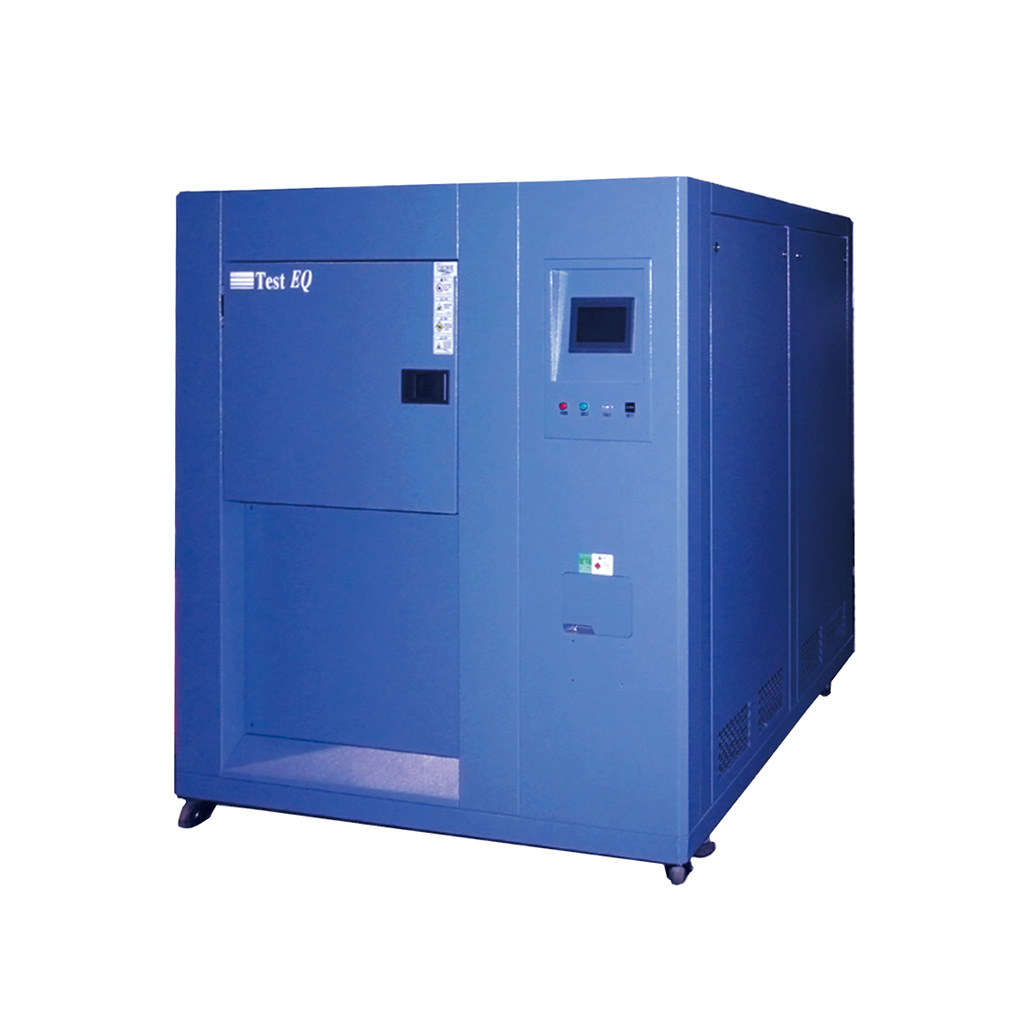
Evaluate product durability under severe temperature transitions when the primary requirement is thermal shock rather than ice accumulation.
Related Standards
Understand how applicable MIL-STD-810 environmental test methods can be used to evaluate equipment under defined icing, freezing and other climatic conditions.
Explore environmental qualification requirements for applicable airborne equipment, including environmental conditions relevant to aerospace testing programs.
Review environmental testing requirements commonly considered for automotive components, electrical systems and vehicle reliability validation.
Related Resources
Learn how controlled icing conditions can be used to evaluate vehicle components, sensors, charging interfaces, seals and other automotive systems.
Understand the relationship between temperature, water delivery, ice accretion and test duration when designing a controlled freezing-rain test.
Review the key engineering and procurement parameters, including chamber volume, temperature range, spray system, ice formation requirements and test standards.