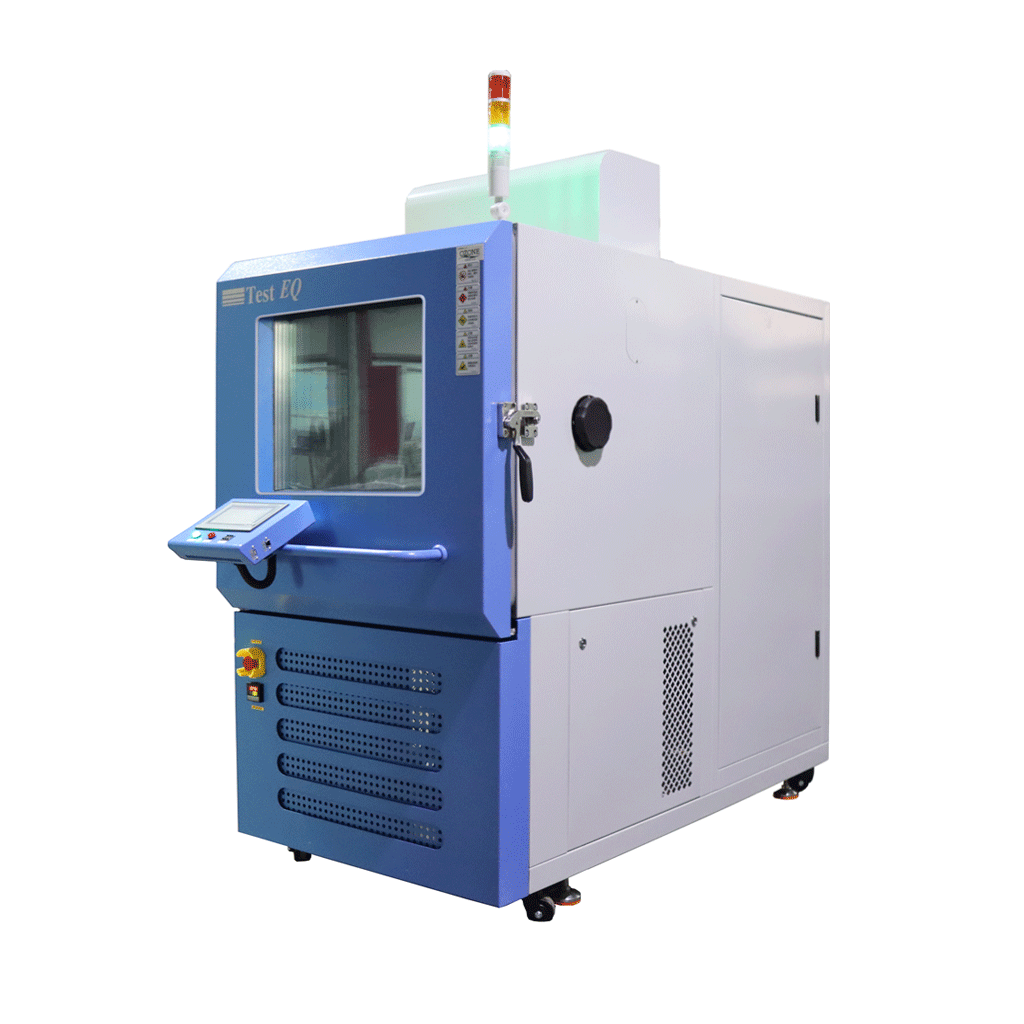
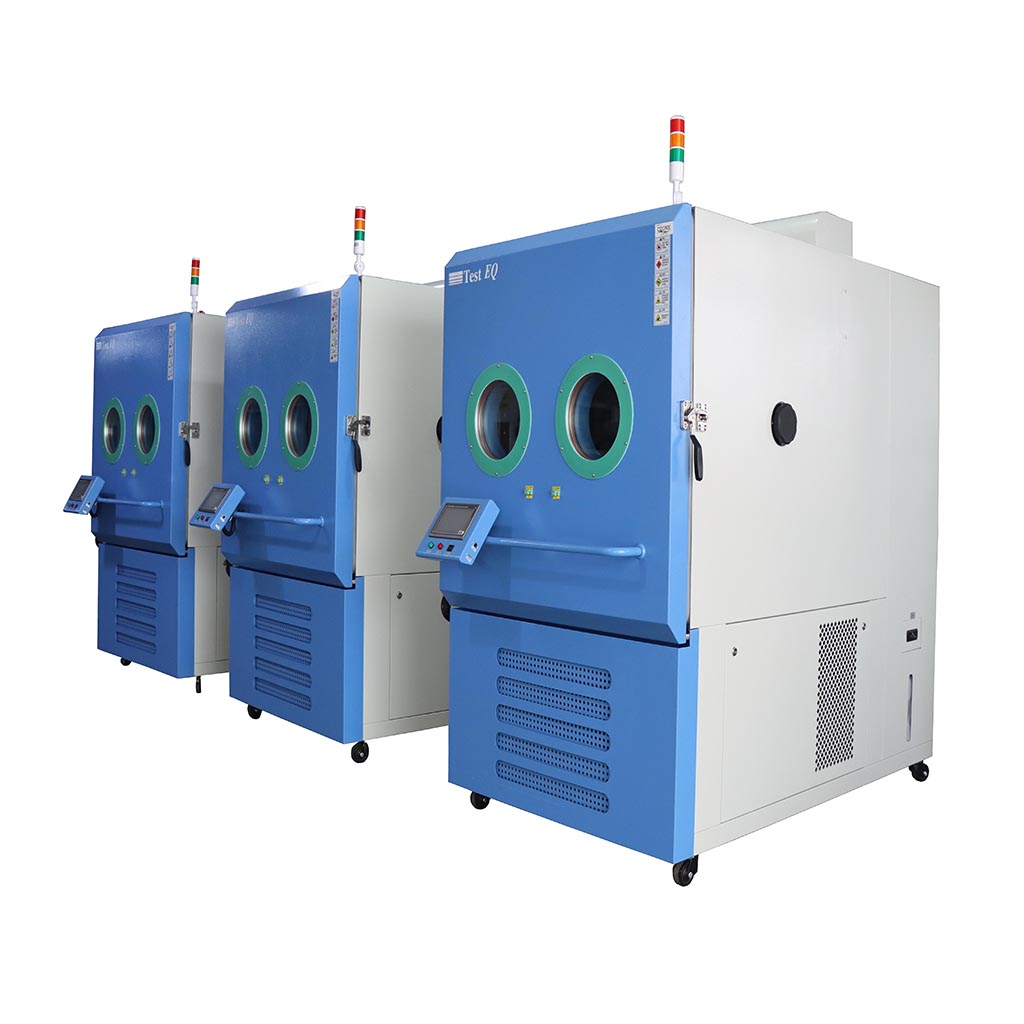
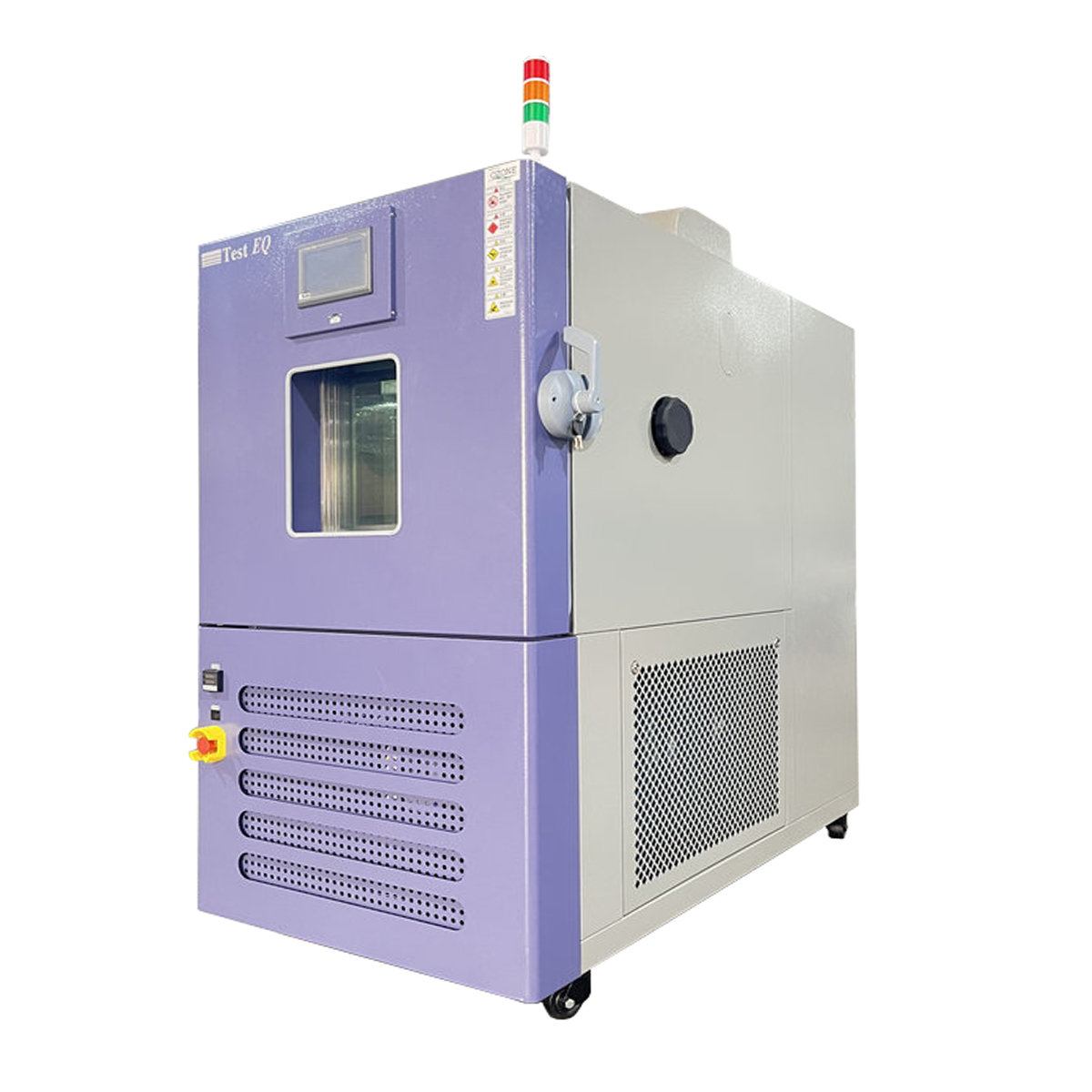
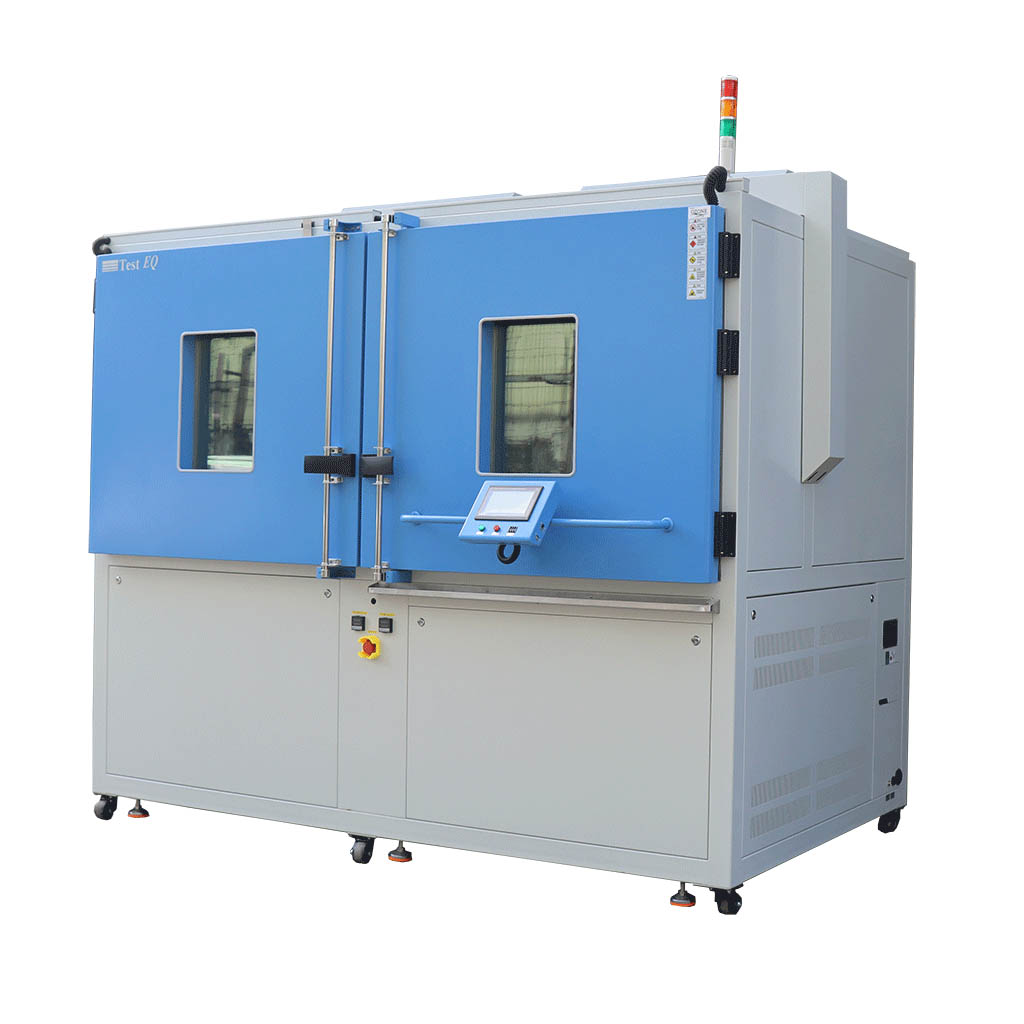
What Is a Sand and Dust Test Chamber?
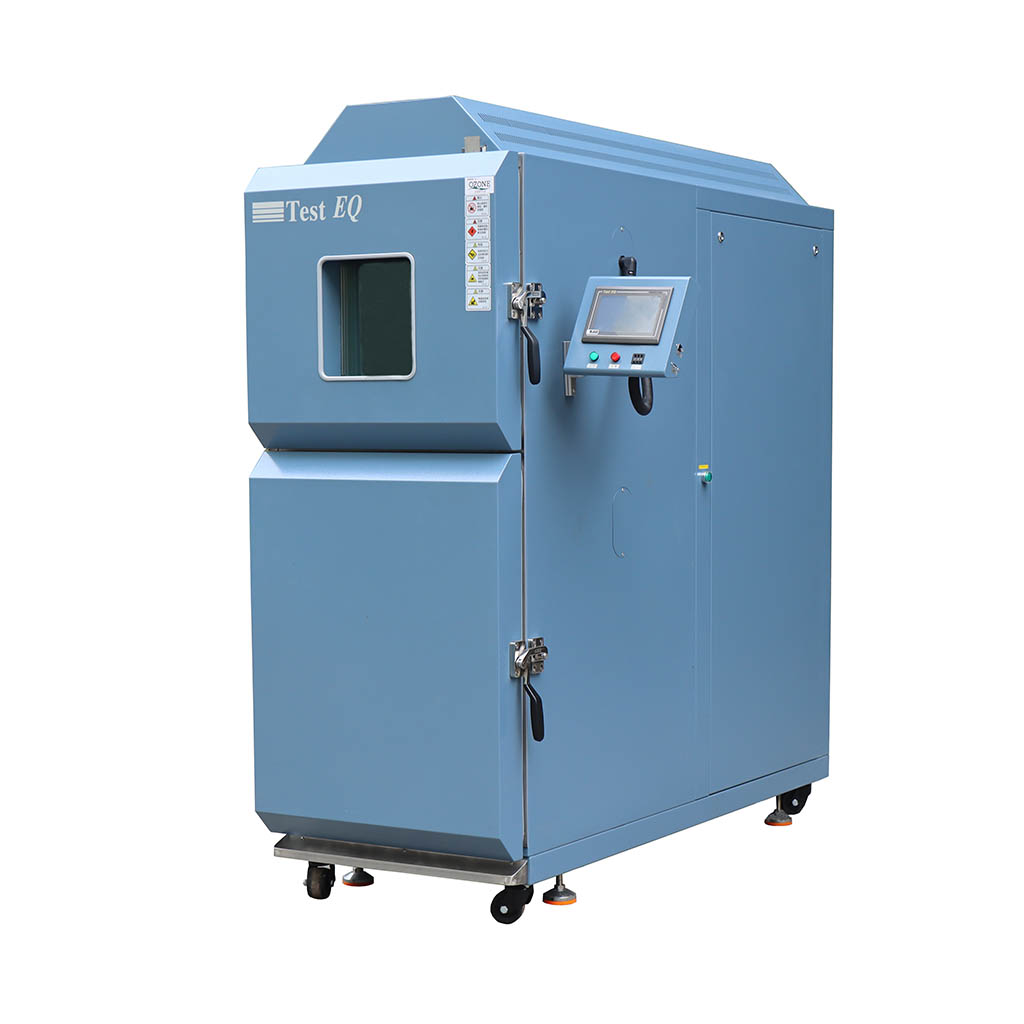
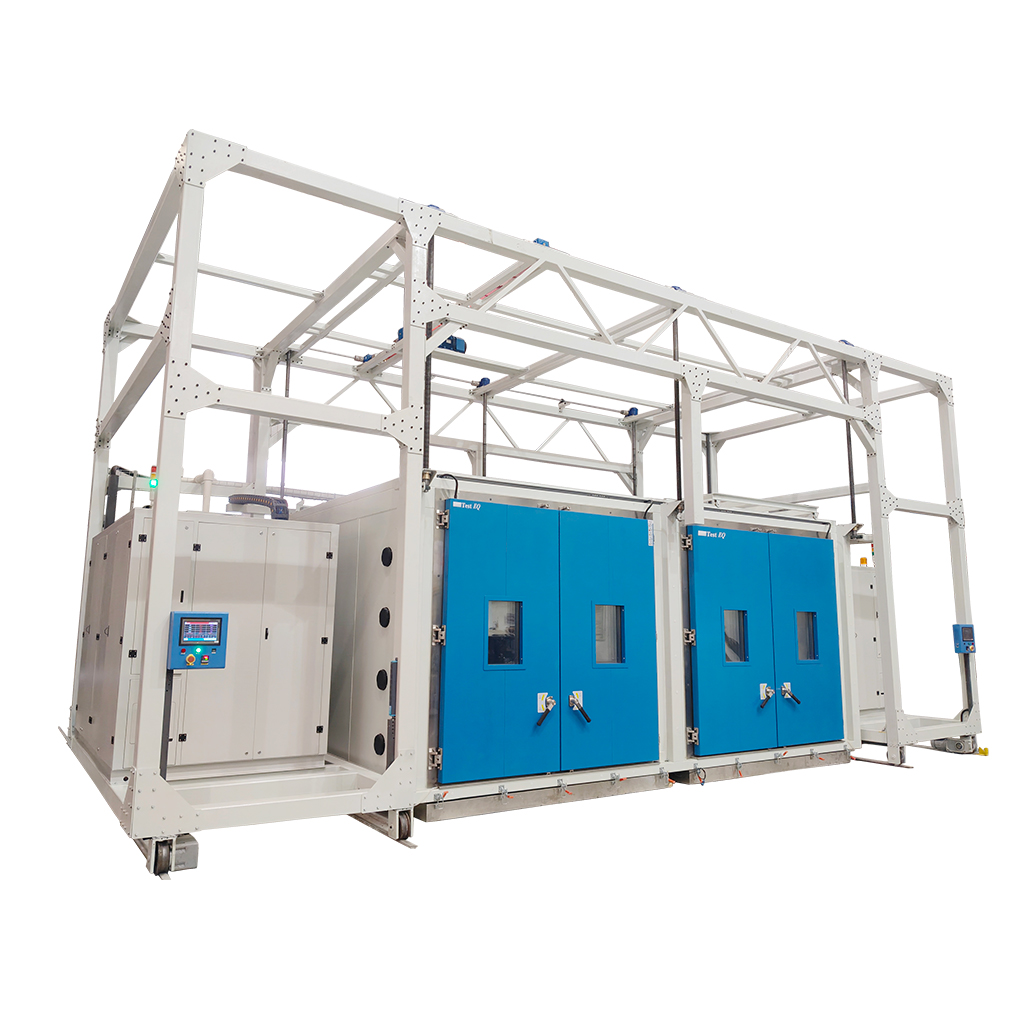
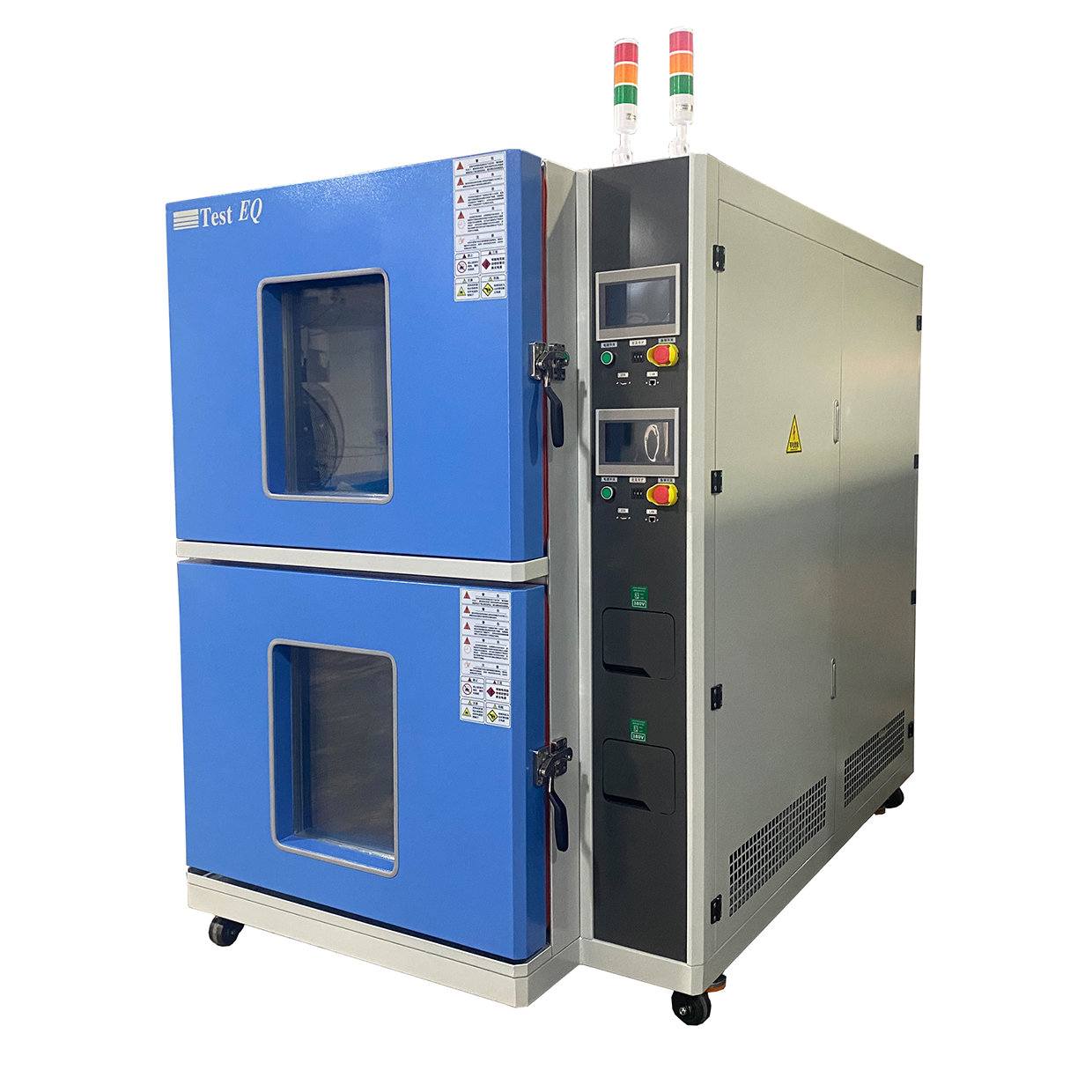
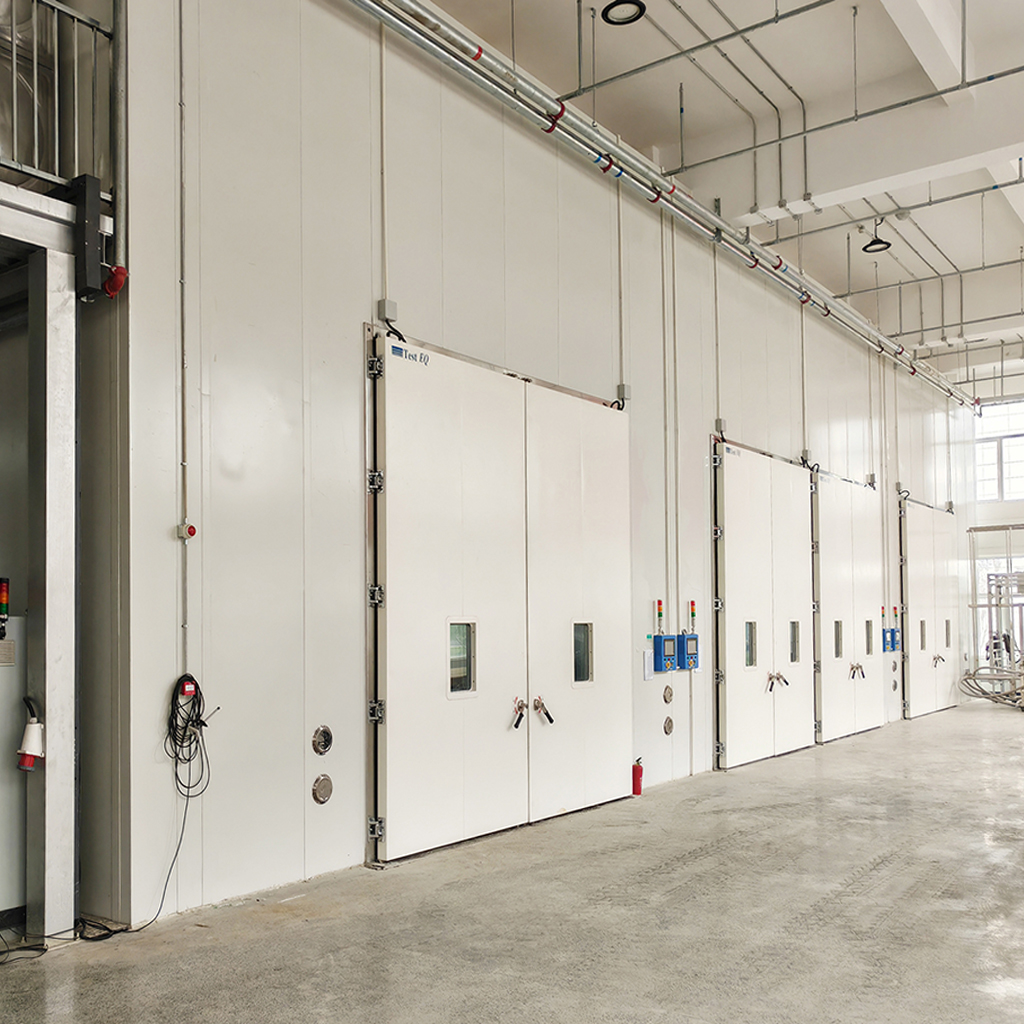
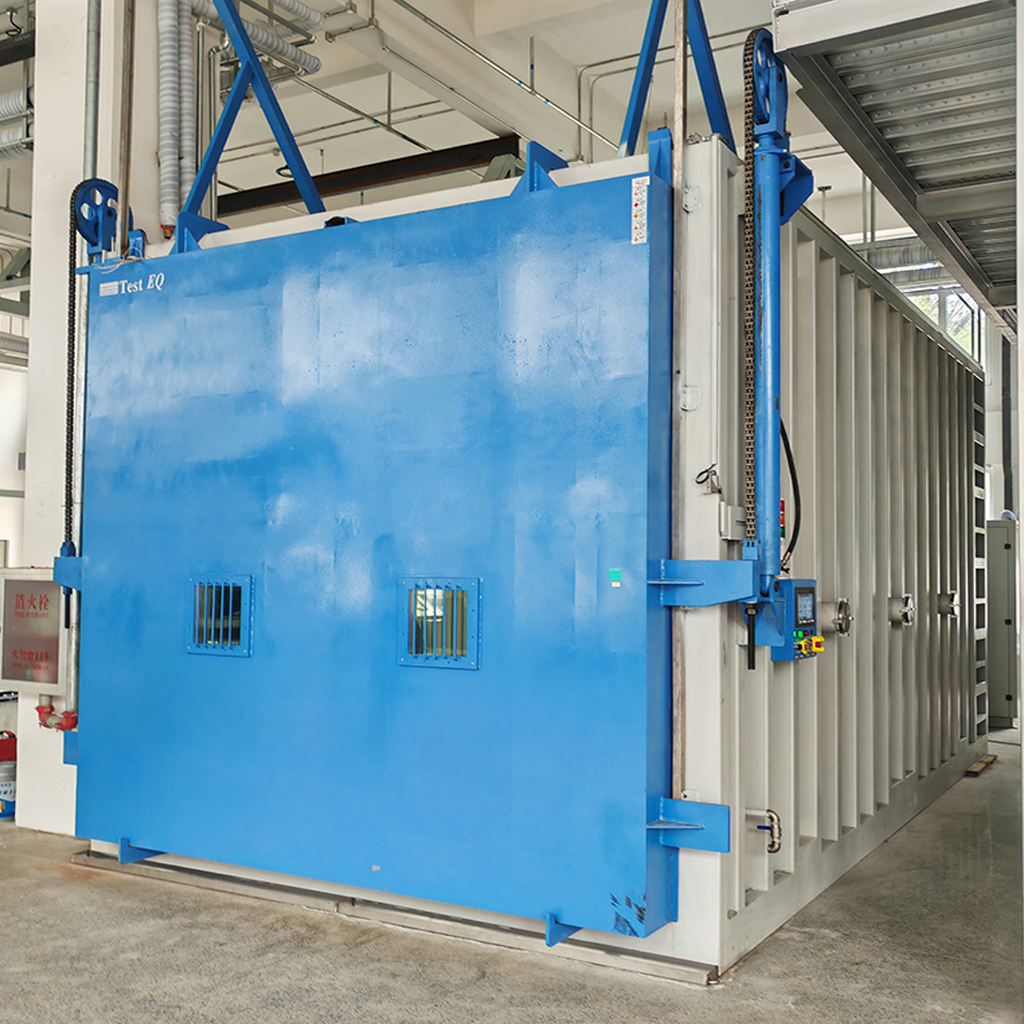
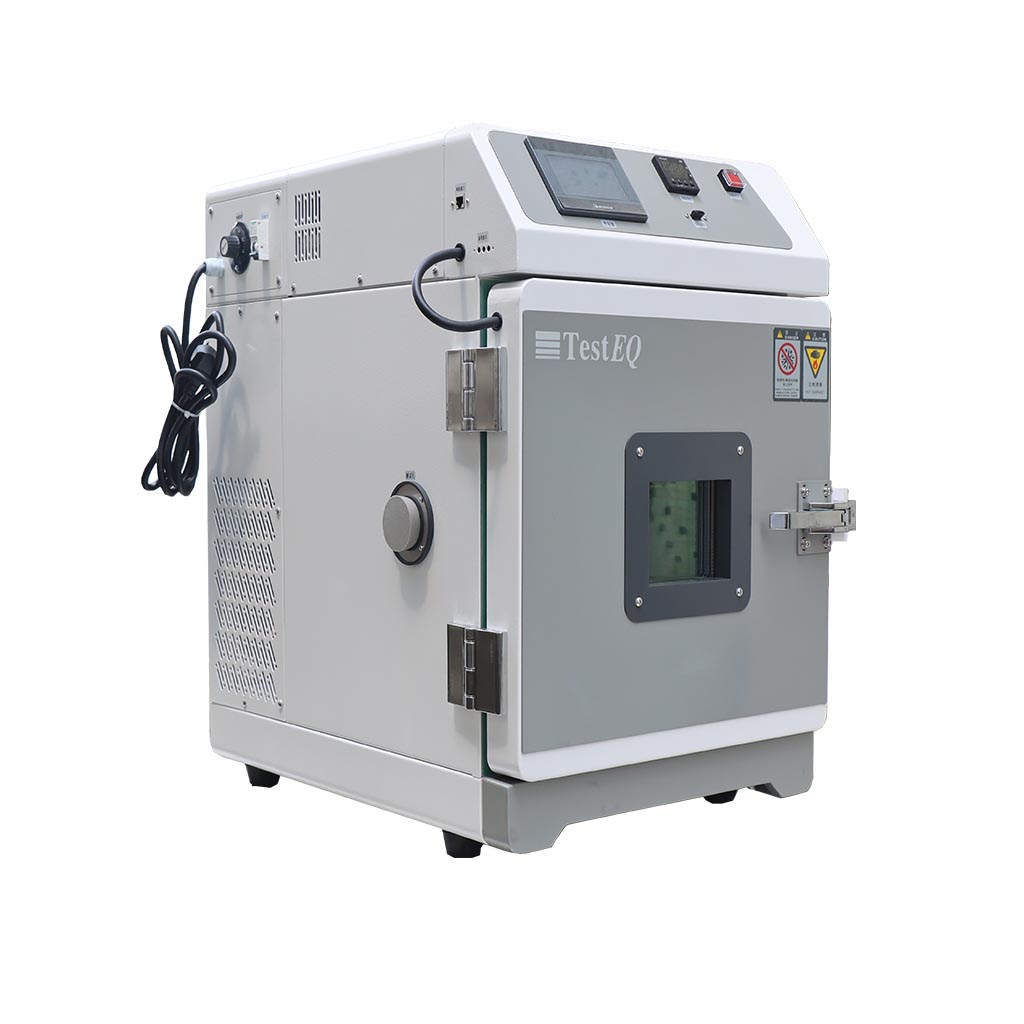
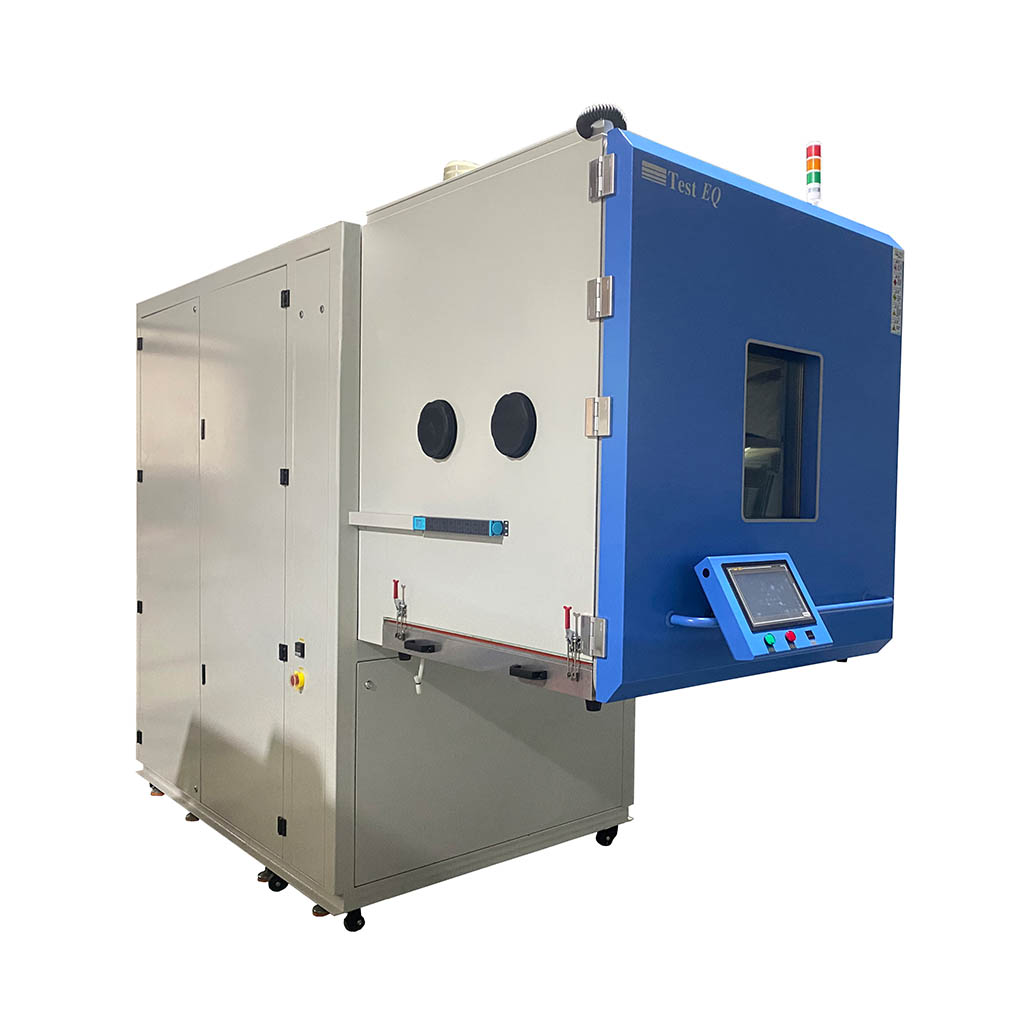
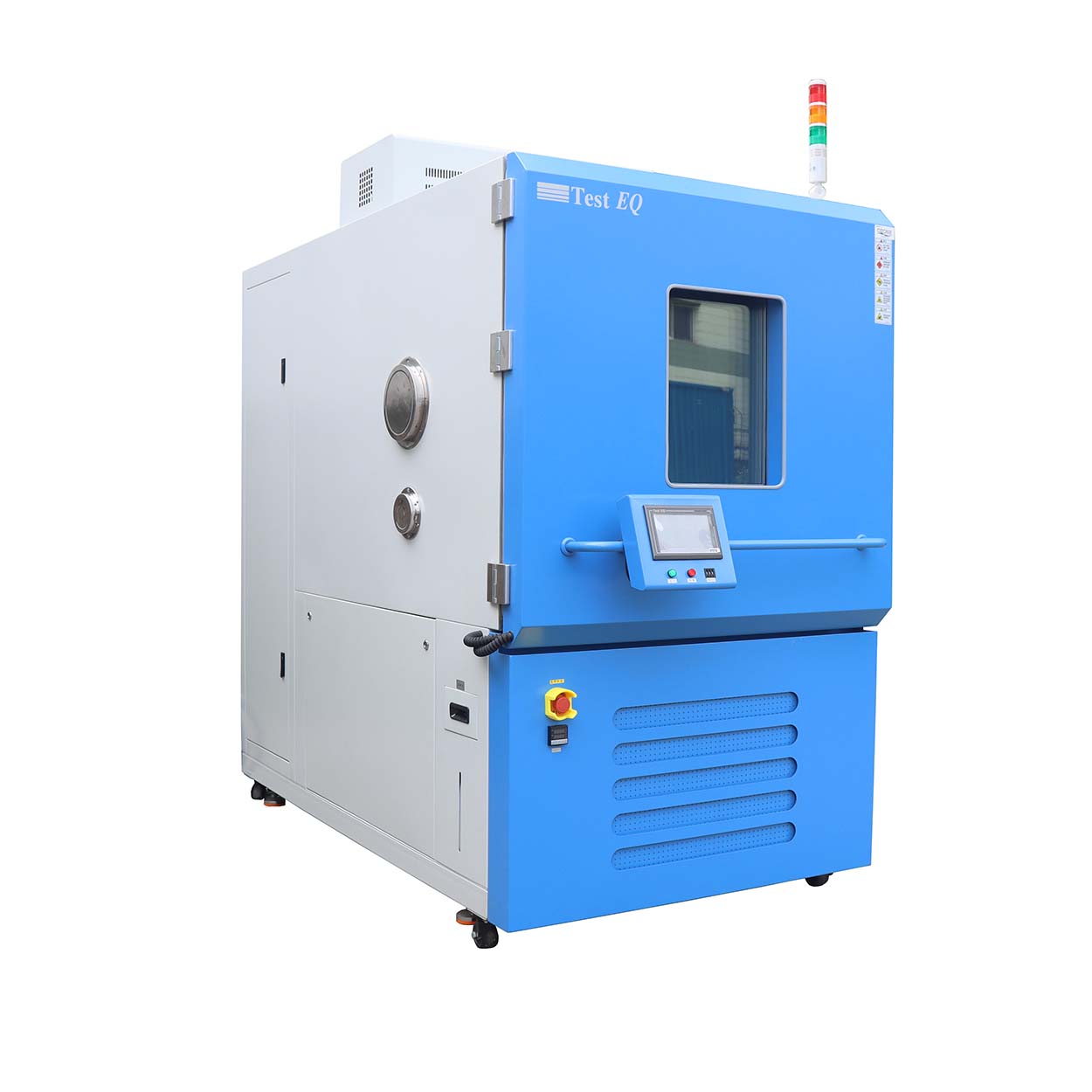
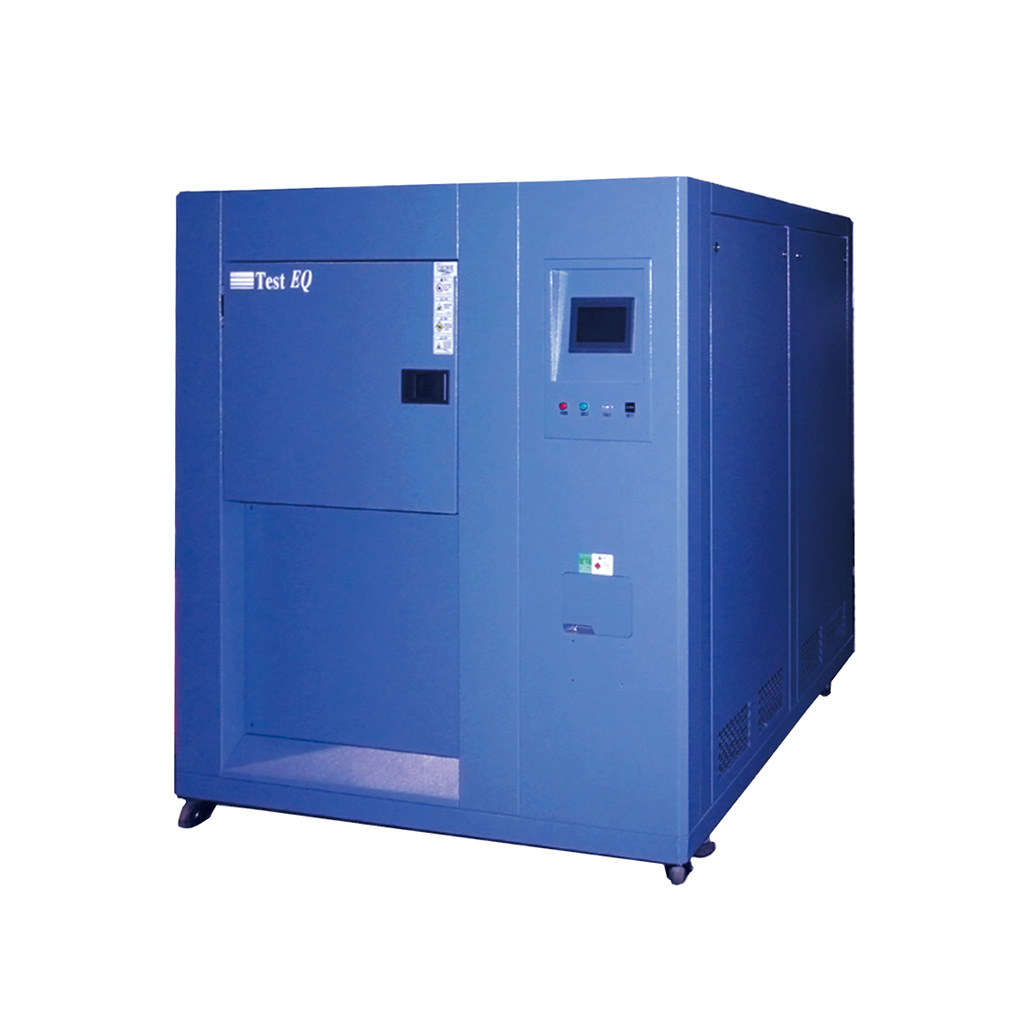
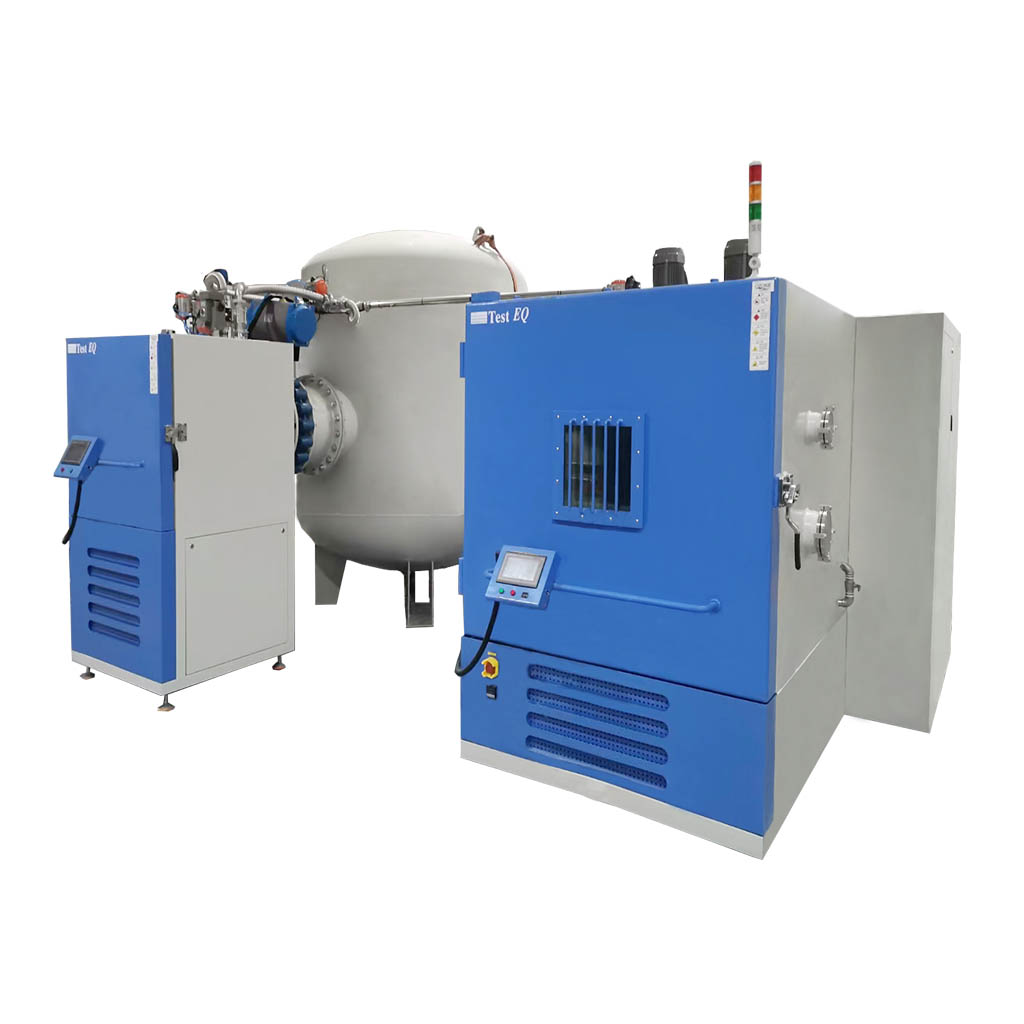
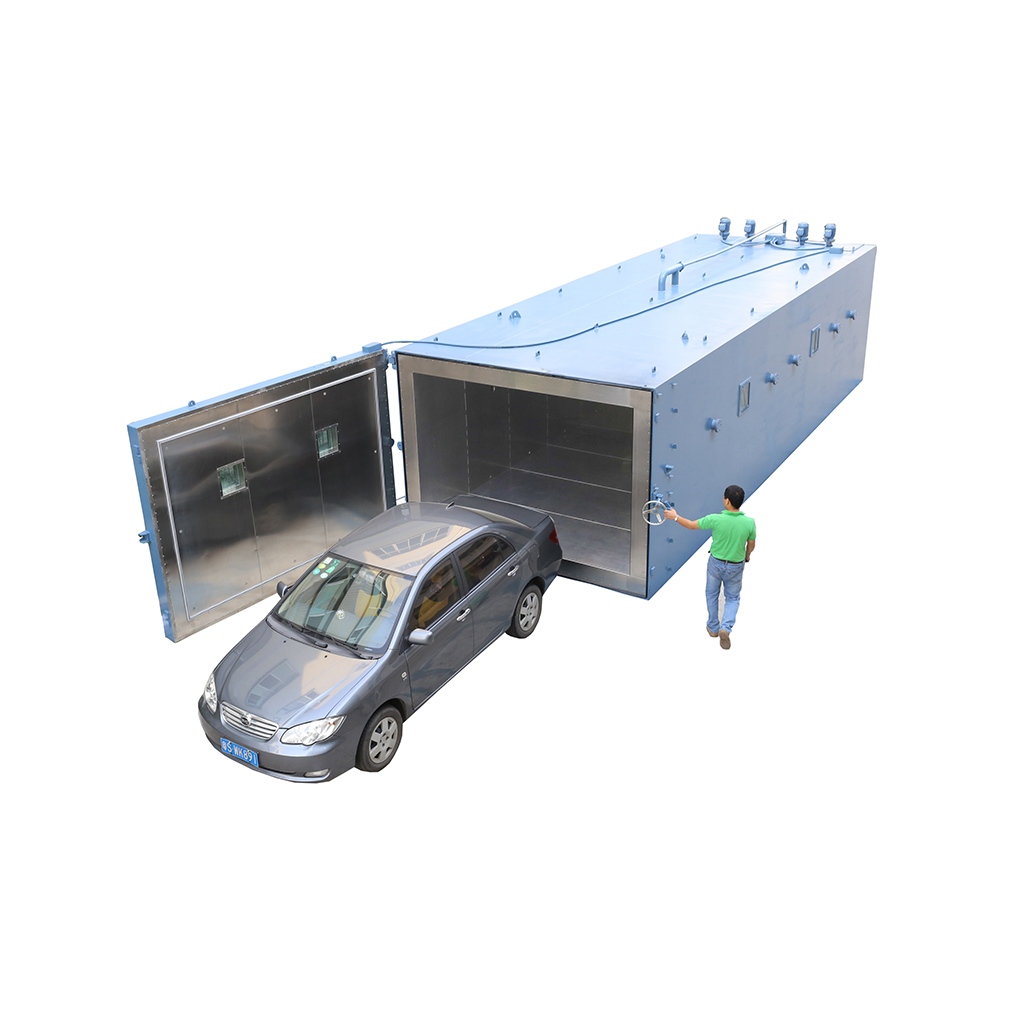
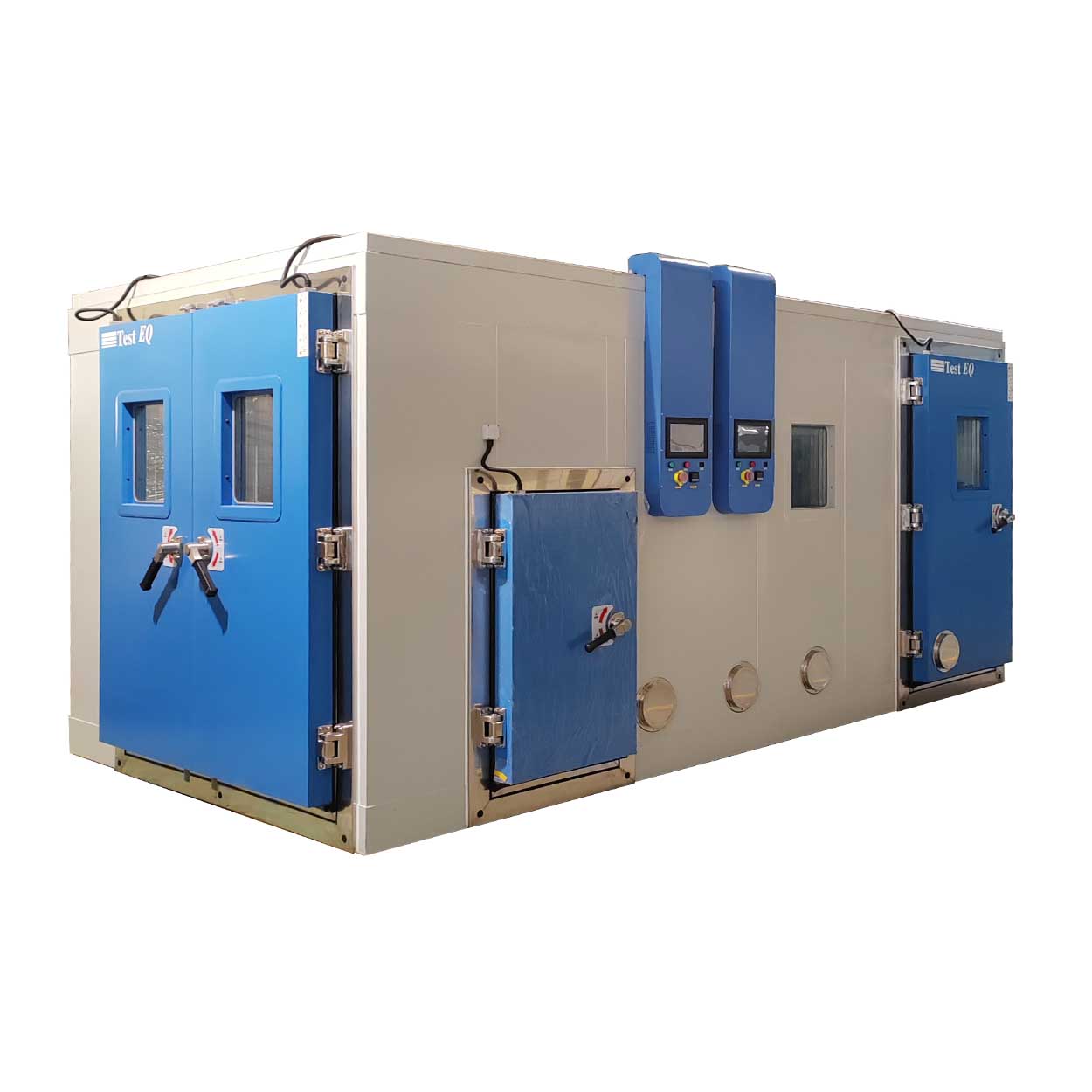
A Sand and Dust Test Chamber is an environmental simulation system designed to evaluate the resistance of products against airborne dust, sand particles, and harsh outdoor conditions.
The chamber reproduces real-world environments such as desert areas, construction sites, military operations, and industrial locations where equipment may experience dust penetration and particle contamination.
Sand and dust testing is commonly used to verify enclosure protection levels according to IEC 60529 IP5X/IP6X and vehicle dust resistance requirements such as ISO 20653.
TestEQ provides programmable sand and dust test chambers for automotive components, aerospace equipment, electronics, defense systems, and industrial products.
Working Principle
1.Multi-Scenario Simulation:
•Replicates desert storms, industrial dust ingress, and abrasive wear with programmable wind/sand profiles.
2.Precision Particle Control:
•Cyclonic dispersion system ensures uniform particle distribution (ISO 12103-2025 certified).
3.Durability:
•Hard-coated aluminum interior, wear-resistant seals, and self-cleaning filter traps.
4.Smart Monitoring:
•Real-time particle counter, temperature/humidity logging, and AI-driven failure prediction.
5.Energy Efficiency:
•Recirculating airflow design reduces energy use by 35% (ENERGY STAR® 2025 compliant).
How to Choose a Sand and Dust Test Chamber?
When selecting a sand and dust test chamber, engineers should evaluate:
1. Dust Concentration Control
Different standards require different dust concentration levels. Accurate particle distribution ensures repeatable test results.
2. Airflow Velocity
Adjustable airflow allows simulation of different environmental conditions including:
Desert wind
Industrial dust
Road environments
3. Chamber Size
The chamber should match the tested product:
Electronics
Automotive components
Battery systems
Aerospace equipment
4. Standard Compatibility
The system should support:
IEC 60529
MIL-STD-810H
ISO 20653
Why Choose TestEQ Sand and Dust Test Chamber?
TestEQ provides reliable sand and dust testing solutions for automotive, aerospace, defense, electronics, and industrial applications. With professional environmental test chamber manufacturing experience, TestEQ helps customers achieve accurate, repeatable, and standard-compliant dust testing results.
Key advantages include:
International Standard Compliance
Designed to meet IEC 60529 IP5X/IP6X, MIL-STD-810H Method 510.7, and other environmental testing requirements.
Customized Testing Solutions
TestEQ supports customized chamber sizes, dust concentration control, airflow systems, and test configurations according to different product requirements.
Engineering Reliability
Advanced control systems and precise environmental simulation technologies ensure stable test conditions and repeatable testing performance.
Multi-Industry Experience
TestEQ solutions are widely applied in automotive components, EV systems, aerospace equipment, electronics, and industrial products reliability testing.
Standards Compliance
Sand and Dust Test Chamber Standards
TestEQ Sand and Dust Test Chambers are designed for testing requirements defined by major international environmental and protection standards.
IEC 60529 IP5X/IP6X Dust Protection Testing
IEC 60529 defines enclosure protection levels against solid foreign objects and dust ingress.
IP5X:
IP6X:
MIL-STD-810H Method 510.7 Sand and Dust Test
MIL-STD-810H Method 510.7 evaluates equipment performance under desert environments, blowing dust, and blowing sand conditions.
Typical applications include:
ISO 20653 Road Vehicle Dust Testing
ISO 20653 defines dust and water protection requirements for road vehicles and automotive components.
FAQ
1.What is a sand and dust test chamber?
A sand and dust test chamber simulates dusty and sandy environments to evaluate product protection and reliability.
2.What standards are used for dust testing?
Common standards include IEC 60529 IP5X/IP6X, MIL-STD-810H Method 510.7, and ISO 20653.
3.What is the difference between IP5X and IP6X testing?
IP5X allows limited dust entry, while IP6X requires complete dust protection.
4.Which industries need sand and dust testing?
Automotive, aerospace, defense, electronics, renewable energy, and industrial equipment manufacturers commonly use dust testing.
5.Can TestEQ customize sand and dust chambers?
Yes. TestEQ provides customized chamber sizes, airflow systems, dust concentration control, and testing configurations.
6.How does a sand and dust test chamber work?
A sand and dust test chamber generates controlled airflow containing specified dust or sand particles to simulate harsh environmental conditions. The system controls dust concentration, air velocity, test duration, and particle circulation to ensure repeatable and accurate reliability testing.
7.What products can be tested in a sand and dust test chamber?
Sand and dust test chambers are commonly used for testing automotive components, electronic devices, battery systems, sensors, connectors, outdoor equipment, military products, and aerospace components to verify resistance against dust penetration and environmental exposure.
8.How do I choose the right sand and dust test chamber?
Selecting a suitable sand and dust test chamber depends on test standards, specimen size, dust concentration requirements, airflow conditions, and application environment. Engineers should consider chamber volume, control accuracy, compliance with IEC 60529, MIL-STD-810H, and customization requirements.
Internal Linking Module
Related Products
Simulate temperature and humidity conditions to evaluate product reliability, durability, and environmental performance under extreme climates.
Simulate low-pressure and high-altitude environments for aerospace, defense, automotive, and electronic component reliability testing.
Perform rapid temperature transition testing to evaluate material stress, sealing performance, and reliability under extreme temperature changes.
Related Standards
Learn about military environmental testing methods including altitude, temperature, humidity, vibration, and sand/dust testing requirements.
Understand IP5X and IP6X enclosure protection requirements for dust ingress and waterproof protection testing.
Explore international environmental reliability testing methods for temperature, humidity, dust, vibration, and mechanical stress evaluation.
Technical Resources
Understand IP6X testing procedures, dust chamber requirements, and how engineers evaluate enclosure protection performance.
A technical overview of MIL-STD-810H Method 510.7, including blowing dust, blowing sand, test procedures, and applications.
Learn key selection factors including test standards, chamber size, temperature control, airflow requirements, and customization options.